Strong Manufacturing Capacity, China’s Industrial Touchscreen Computers Breakthrough Path
Product knowledge 2026-04-01
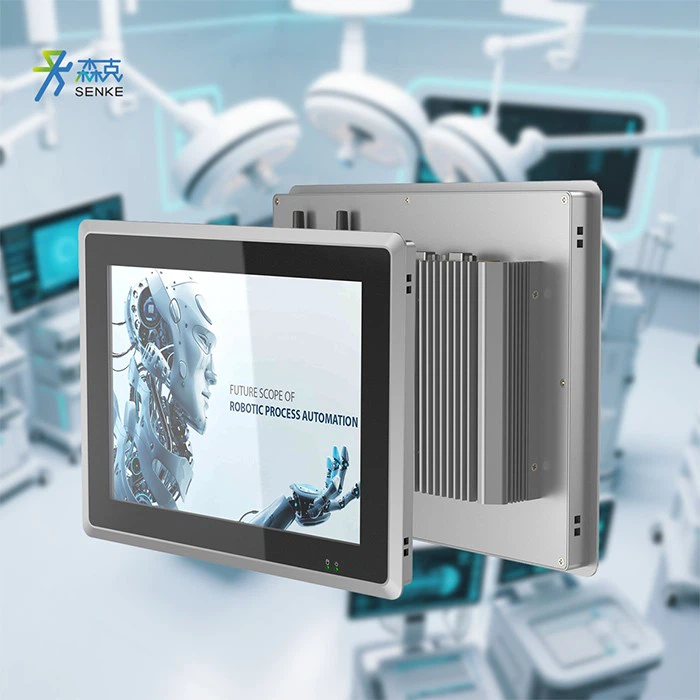
Industrial touchscreen computers are the core interactive terminals in the field of intelligent manufacturing, carrying out functions such as equipment control, data collection, status monitoring, and process management. In the early days, the domestic market was largely dominated by overseas brands, with core components, technical standards, and high-end applications relying on imports. After more than two decades of technological accumulation and industrial chain collaboration, Chinese industrial touchscreen computers started from low-end substitution, gradually breaking through key technologies, improving the supply chain system, and deeply adapting to various scenarios, thus embarking on a breakthrough path from following to parallel, from domestic to global, and becoming an important force supporting the digital transformation of the manufacturing industry.
1. Initial Stage: Transition from Being a Migrant Manufacturer to Starting Independently, Filling Market Gaps
From the late 1990s to around 2005, it was the initial exploration period for China’s industrial touch screen computers. At that time, the global industrial touch control market was dominated by resistive technology, and high-end products were monopolized by overseas brands such as Siemens, Rockwell, and Innolux. Domestic manufacturing mainly relied on imported equipment to meet automation needs. Domestic enterprises entered the industrial chain through assembly and module processing. The core components such as display panels, driver ICs, main control chips, and industrial-level operating systems were highly dependent on overseas supply. The products were mainly limited to low precision, low protection, and narrow temperature ranges in basic scenarios, lacking independent R&D capabilities and brand systems.
The core breakthrough in this stage lies in successfully introducing industrial touch technology into the local market. A few enterprises started with resistive touch screens and simple industrial control motherboards, adapting to the basic control needs of domestic small and medium-sized manufacturing lines, machine tools and equipment, and gradually establishing local production and service capabilities. In 2005, the first industrial touch module production line in China was put into operation, marking a crucial step for the local industry to emerge from non-existence. Although the product performance and stability were inferior to those of overseas products, due to its price advantage and rapid response service, it began to replace foreign products in the low-end market, accumulating experience and capital for subsequent technological upgrades.
2. Growth: Technological Iteration and Industrial Chain Improvement, Breaking Overseas Monopoly
From 2006 to 2015, China’s industrial touch-screen computers entered a period of rapid growth. Along with the upgrading of domestic manufacturing and the popularization of automation, the market demand continued to expand, and local enterprises accelerated their technological catch-up and industrial chain layout.
Comprehensive Upgrade of Technical Route: Transition from resistive touch to projected capacitive (PCAP) touch, addressing the shortcomings of traditional touch technology such as low sensitivity, easy wear, and lack of support for multi-point operations. Domestic enterprises have optimized the design of touch sensors, signal processing algorithms, and drivers to enhance touch accuracy, response speed, and anti-interference capabilities. Some products have achieved a touch accuracy within ±0.5mm, suitable for industrial scenarios such as glove operation and oily environments. At the same time, industrial-grade features such as wide temperature range (-20℃~60℃), dust and water resistance (IP65), shock resistance, and anti-interference have gradually matured, narrowing the basic gap with overseas products.
Supply Chain Gradually Becoming Autonomous: In the display panel sector, enterprises such as BOE and Hua Xing Optoelectronics have broken through industrial-level TFT-LCD technology, increasing the domestic production rate of wide-temperature and highly reliable panels to 68%; the domestic production rate of midstream components such as touch sensors, protective structural parts, and optical adhesives has exceeded 50%, and new conductive materials like nano silver wires and metal grids have achieved mass production replacement. At the motherboard and system level, local enterprises have launched autonomous industrial control motherboards based on ARM and X86 architectures, compatible with Linux, Windows embedded systems, and domestic operating systems, reducing reliance on overseas control solutions.
Market Share Continues to Rise Steadily: In 2015, the domestic market share of domestic industrial touch-screen computers exceeded 30% for the first time. They have been widely used in mid-range scenarios such as textiles, food, and light industrial machinery. Local brands have gradually broken through the price barriers and channel monopolies of overseas brands with their high cost-effectiveness, customized services, and prompt after-sales support, transitioning from “usable” to “easy to use”.
III. Breakthrough: Core Technology R&D and Penetration into High-End Scenarios, Establishing Differentiation Advantage
From 2016 to 2020, the industry entered a period of technological breakthrough. Chinese industrial touch screen computers focused on advancing into the high-end field of high precision, high stability, and high integration. They developed differentiated competitiveness in core components, scenario adaptation, and intelligentization.
Core components’ shortcomings are gradually being addressed: Progress has been made in the domestication of key components such as industrial-grade driver ICs and main control chips. Companies like Weilong and Moyal Innovation have launched chip products tailored for industrial scenarios. Although there is still a gap in terms of high-end computing power and long-term stability, they can meet the needs of most mid-range scenarios. Protection and structural design have been upgraded, with technologies such as aluminum-magnesium alloy bodies, full-lamination processes, and reinforced glass covers being widely adopted. The average time between failures (MTBF) of the products has increased from 30,000 hours to 45,000 hours, making them suitable for harsh environments such as rail transit, new energy, and construction machinery.
Scenario-based capabilities become the core barrier: The manufacturing industry in China is diverse, ranging from photovoltaics, lithium batteries, 3C electronics to metallurgy, chemicals, warehousing and logistics. Different industries have customized requirements for interactive terminals. Local enterprises have deeply explored the pain points of the industries and launched dedicated models suitable for production line control, machine tool operation, intelligent warehousing, and equipment maintenance. They support multiple serial ports, network ports, digital IO expansion, and are compatible with mainstream industrial protocols such as PLC, sensors, and servo systems. Compared to the standardized solutions of overseas brands, domestic products respond faster, offer more flexible customization, and have more precise adaptation, quickly occupying the dominant position in the segmented markets.
Accelerated Promotion of Domestic Replacement: After 2020, the demand for supply chain security and self-control has increased, and the penetration rate of domestic industrial touch screen computers in fields such as power, metallurgy, and municipal services has significantly risen. In 2023, the domestic market share of domestic HMI products exceeded 60%, and the market share in the mid-range equipment segment of 300,000 yuan and below reached 67%. Local brands such as Huaxian Control, Ruzhan Intelligent, and Weilun Tong formed a chain, and their products were exported to markets in Southeast Asia, Europe, and North America, initiating a global layout.
IV. Advanced Stage: Intelligent Integration and Ecological Construction, Moving towards Global Competition
Since 2021, China’s industrial touch screen computers have entered a period of high-quality development, deeply integrating edge computing, AI, and IoT technologies. They have evolved from a single interactive terminal to an intelligent industrial gateway, while improving the standard system and ecological capabilities, and participating in global high-end competition.
Integrating Intelligence and Edge Computing: The product integrates multi-core CPU, GPU and NPU computing units, supporting real-time processing of local data, AI visual inspection, predictive maintenance and edge inference. Some high-end models are equipped with edge computing modules, reducing reliance on the cloud and enabling intelligent early warning of equipment status, optimization of process parameters and collaborative control of multiple devices. Touch interaction has upgraded from single-point operation to multi-modal, supporting voice commands, gesture recognition and visual configuration, and adapting to the efficient interaction requirements of digital factories.
Collaboration in the industrial chain and improvement of the standard system: In China, two major industrial clusters have formed in the Yangtze River Delta and the Pearl River Delta regions, gathering enterprises covering the entire chain of display, touch control, chips, structure, and systems. The local supply chain rate exceeds 70%. National standards such as “General Specifications for Embedded Capacitive Touch Screens” have been implemented, promoting the standardization of product performance, reliability, and compatibility. Local enterprises have increased their research and development investment, with leading enterprises accounting for 8% to 12% of the total. They have achieved breakthroughs in cutting-edge technologies such as flexible touch control, anti-glare, wide temperature range, and high protection.
The High-End Market Is Gradually Breaking Through: In high-end scenarios such as semiconductors, new energy vehicles, and aerospace, domestic industrial touch screen computers are beginning to replace foreign products. Some products have obtained international certifications such as IEC 61000 and ISO 13849, meeting the requirements for global entry of high-end industrial equipment. By 2025, the industry market size will exceed 21.5 billion yuan, with product export accounting for 22%, moving from “local substitution” to “global competition”.
V. Challenges and Future: Continuous Striving, Strengthening the Foundation of Intelligent Manufacturing
At present, the breakthrough of China’s industrial touch screen computers still faces multiple challenges: core components such as high-end driver ICs, industrial-grade processors, and special glass substrates still rely on imports; the international standard话语权 is insufficient, and the capabilities for high-end certification and compliance need to be improved; there are gaps in system stability, long-term reliability, and compared with overseas leading brands.
To achieve future breakthroughs, we need to focus on three main directions:
Firstly, enhancing core technology autonomy: Increase investment in chips, materials, and processes, break through the bottlenecks of high-end components, and promote full-chain self-control;
Secondly, deep integration of scenarios and technologies: Combine digital twins, industrial internet, and large AI models to expand intelligent interaction, remote operation, and data decision-making capabilities;
Thirdly, globalization and standard co-construction: Participate in international standard formulation, enhance product compliance and global adaptability, and consolidate overseas market share.
Starting from OEM production to technological breakthrough, from low-end imitation to high-end innovation – the development journey of China’s industrial touch screen computers is a microcosm of China’s independent innovation in manufacturing. Relying on a complete industrial chain, scenario-based capabilities and continuous research and development investment, the local industry is gradually breaking away from overseas dependence and building a solid foundation for hard-core manufacturing. In the future, as intelligent manufacturing progresses further, China’s industrial touch screen computers will continue to upgrade and become an important force in the global industrial interaction field, laying a solid foundation for the high-quality development of the manufacturing industry.