What are the installation methods for industrial control all-in-one machines? What are their respective advantages and disadvantages?
Product knowledge 2025-12-31
Industrial control all-in-one machines have four main installation methods: embedded, wall-mounted, rack-mounted and bracket-mounted. In the following, we will introduce the comparisons of these four different installation methods.
Comparison of Four Installation Methods Embedded
Installation method: Embedded in the equipment cabinet or the wall to achieve integrated panel.
Core features: Automated equipment control cabinet, CNC machine operation panel, outdoor intelligent terminal (such as charging station).
Advantages: High space utilization, neat and beautiful appearance; Good protection (some can reach IP67), shock resistance, dustproof and waterproof.
Disadvantages: Precise reserved holes need to be made before installation, and it is inconvenient for maintenance or equipment replacement later.
Wall-mounted
Installation method: Fixed to the wall, column or side of the cabinet via a bracket.
Core features: Workshop monitoring center, logistics warehouse information screen, small control room, retail store.
Advantages: Flexible installation, fast deployment; easy maintenance, easy disassembly.
Disadvantages: The installation surface’s load-bearing capacity needs to be evaluated; vibration environments require anti-vibration measures.
Rack-mounted
Installation method: Installed in a standard 19-inch cabinet, it is a common form of equipment in data centers, computer rooms, broadcasting stations, and industrial sites with centralized control requirements.
Core features: Data centers, computer rooms, broadcasting stations, industrial sites with centralized control needs.
Advantages: Equipment is centralized, facilitating unified management and heat dissipation; appearance is neat, with strong professionalism.
Disadvantages: Requires a dedicated cabinet, with higher initial cost; equipment is usually heavy, and installation requires teamwork of multiple people.
Rack-mounted
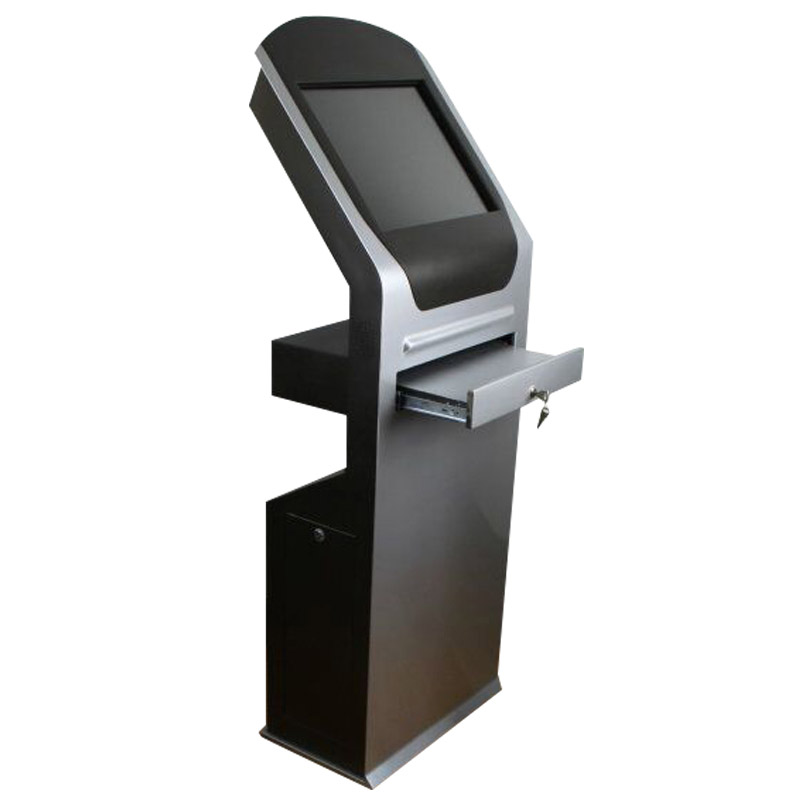
Installation method: Supported by floor-mounted racks, arm-type racks or mobile carts.
Core features: Mobile inspection, temporary command center, laboratory, multi-workstations requiring flexible adjustment of position and angle.
Advantages: Position and angle can be flexibly adjusted; strong mobility; suitable for temporary or dynamic requirements.
Disadvantages: Occupies floor space; stability of the rack needs to be considered on vibrating or uneven ground.
II: How to choose the appropriate installation method?
You can evaluate based on the following four dimensions:
- Environment and stability: Is there vibration, dust, oil, or water splashing at the site?
If the environment is harsh, consider embedded (with good protection) or reinforced wall-mounted options.
If the environment is clean and stable, you can choose flexibly based on other factors. - Operation and Maintenance Requirements: Does the equipment require frequent maintenance, hardware upgrades, or position adjustments?
If so, the ease of maintenance offered by wall-mounted and bracket-style designs is highly advantageous.
If the equipment is expected to operate stably for an extended period, embedded or rack-style options are also reliable choices. - Space Constraints: The installation location could be a compact control cabinet, a vertical wall, or a spacious floor?
Embedded installation can save the most external space.
Wall-mounted installation does not occupy floor space.
Rack-mounted installation requires reserved floor space. - Expansion and Integration Requirements: Will there be a need for multi-screen docking or integration of peripherals such as keyboards and barcode scanners in the future?
Wall-mounted units can easily achieve multi-screen docking with dedicated brackets.
Bracket-style is the most flexible in peripheral integration.
Overall, for high protection and integration, choose embedded systems; for flexibility and ease of maintenance, choose wall-mounted systems; for centralized deployment in the computer room, choose rack-mounted systems; and for mobile or multi-angle adjustment requirements, choose bracket-style systems.