Industrial Control Touch一体 Machine Empowers MES System: Workshop Digital Management Solution
Product knowledge 2026-03-26
During the digital transformation of the manufacturing industry, the MES system plays a crucial role in connecting the ERP planning layer and the on-site equipment control layer. The industrial control touch一体 machine, as the human-machine interaction and data collection terminal at the workshop site, is the key hardware carrier for the implementation of the MES system. This article focuses on the collaborative application of the industrial control touch一体 machine and the MES system, elaborating on the practical solution for workshop digital management from aspects such as scene value, function realization, and deployment key points, providing a reference for enterprise production line upgrades.
1. Pain Points in Workshop Management and the Supporting Value of Terminal Hardware
Traditional workshop management often faces problems such as delayed information transmission, reliance on manual data collection, inconsistent process execution, opaque equipment status, and difficulty in quality traceability, which makes it difficult for the MES system’s digital capabilities to be fully utilized.
The industrial control touch panel integrates industrial-grade stability, rich interfaces, flexible installation, and real-time interaction features to provide a site entry for the MES system, enabling “downward transmission of instructions, upward transmission of data, visual process, and controllable anomalies”, and打通ing the digital link of the entire production process.
2. Core Functions of Industrial Control Touch一体 Machine in the MES Environment
1. Visualization of Production Instructions and Operating Standards
- Real-time reception of work orders, production schedules, and process requirements issued by MES, replacing paper documents.
- Synchronous display of electronic operation instructions (ESOP), process parameters, drawings, and operation videos. After process updates, the background can be synchronized with a single click, ensuring uniform standards across all workstations.
- Supports touch interaction, allowing workers to quickly consult and confirm process nodes, reducing errors.
2. On-site Data Collection and Work Reporting
- Connect with external devices such as barcode scanners, RFID, and sensors to automatically collect and input information about materials, processes, personnel, and equipment.
- Support real-time reporting of start, completion, rework, and scrap statuses, and synchronize the data to MES to form production history.
- Automatically calculate output, cycle time, and working hours, reducing human error in statistics and improving the timeliness of work reporting.
3. Equipment Interconnection and Status Monitoring
- Connect to PLC, machine tools, robots and other devices through industrial interfaces such as network ports and serial ports, and collect operating parameters, start-stop status, and fault codes.
- Display the overall efficiency (OEE), uptime rate, and abnormal information of the equipment in real time on the terminal, trigger the alarm light to prompt on-site handling.
- Provide underlying data for the MES equipment management module, supporting preventive maintenance and efficiency analysis.
4. Quality Control and Process Traceability
- Supports the input of quality inspection items, reporting of defective products, and linkage with the MES quality module to form process data.
- Links material batches, process parameters, operators, and equipment information to establish a complete traceability chain throughout the process.
- In case of quality abnormalities, it enables quick identification of related links, providing a basis for cause analysis and improvement.
5. Production Kanban and On-site Collaboration
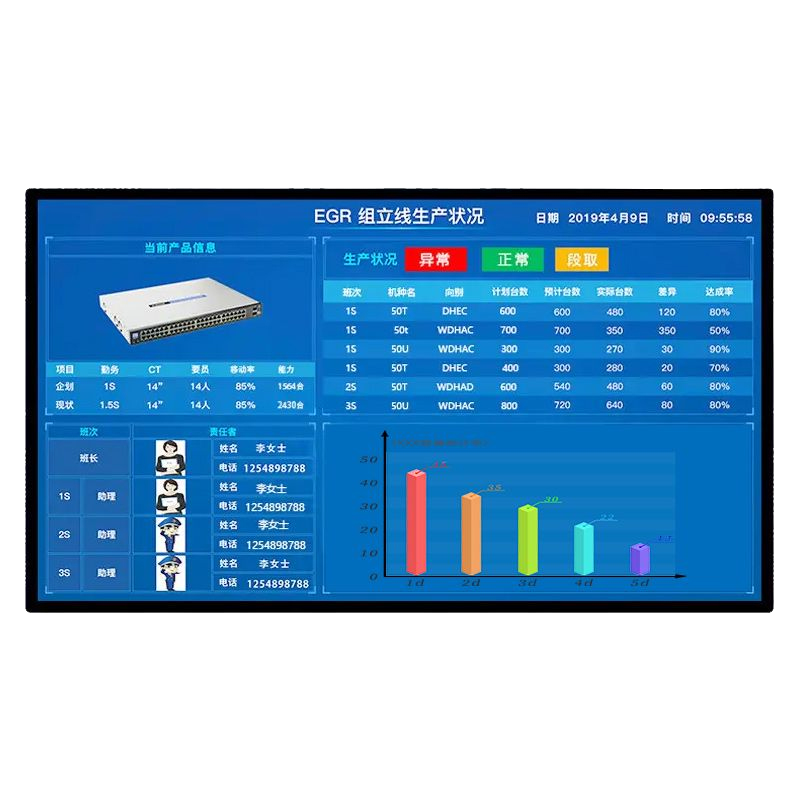
- Present key indicators such as work order progress, yield rate, production capacity, and material completeness in a visual interface.
- Support for exception calls, material requests, and process flow notifications to enhance on-site collaboration efficiency.
- Synchronize data to the workshop management backend to provide real-time basis for scheduling decisions.
III. Hardware Compatibility and Technical Characteristics Requirements
To ensure the stable operation of the MES system in the workshop, the industrial control touch panel must possess the following industrial-level characteristics:
- Environmental Adaptability: Capable of operating in a wide temperature range, with dust-proof, oil-proof, vibration-resistant, and anti-electromagnetic interference capabilities, suitable for various working environments.
- Touch Interaction: Supports operation with gloves or wet hands, has a sensitive response, and is visible in strong light, meeting the operational habits in the field.
- Interface Expandability: Equipped with network ports, multiple serial ports, USB interfaces, etc., capable of connecting scanning devices, printers, PLCs, etc., and compatible with mainstream industrial protocols.
- System Compatibility: Supports Windows, Linux, and domestic operating systems, and can run the MES client and related industrial software stably.
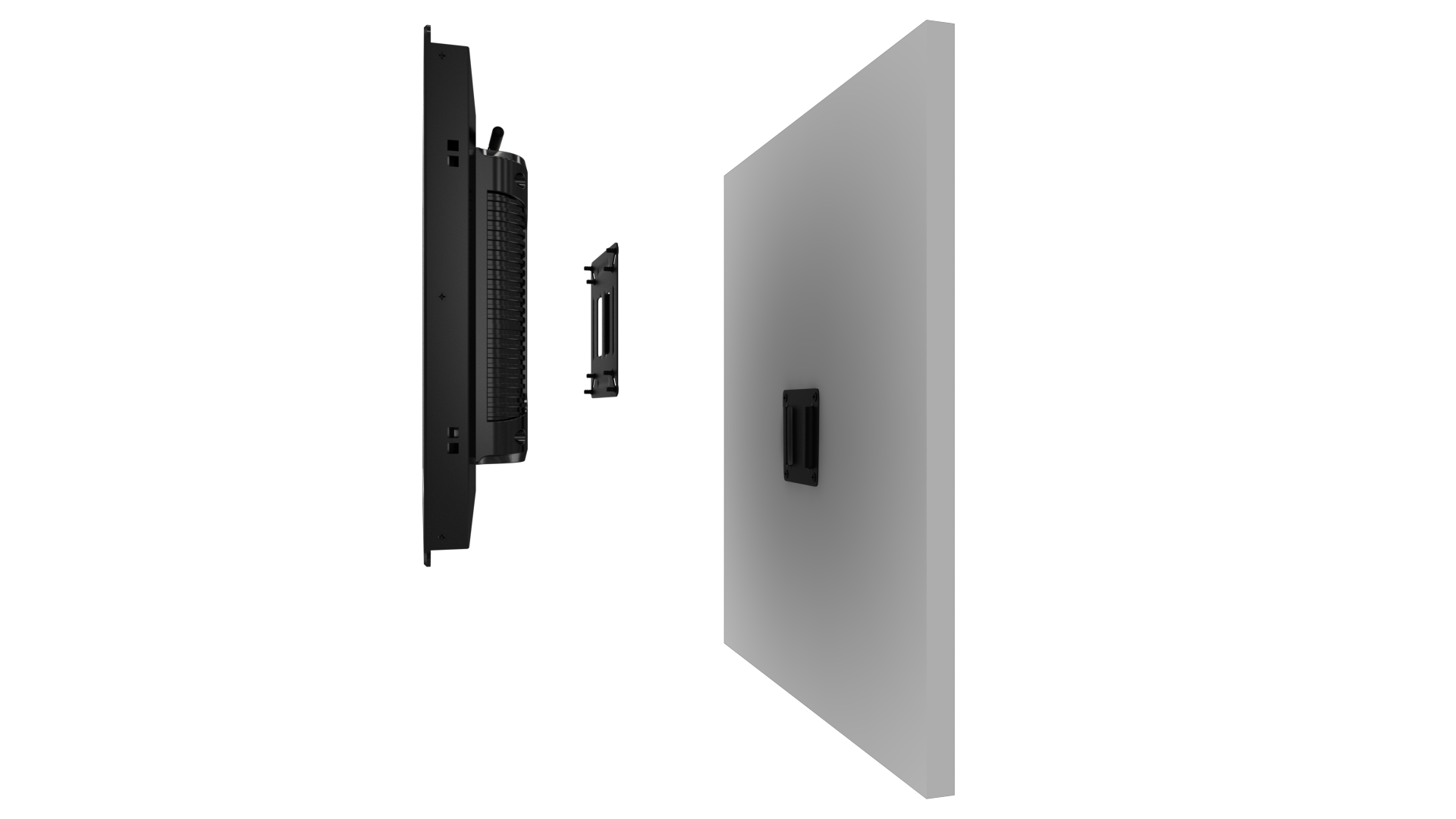
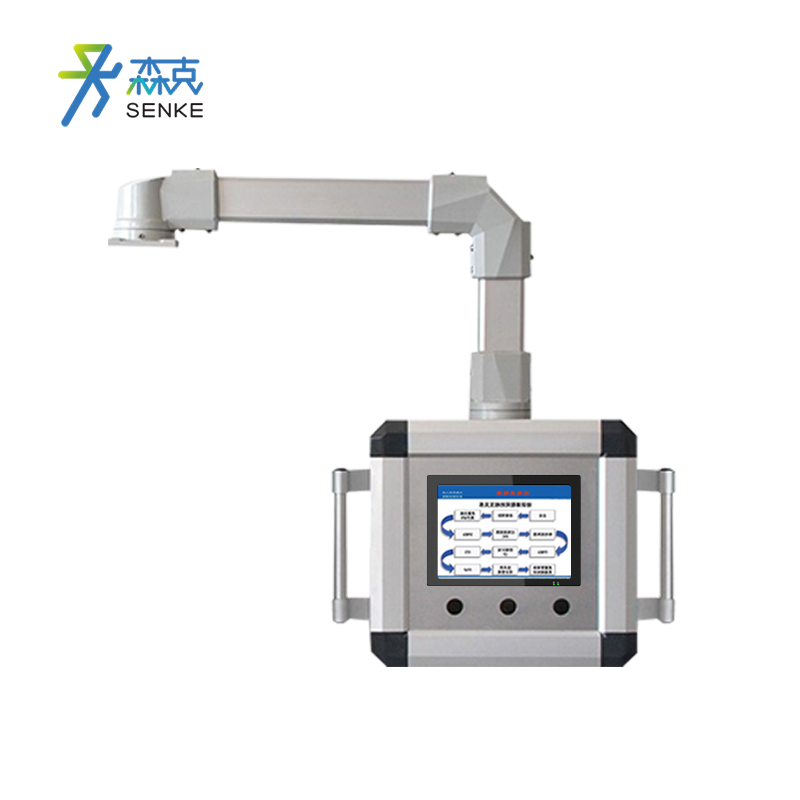
- Installation Flexibility: Supports embedded, wall-mounted, and cantilevered installation, suitable for different positions such as workstations, control cabinets, and production line operation consoles.
IV. Key Points for Deployment and Implementation of Digital Management in the Workshop
- Point Planning
Arrange the points reasonably based on key process nodes, equipment stations, quality inspection stations, and material nodes to ensure complete data coverage and convenient interaction. - Network and Data Security
Establish a stable industrial local area network to ensure real-time communication between terminals and the MES server; implement hierarchical access control and standardize operation logs to safeguard the security of production data. - System Integration and Debugging
Standardize the data interface between the terminal and the MES, unify the protocol and data format to reduce integration costs; complete the functional joint debugging to ensure smooth processes such as work reporting, data collection, and alarm. - Operational Training and Maintenance
Conduct basic touch operation training for front-line staff; establish terminal inspection and maintenance mechanisms to ensure long-term stable operation.
V. Summary of Application Value
The integration of industrial control touch一体机 and the MES system can help the workshop achieve the following:
- Transparency in the production process, reducing information gaps and communication costs;
- Automation of data collection, reducing human error in data entry and improving traceability efficiency;
- Standardization of process execution, reducing human deviations and improving quality stability;
- Collaboration between equipment and processes, optimizing production rhythm and enhancing on-site response speed;
- Data-based management decisions, providing quantitative basis for continuous improvement.
VI. Conclusion
The industrial control touch panel is the physical entry and execution terminal for the MES system to be implemented in the workshop. The deep collaboration between the two can effectively fill the gap in on-site digitalization and promote the workshop to shift from experience-based management to data-driven, refined management. When enterprises are advancing digitalization, they can combine their own production line characteristics to reasonably select hardware configuration and deployment plans, so as to support the value realization of the MES system with stable and reliable terminals, and steadily improve the operational efficiency and management level of the workshop.