The Current Situation and Future Development Trends of the Industrial All-in-One Computer Market in China
Product knowledge 2026-03-25
Driven by multiple factors such as industrial automation, intelligent manufacturing, and domestic substitution, the Chinese industrial all-in-one computer market has gradually matured and become an important hardware sub-sector supporting the digital transformation of the manufacturing industry. Currently, the market is showing an overall trend of steady growth in scale, continuous expansion of application scenarios, and continuous technological iteration. However, it also faces practical problems such as a fragmented competitive landscape and core technology shortcomings. Based on objective industry data and market realities, this article analyzes the current market situation and competitive landscape of industrial all-in-one computers in China. By combining policy guidance and technological development directions, it predicts future trends and provides objective references for industry development and market layout. It strictly avoids extreme expressions, sensitive advertising content, and marketing descriptions.
I. Analysis of the Current Situation of the Industrial All-in-One Computer Market in China
Currently, the industrial all-in-one computer market in China is in a steady development stage. The market size and shipment volume show a phased upward trend with fluctuations. The impact of industry demand release and external environment is quite obvious. According to relevant industry report data, in 2024, the shipment volume of industrial computers (including industrial all-in-one computers) in China reached 3.78 million units, with a slight year-on-year decrease of 2.8%. The main reason is that the large customer demands from industries such as new energy and rail transit were released in advance and were completed with procurement and expansion in 2023, resulting in a phased decline in demand in 2024. At the same time, the uncertainty of external environments such as geopolitics also had a certain impact on market demand. From the perspective of market size, with the promotion of digital transformation in multiple industries, the market size of industrial all-in-one computers has exceeded 10 billion yuan, and the annual compound growth rate remains within a reasonable range. Among them, industrial control all-in-one computers, as the core subcategory, have a continuously increasing proportion.
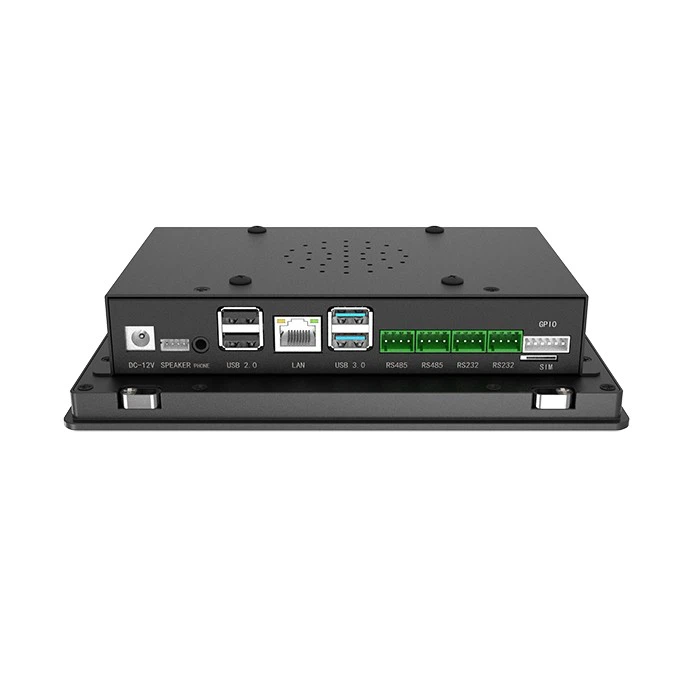
From the perspective of product structure, industrial all-in-one machines adopt a diversified layout, mainly divided into embedded, wall-mounted, and desktop types, which are suitable for different installation and usage requirements in industrial scenarios. Among them, the industrial motherboards with more flexible application scenarios have a relatively higher shipment ratio. Desktop and fanless embedded industrial control computers rank second and third in the market respectively. The product design focuses on wide temperature compatibility, protection performance, interface expansion, and computing power improvement to meet the complex working conditions in industrial sites. Some products have achieved wide temperature operation from -20℃ to 60℃ and protection grades of IP65 and above, suitable for harsh environments such as dust, oil contamination, and strong electromagnetic interference.
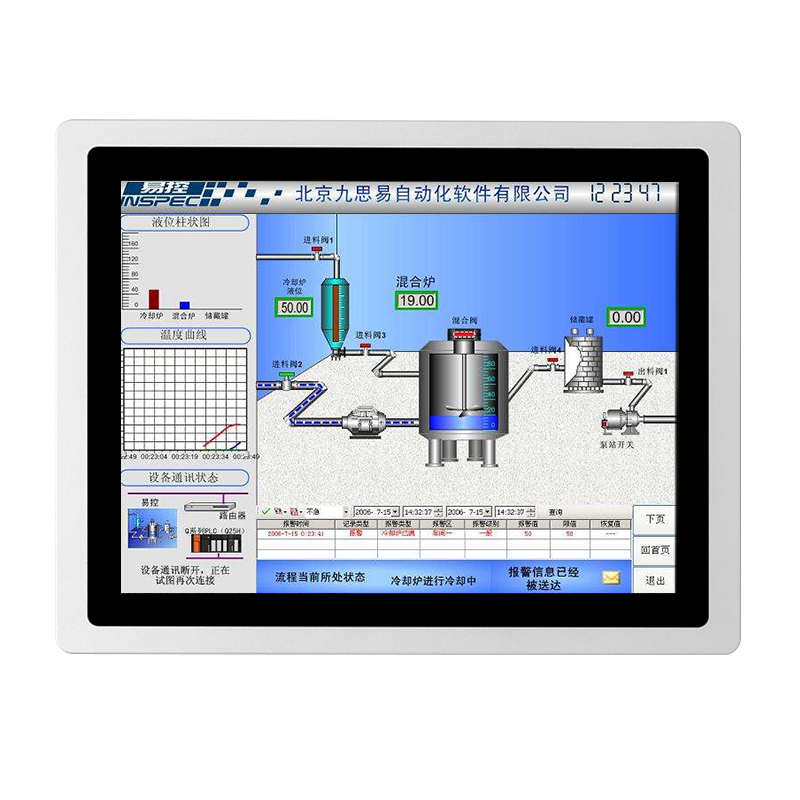
From the perspective of application coverage, market demand has gradually expanded from core areas such as traditional mechanical manufacturing and industrial automation to multiple specialized industries including new energy, food processing, government information innovation, warehousing and logistics, medical health, etc. The application scenarios have extended from the simple control of equipment to diversified scenarios such as data collection, human-computer interaction, edge computing, and AI model deployment, becoming one of the core terminal devices in the digital transformation process of various industries. The demand in the fields of new energy and information innovation has shown a more significant growth.
From the perspective of market supply, there are a large number of enterprises in China engaged in the production of industrial all-in-one machines, forming a diversified supply pattern. There are both specialized manufacturers focusing on industrial terminals and enterprises that have extended from the fields of electronic manufacturing and chip research and development. The quality and technical level of the supply side show differences. Some enterprises have already possessed core technology research and vertical integration capabilities, and can provide a full chain of services from research and design, production and manufacturing to after-sales operation and maintenance. However, some small and medium-sized enterprises mainly engage in assembly production, with core components relying on external procurement, and their technical research capabilities are relatively weak.
II. Current Market Competition Landscape and Existing Issues
The market competition landscape of industrial all-in-one computers in China is relatively stable, and it also shows a feature of low concentration. Currently, there are several leading enterprises in the industry that occupy a certain market share. Among them, some leading manufacturers together account for more than 50% of the market share. They mainly rely on technological accumulation, supply chain integration capabilities, and brand reputation to achieve wide application in multiple industries. At the same time, a large number of local small and medium-sized enterprises are active in the market, mainly focusing on mid-to-low-end niche markets. They occupy a certain market share by leveraging cost advantages, forming a “leadership by the top, supplemented by small and medium-sized enterprises” competitive landscape.
The core problems existing in the current market mainly lie in three aspects: Firstly, at the core technology level, the core chips and high-end display components of some products still rely on imports. Although the process of domestic substitution is advancing, there is still room for improvement in the high-end field. At the same time, insufficient investment in the research and development of advanced functions such as AI integration and edge computing makes it difficult for some products to meet the computing power requirements of high-end industrial scenarios. Secondly, the phenomenon of product homogeneity is quite obvious. In the mid-to-low-end market, some enterprises lack core R&D capabilities, and their product designs and functions are similar. They mainly rely on price competition to seize the market, and it is difficult for them to form a differentiated competitive advantage. Thirdly, industry standards have not been fully unified. Different enterprises’ products have differences in interface specifications, protection levels, and compatibility, making it difficult for different brand products to be compatible. This increases the cost of enterprise multi-brand equipment integration and operation. The release of relevant industry norms in 2026 is gradually guiding the industry towards standardized development.
Furthermore, the stability of the supply chain has also become an important factor influencing market development. Fluctuations in the supply of core components and changes in raw material prices will all have an impact on the production, delivery and cost control of industrial all-in-one machines, especially exerting certain pressure on the production and operation of small and medium-sized enterprises.
III. Future Development Trends of Industrial All-in-One Computers in China
Taking into account policy guidance, technological development and market demands, the Chinese industrial all-in-one computer market will develop in the future towards four major directions: domestication, intelligence, scene-based application, and standardization. It will gradually address the shortcomings in the current market and achieve high-quality development.
The continuous deepening of domestic substitution will become one of the core trends. With the advancement of domestic policies and the increasing demand for supply chain autonomy, the domesticization process of core components of industrial all-in-one machines will accelerate further. The proportion of domestic chips and domestic operating systems will continue to increase, achieving full chain control of the entire process from the underlying hardware to the upper software. At the same time, the improvement of the local supply chain will enhance the stability of product delivery and reduce the risks brought by reliance on imported core components. Especially in fields such as government information innovation, energy, and rail transportation, which have high requirements for information security, the demand for domestic adaptation will continue to be released, promoting the iterative process of industrial all-in-one machines towards a fully domesticized direction.
The continuous improvement of intelligent integration capabilities will become an important development direction. With the promotion of relevant policies by the Ministry of Industry and Information Technology, the demand for industrial intelligent computing power has shown an explosive growth. Industrial all-in-one machines will gradually integrate AI computing power modules, strengthen edge computing and multi-device collaboration capabilities, achieve integration of data collection, analysis, processing and control, adapt to high-end scenarios such as machine vision inspection, AGV scheduling, and production line intelligent management, and at the same time support network technologies such as 5G and WiFi 6, enabling seamless connection with industrial Internet and cloud platforms, promoting the coordinated development of “end-edge-cloud”, and improving the intelligence level and efficiency of industrial production.
Scenario-based customization demands will continue to stand out. In the future, the market share of general-purpose industrial all-in-one machines will gradually decline. Customized products tailored for different industries and different working conditions will become the mainstream of the market. Enterprises will pay more attention to the compatibility of their products with specific scenarios. Based on the working conditions of different industries such as mechanical processing, new energy, and food processing, they will optimize protective designs, interface configurations, and functional modules, and launch customized solutions that meet actual needs. At the same time, they will deeply explore the potential demands of specific scenarios and promote the application of industrial all-in-one machines in more emerging fields.
The level of industry standardization will further improve. As the relevant industry regulations gradually become more complete, the standards for industrial all-in-one machines in terms of protection level, interface specifications, compatibility, and safety performance will gradually be unified. This will effectively solve problems such as product homogeneity and poor compatibility, guiding enterprises to shift from price competition to technology competition and service competition, and promoting the healthy development of the industry. At the same time, the industry will pay more attention to product quality and after-sales service, and the full-cycle operation and maintenance service system will gradually be improved, reducing the equipment operation and maintenance costs of enterprises and enhancing the product usage experience.
Furthermore, green development will become an important trend in the industry. Industrial all-in-one machines will reduce equipment energy consumption by optimizing hardware design and adopting low-power components. At the same time, they will promote the greenization of the production and manufacturing process, catering to the development needs of zero-carbon factories and green manufacturing, and achieving a deep integration with the industrial green transformation.
IV. Summary
At present, the industrial all-in-one computer market in China is in a stage of steady development. The market scale and application scenarios are continuously expanding, and the competitive landscape shows diversified characteristics. However, it also faces practical problems such as the need to improve core technologies, product homogeneity, and inconsistent industry standards. With the acceleration of the domestic process, continuous technological iteration, and improvement of industry norms, in the future, industrial all-in-one computers will gradually develop towards domestication, intelligence, scene-based, and standardization. Core technologies and product performance will continue to be optimized, and they will be able to better meet the digital transformation needs of more specialized industries.
For market participants, whether they are leading enterprises or small and medium-sized enterprises, in the future, they need to focus on core technology research and development, enhance the differentiation competitiveness of their products, pay attention to scenario adaptation and service upgrades, and at the same time, rely on policy guidance and market demand to promote product iteration and upgrading. Together, they should drive the high-quality development of China’s industrial all-in-one computer market, providing solid hardware support for the digital and intelligent transformation of the manufacturing industry.