Breakthrough and Upgrading: The Innovation Journey of Chinese Industrial Display Companies
Product knowledge 2026-03-27
Industrial displays are the core interactive terminals in intelligent manufacturing and industrial automation. Their technological iteration and model innovation are important supports for the digital transformation of China’s manufacturing industry. From relying on imports and engaging in homogeneous competition in the early days, to achieving multi-dimensional breakthroughs in core technologies, product forms, and service models today, Chinese industrial display companies are gradually establishing differentiated competitiveness in the global industrial chain through independent innovation and in-depth exploration of scenarios. This article analyzes the innovation breakthrough path of Chinese industrial display companies from five dimensions: industry development background, technical breakthrough paths, product and model upgrades, typical enterprise practices, and future trends.
1. Industry Background: The Opportunity for Transition from Following to Leading
The Chinese industrial display industry began in the early 21st century. In its early days, it mainly engaged in assembly and contract manufacturing, with standardized production. Core technologies such as panels, driver chips, and touch control solutions were long dependent on imports. Products were mainly concentrated in the mid-to-low-end market, facing development bottlenecks such as “low profit margins, homogeneity, and weak customization”.
With the convergence of the three major waves of intelligent manufacturing, industrial Internet of Things, and domestic substitution, the industry is entering a critical transformation period:
- Policy-driven: Policies such as “Made in China 2025” and “The 14th Five-Year Plan for the Integrated Development of Informatization and Industrialization” have clearly stated the need to enhance the independent control ability of industrial basic components, providing policy guarantees for the innovation of industrial display enterprises.
- Market demand upgrading: The digital transformation of manufacturing is accelerating, and industrial scenarios are shifting from a single display demand to a comprehensive solution demand featuring “high reliability, strong adaptability, intelligence, and customization”, forcing enterprises to upgrade their technologies and products.
- Supply chain reconfiguration: Under the fluctuations of the global supply chain, the domestic display panels, chips, materials, and other industrial chains have gradually matured, providing a fundamental support for the independent innovation of industrial display enterprises.
In this context, Chinese industrial display enterprises have emerged from the quagmire of “price wars” and shifted to a comprehensive competition model of “technology + scenarios + services”, embarking on a breakthrough path from “manufacturing” to “intelligent manufacturing”, and from “following” to “leading”.
2. Technological Breakthrough: Strengthening the Core Barrier of Independent Control
Technological innovation is the fundamental way for industrial display enterprises to break through. Domestic enterprises focus on three major directions: the autonomy of core technologies, the enhancement of industrial-level performance, and the integration of intelligence. They break through technological barriers and build core competitiveness.
(I) Autonomous Core Technologies: Breaking the “Stranglehold” Situation
- Self-Development of Display and Touch Technology
- Panel End: Leading enterprises such as BOE and TCL Huaxing have achieved independent production of industrial-grade panels through technologies like printed OLED and Mini LED, breaking the monopoly of Japanese and South Korean companies in high-end display sectors. By 2025, the industrial display module production capacity in China accounted for 41% of the global total, and BOE ranked first globally in the market share of 10.1-inch and above industrial LCD modules.
- Touch Control and Driving End: Enterprises like Senke and Huaxian Control have independently developed industrial-level touch control solutions and display driving chips, optimizing wide temperature and anti-interference performance to adapt to complex industrial environments; some enterprises have achieved self-automation of full lamination processes, improving display clarity and touch sensitivity.
- Domestication of Core Hardware and Systems
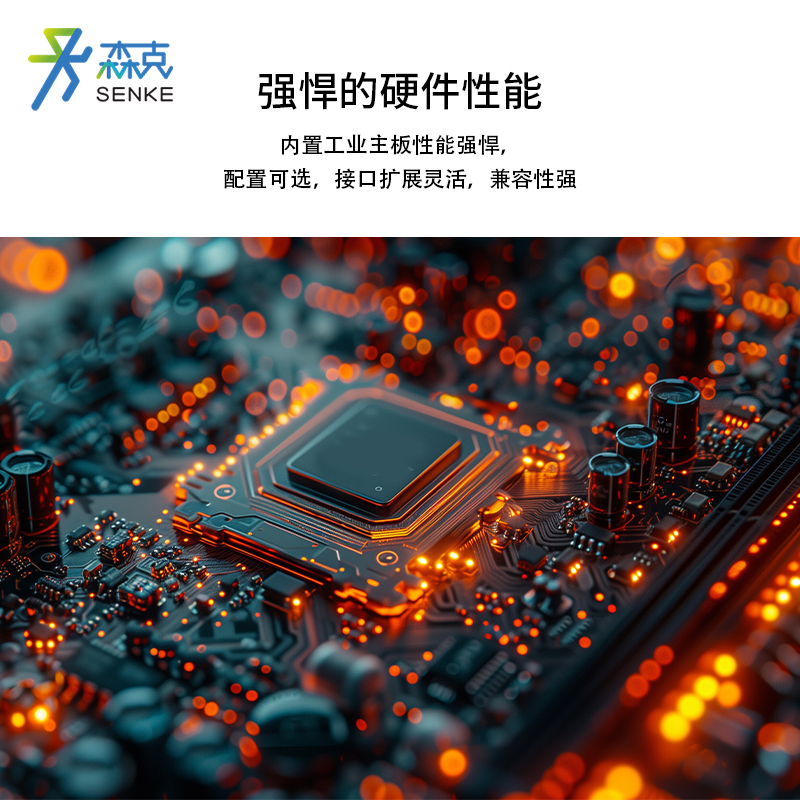
- Motherboards and Processors: Enterprises have independently designed industrial-grade motherboards, adapting to domestic processors, reducing reliance on imported chips, and meeting the needs of high-security fields such as military and energy.
- Operating Systems: Supporting Windows, Linux, Android, and domestic Keryn, Wuxi Suning, etc., systems, achieving full-chain domestication of industrial display equipment, ensuring data security.
(2) Industrial-grade Performance Enhancement: Meeting Harsh Environmental Requirements
The industrial environment features high temperatures, high humidity, dust, vibration, and electromagnetic interference, which impose stringent requirements on the stability of display devices. Domestic enterprises have achieved comprehensive performance upgrades through technological innovation:
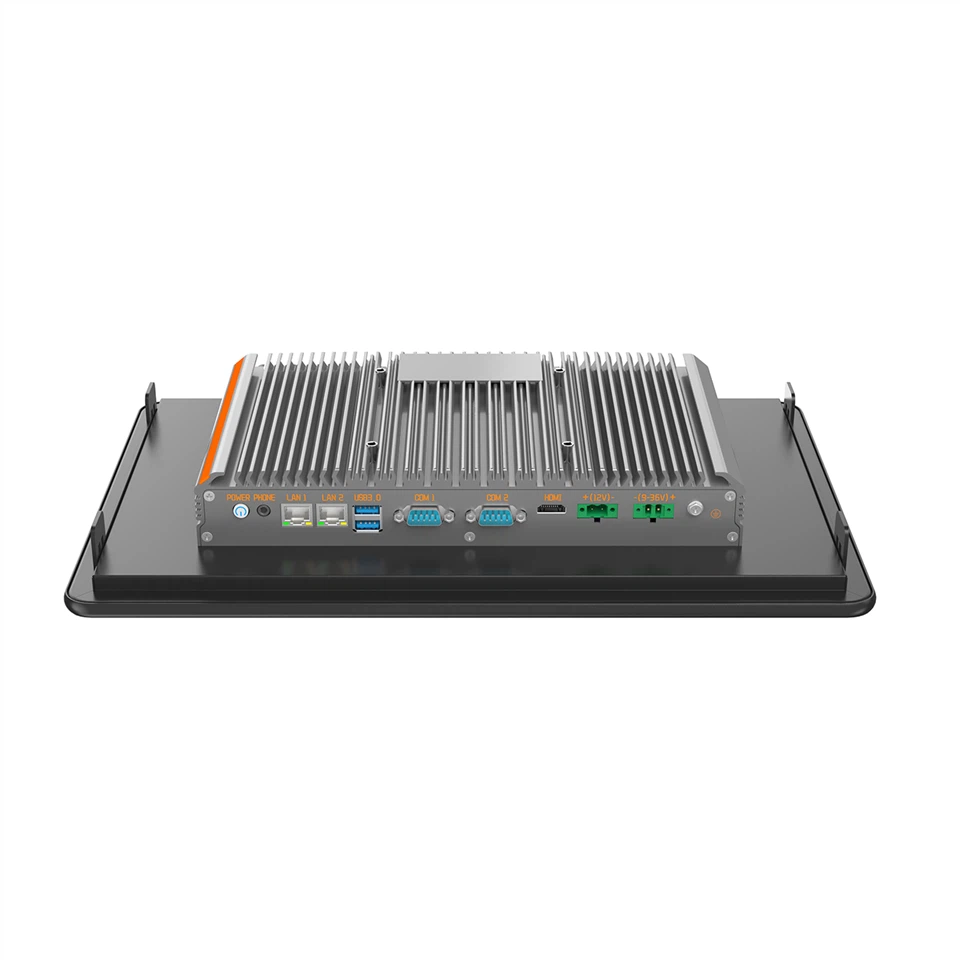
- Wide Temperature and Protection Technologies: Develop wide-temperature driver chips and cooling solutions to ensure stable operation within the range of -30°C to 85°C; adopt fully enclosed fanless design, aluminum/stainless steel body, with protection levels of IP65/IP67, featuring dustproof, waterproof, corrosion-resistant, and anti-electromagnetic interference capabilities.
- Damping and Durability Technologies: Optimize structural design, pass vibration and shock tests, and adapt to complex working conditions such as workshops, vehicles, and outdoors; use long-life LED backlight, with a lifespan exceeding 50,000 hours, reducing maintenance costs.
- Signal Compatibility Technologies: Independently develop anti-interference signal transmission protocols, compatible with mainstream industrial communication protocols such as Modbus, CAN, and OPC UA, capable of connecting to PLC, MES, and SCADA industrial systems, achieving data interconnection.
(III) Intelligent Integration: From “Display Terminal” to “Intelligent Hub”
With the development of AI and edge computing technologies, industrial displays have evolved from simple display devices to integrated industrial intelligent terminals that incorporate data collection, edge computing, and intelligent interaction:
- AI Empowerment: Integrated with AI image enhancement, scene recognition, and dynamic dimming algorithms, they are suitable for different industrial display requirements; some products are equipped with edge AI modules to achieve functions such as defect detection and data prediction analysis.
- Edge Computing Integration: Equipped with a low-power processor, it supports local data processing and storage, reducing reliance on the cloud and improving data transmission efficiency and security.
- Function Expansion: Integrated with modules such as IC cards, NFC, cameras, and sensors, they are suitable for scenarios such as access control systems, card-based attendance, and environmental monitoring, enabling “one screen for multiple uses”.
III. Product and Model Upgrade: Building Comprehensive Service Capabilities
The technological breakthroughs ultimately translate into products and services. Chinese industrial display enterprises have achieved an upgrade from “selling hardware” to “providing solutions” through product matrix expansion, customized services deepening, and business model transformation.
(I) Product Matrix: From Standardization to Full-Scale Coverage
The enterprise has abandoned the single standardized product model and constructed a full-scale product matrix covering various sizes, forms, and industries:
- Core Categories: Fully enclosed industrial touch一体机, embedded/ rack-mounted industrial display monitors, waterproof industrial display equipment, miniature industrial hosts, etc. The sizes range from 7 inches to 32 inches, suitable for general scenarios such as factory workshops, CNC equipment, power monitoring, food and medicine industries, etc.
- Specialized Products for Specific Scenarios: For special scenarios such as smart mines, vehicles, medical imaging, and new energy, specialized terminals with features like explosion-proof, shock-resistant, antibacterial, and high brightness are launched to meet industry-specific demands.
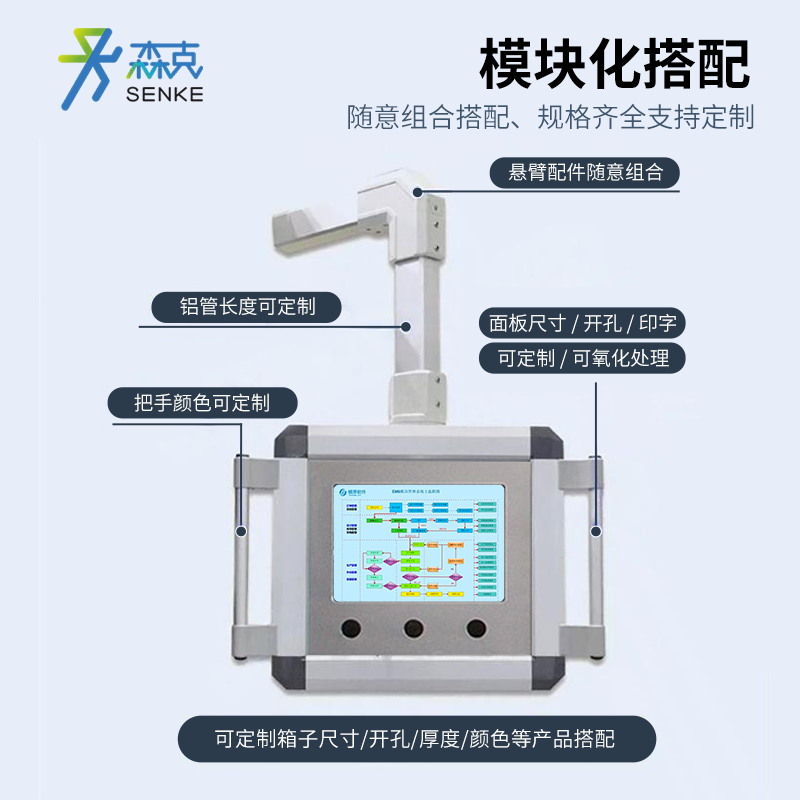
- Modular Design: The display module, driving circuit, and touch control unit are separated into standardized modules, enabling quick combination and customization, thereby shortening the delivery cycle.
(2) Customized Services: Meeting the “One Factory, One Model” Demand
Customization capability has become the core competitiveness of enterprises. Domestic enterprises have established a complete “demand – research and development – testing – delivery – after-sales” customized service system:
- Quick Response: In response to customer needs, adjustments can be made to dimensions, interfaces, protection levels, system configurations, etc. Some enterprises have shortened the delivery cycle to 7 days.
- Industry-specific Solutions: Provide exclusive solutions for industries such as automotive manufacturing, electronic processing, and logistics and warehousing, deeply adapting to the production processes and management requirements of the industries.
- Full Lifecycle Services: Offer services such as installation and commissioning, remote operation and maintenance, firmware upgrades, and fault repairs to ensure the stable operation of the equipment and enhance customer loyalty.
(III) Business Model Transformation: From Hardware to “Hardware + Software + Services”
Enterprises break away from the traditional hardware sales model and transform into comprehensive solution providers:
- Integrated Solution: Offer an integrated solution of “display hardware + embedded system + industrial software + operation and maintenance services”, reducing the integration costs for customers and enhancing the product’s added value.
- Ecological Collaboration: Collaborate with industrial automation enterprises, software developers, and system integrators to build an industrial display ecosystem, expanding application scenarios.
- Service Value Enhancement: Introduce value-added services such as remote monitoring, predictive maintenance, and data visualization, achieving a transition from one-time sales to continuous services.
IV. Typical Enterprise Practices: Benchmark Cases of Innovation Breakthrough
(I) BOE: Industrial Ecosystem Layout of the Leading Panel Company
As the global leader in display panels, BOE leverages its panel production capacity and technological advantages to establish an industrial display value chain:
- Technical Advantages: Independently develops industrial-grade LCD and Mini LED panels, featuring high resolution, high contrast ratio, and wide temperature range, suitable for large-scale industrial applications.
- Product Layout: Offers products such as industrial display modules, touch control all-in-one machines, and intelligent HMI terminals, covering areas such as intelligent manufacturing, rail transit, and healthcare.
- Ecological Collaboration: Collaborates with industrial automation enterprises to launch “panel + motherboard + system” integrated solutions, accelerating the domestic substitution of industrial display equipment.
(2) Senke: Full-Chain Innovation of Specialized Enterprises
As a specialized enterprise deeply involved in industrial display, Senke focuses on “independent research and development + full-scenario customization” to achieve differentiated breakthroughs:
- Technology Self-Development: The R&D team accounts for 20%, with over 100 core patents. They independently design industrial-grade motherboards, touch control solutions, and cooling structures, achieving independent control of core technologies.
- Product Matrix: It has a complete range of products including fully enclosed touch一体 machines, embedded industrial control displays, miniature industrial hosts, and industry-specific terminals, covering sizes from 7 to 27 inches, suitable for various industrial scenarios.
- Customized Services: It offers rapid customization and industry-specific solutions, with short delivery cycles. The service network covers the entire country, providing customers with full lifecycle support.
(3) Tianma Microelectronics: Deep Vertical Focus in Small and Medium-sized Display Sectors
Tianma Microelectronics focuses on small and medium-sized industrial displays. By adopting the “wide coverage + deep vertical” strategy, it has established advantages in specific sectors:
- Technical Features: Achieved breakthroughs in high-brightness, wide-temperature, and anti-interference display technologies for small and medium-sized screens. It launched full-lamination touch screens, pre-installed lightweight Linux systems, and supports mainstream industrial protocols.
- Scene Focus: Deeply specialized in industrial HMI, handheld medical equipment, rail transportation and other specific sectors, providing highly adaptable products and solutions, and accumulating a large number of industry cases.
V. Future Trends: Continuous Innovation, Leading the New Development of Industrial Display
(I) Technological Trends
- Large-scale Application of Frontier Technologies: Mini LED, Micro LED, printed OLED, etc. are gradually introduced into the high-end industrial market, enhancing display quality and performance; flexible display, transparent display, etc. have achieved breakthroughs in special scenarios.
- Deepen Domestic Production: The self-reliance rate of industrial-level chips, motherboards, systems and other core components continues to increase, and full-chain domestic production has become the mainstream, ensuring supply chain security.
- Intelligent Upgrade: The deep integration of AI and edge computing makes industrial displays the core intelligent terminal of the industrial Internet of Things, enabling real-time data analysis, intelligent decision-making and remote control.
(II) Market Trends
- Enhanced Customization in Scenarios: Moving from general products to industry-specific solutions, customized services have become the core competitiveness of enterprises, meeting the diverse industrial demands of “one factory, one solution”.
- Global Market Expansion: Leveraging technological and cost advantages, Chinese industrial display enterprises are accelerating their overseas expansion, entering emerging markets such as Southeast Asia, the Middle East, and Latin America, and increasing their global market share.
- Increased Industry Concentration: Small and medium-sized enterprises with weak technical capabilities and insufficient service capabilities are gradually being eliminated. Headline enterprises and specialized enterprises dominate the market, and the industry landscape is becoming more stable.
VI. Conclusion
The path of innovation breakthrough for Chinese industrial display enterprises is a microcosm of China’s manufacturing industry’s transformation from “large” to “strong”. From the autonomy of core technologies to the full-scenario coverage of products and services, from hardware sales to the provision of comprehensive solutions, enterprises have gradually shaken off their reliance on imported technologies through continuous innovation, and have established differentiated competitiveness in the global industrial display market.
In the future, as intelligent manufacturing and industrial Internet of Things continue to develop, the technical and application boundaries of industrial displays will keep expanding. Only by adhering to independent innovation, deeply exploring scenario demands, and strengthening service capabilities can Chinese enterprises continuously break through in the global competition and become the core supporting force for industrial digital transformation, promoting China from a “display power” to a “display strong country”.