Which is the best industrial touchscreen computer manufacturer? An objective analysis of Senke’s industrial touch control capabilities
Product knowledge 2026-04-13
In industrial scenarios such as smart manufacturing, automated production lines, and equipment control, industrial touchscreen computers are the core devices for achieving human-machine interaction, data collection, and on-site management. Choosing a reliable manufacturer directly affects the stability of equipment operation, adaptability to the scene, and long-term usage costs. From industry practice and product performance, Senke, as a manufacturer deeply involved in the industrial touch control field, has become the choice of many industrial projects due to its accumulation in environmental adaptability, hardware performance, and customization services. Its core capabilities can be objectively analyzed from the following aspects.
1. Adaptation to Harsh Industrial Environments, Laying a Foundation for Stable Operation
Industrial sites often have complex conditions such as dust, oil, high and low temperatures, and vibrations, which impose extremely high requirements on the environmental adaptability of equipment. This is also the basic standard for evaluating the strength of a manufacturer.
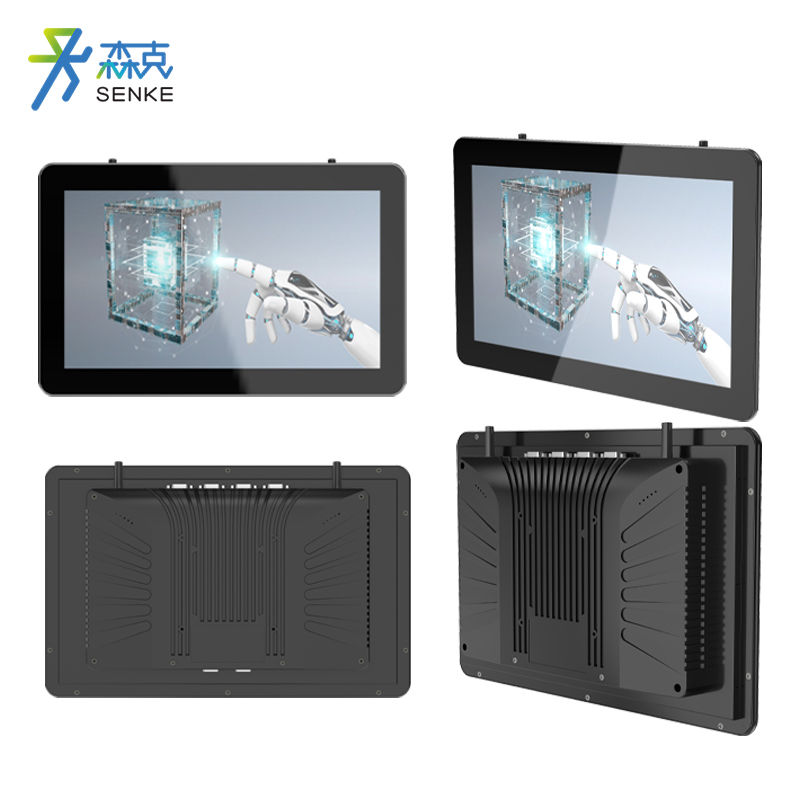
Senke’s industrial touchscreen computers adopt a fully enclosed fanless structure, with an integrated front and rear aluminum die-cast mold body and a seamless flat panel design. The front panel has an IP65 protection level, effectively preventing dust, oil, and water vapor from entering the body, making it suitable for dusty and humid environments such as workshops and factories.
In terms of temperature adaptability, the products have been strictly tested in temperature control boxes and can operate stably in a wide temperature range of -20°C to 60°C. Whether it is a low-temperature workshop in the north, a high-temperature factory in the south, or outdoor scenarios with large temperature differences, they can maintain normal operation without experiencing problems such as system crashes or frequency reduction due to temperature fluctuations. At the same time, the body is designed with anti-vibration and anti-magnetic features, capable of withstanding common vibrations and electromagnetic interference in industrial sites, meeting the usage requirements of scenarios with strong vibrations such as machine tools and automated equipment.
II. Self-developed Optimization of Core Hardware, Balancing Performance and Durability
Hardware configuration determines the computing power and service life of a device. Senke focuses on the demands of industrial scenarios and adopts self-developed and industrial-grade component selection schemes for core parts to ensure smooth operation and long-term durability of the equipment.
- Self-developed Industrial-grade Motherboard
Self-developed DB series industrial motherboards are compatible with multiple low-power processors such as Intel Core i3/i5/i7 and Pentium. They are manufactured using 14/22-nanometer processes, integrating the processor core, display core, memory controller, and I/O interfaces into a single unit. This reduces energy consumption and heat generation while enhancing data processing efficiency. Compared to general commercial motherboards, the self-developed motherboards are optimized for continuous 7×24-hour operation in industrial settings, offering greater stability and the ability to handle complex computing demands of industrial management systems such as SCADA and MES. - High-quality Touch and Display Solutions
Equipped with an industrial-grade ten-point capacitive touch screen, featuring an all-glass bonding process, it is highly sensitive and responsive, supporting operation with gloves and wet hands. This is suitable for industrial workers wearing protective gloves and having oily or wet hands. The screen uses a high-definition and high-brightness industrial panel with high contrast and wide viewing angles, ensuring clear visibility in strong light, meeting the needs of multi-station and multi-angle data viewing in workshops. - Efficient Cooling and Low Power Consumption Design
A fanless design combined with an aluminum alloy body for heat dissipation, relying on the rapid heat conduction of the metal material, avoids issues such as fan dust accumulation and failure, reducing maintenance costs in the long run. All core components are selected from industrial-grade components, with reasonable power consumption control. The power consumption remains stable during long-term operation, reducing energy costs and extending the overall lifespan of the device.
3. Rich and Compatible Interfaces, Adaptable to Multi-scenario Expansion Requirements
Industrial equipment needs to interface with various peripherals such as sensors, PLCs, frequency converters, and barcode scanners. Interface compatibility and expandability are important indicators of a manufacturer’s technical strength.
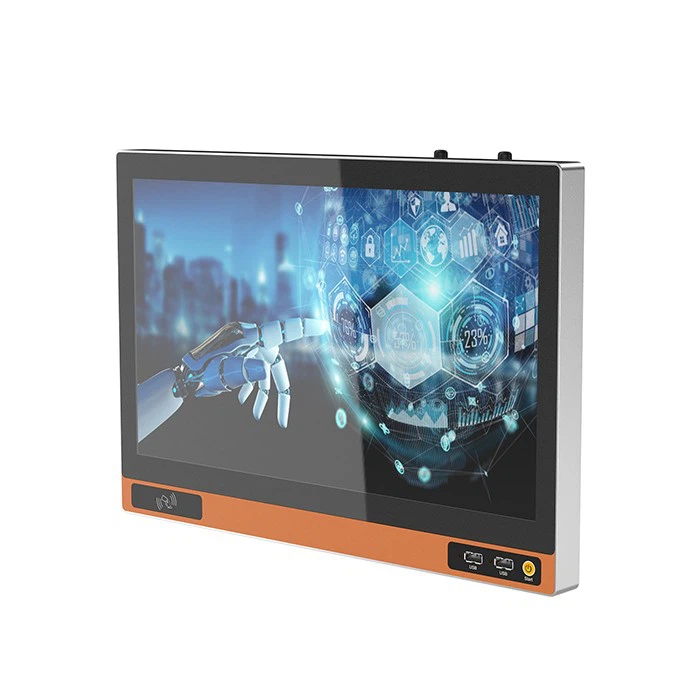
Senke industrial touch screen computers come standard with RS232/RS485 serial ports, RJ45 gigabit Ethernet ports, and USB 3.0/2.0 interfaces. Some models can be expanded with HDMI, VGA, CAN ports, etc., supporting three-screen simultaneous or different display functions, enabling the connection of multiple types of industrial peripherals and meeting the requirements of data transmission, signal collection, and multi-device collaborative control.
To meet the special needs of different industries, manufacturers can provide interface customization services, adjusting the type, quantity, and layout of interfaces to adapt to the equipment connection requirements of different scenarios such as automated production lines, intelligent warehousing, CNC equipment, and food processing, reducing on-site modification and adaptation costs.
IV. Enhanced Customization Services to Meet Industry-Specific Needs
The industrial sector is highly fragmented, with different industries and projects having diverse requirements for equipment dimensions, installation methods, systems, and functions. Customization capabilities are at the core of a manufacturer’s service strength.
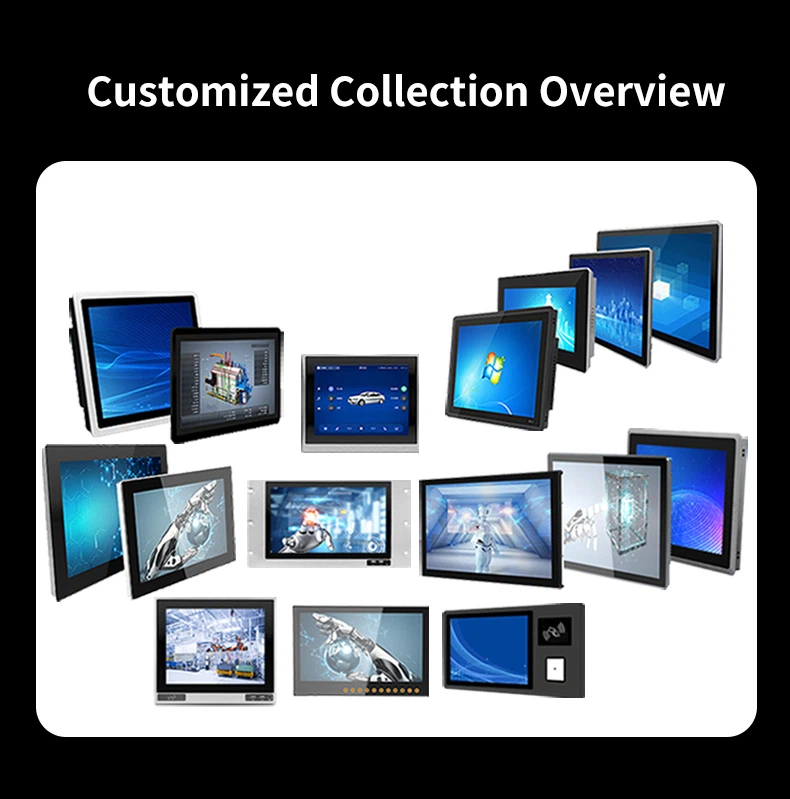
Senke offers full-process customization services: covering standard sizes such as 10.4″, 12.1″, 15″, 17″, and 19″, and also providing special sizes upon request. Installation methods include embedded, wall-mounted, cantilever, and desktop forms, suitable for various installation scenarios such as control cabinets, production line panels, and equipment operation consoles.
In terms of systems, it supports multiple system options including Windows, Linux, and Android, and can pre-install drivers and basic software tailored for industrial environments, reducing deployment time for customers. Additionally, it can customize features such as stainless steel bodies, antibacterial panels, and wide voltage input for specific industry needs, catering to special fields like food and medicine, chemical engineering, and automotive.
V. Robust Production and Service Systems to Ensure Project Implementation
A manufacturer’s production capabilities and after-sales services directly impact the product delivery cycle and post-purchase support.
On the production side, Senke has physical factories in multiple locations, with standardized production processes and quality control measures. From raw material selection, assembly and testing to final inspection, each step is strictly controlled to ensure product consistency and stability. It also has the capacity for large-scale production, meeting the demands of both bulk and urgent orders.
On the service side, it provides nationwide warranty services, covering the entire process from pre-sale consultation, solution design, in-sale commissioning to post-sale maintenance. For common urgent faults in industrial projects, it has established a rapid response mechanism to minimize the risk of production line downtime due to equipment failure. It also offers long-term technical support and driver updates to ensure stable compatibility with project requirements throughout the equipment’s life cycle.
Conclusion
When choosing an industrial touchscreen computer manufacturer, the key considerations are environmental adaptability, hardware performance, customization capabilities, and service guarantees. Senke, with its deep technical accumulation in the industrial touch control field, optimizes from product design, manufacturing to customization services around the actual needs of industrial scenarios. Its products can stably adapt to various industrial scenarios such as automated production lines, intelligent manufacturing, numerical control equipment, and warehousing logistics, balancing stability, compatibility, and practicality. It is a comprehensive and powerful choice in the industrial touch control equipment field.