What operating systems are available for industrial control all-in-one computers and how can one make an informed choice?
Product knowledge 2026-02-04
What operating systems are available for industrial control all-in-one computers and how can one make an informed choice?
Common operating systems for industrial control all-in-one computers
Windows series operating systems
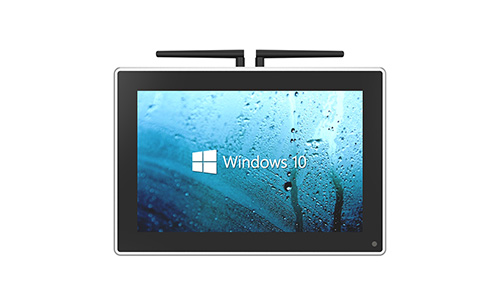
Windows Embedded and Windows 10 IoT are among the common operating systems used in the industrial sector. The Windows system has significant advantages in user interface, software compatibility, and development tool support, and is thus widely applied in industrial automation, monitoring, data collection, and other scenarios.
Applicable scenarios: Suitable for industrial environments that require high compatibility and a strong user interface, such as production monitoring, data display, and equipment control.
Windows Embedded: This version of Windows has been optimized for embedded devices, featuring greater stability and stronger customizability. It is suitable for industrial environments that require long-term stable operation and supports various industrial protocols and interfaces, facilitating the integration of various devices and peripherals.
Windows 10 IoT: Compared to Windows Embedded, Windows 10 IoT places greater emphasis on support for the Internet of Things (IoT) and smart devices, and is suitable for scenarios such as data collection, intelligent manufacturing, and IoT applications. It offers the powerful compatibility of Windows, while optimizing resource usage and security, making it suitable for some applications that have certain requirements for computing power.
Linux series operating systems
Linux is an open-source operating system with high degree of customizability and stability, thus it has been widely applied in the field of industrial automation. Compared with the Windows system, Linux usually performs better in terms of performance, resource consumption and system security.
Applicable scenarios: Suitable for industrial environments that require high performance, long-term stability, and customization needs, especially in automated production lines, data collection, and embedded devices.
Ubuntu: As a popular Linux distribution, Ubuntu has become the preferred choice for many industrial control systems due to its user-friendly interface and strong developer community. It is suitable for developing and deploying various industrial applications, and is widely used in embedded devices.
Debian, CentOS, Red Hat: These Linux distributions are also widely used in industrial equipment, especially in environments that require high reliability and long-term stable operation. The Linux system can achieve precise hardware control and optimization, and is suitable for industrial control, data processing, and IoT devices, etc.
RTOS (Real-Time Operating System)
RTOS (Real-Time Operating System) is an operating system specifically designed for real-time applications. It can respond within the specified time frame and ensure that tasks are completed on time. This type of operating system is very common in industrial control systems where strict response times are required.
Applicable scenarios: Suitable for industrial environments with high requirements for real-time performance, such as robot control, automated production lines, and complex equipment management.
VxWorks, FreeRTOS, QNX: These are common RTOS (Real-Time Operating Systems) that are widely used in devices requiring high real-time performance and low latency, such as automated control systems, robot control, medical equipment, drones, etc. RTOS has precise time management and task scheduling capabilities, ensuring that critical tasks are executed promptly.
Android operating system
Although Android was initially designed as an operating system for smartphones, its openness and strong development support have enabled it to gradually enter the industrial sector. Many industrial control all-in-one machines have also begun to support the Android system, especially in scenarios that require graphical interfaces and touch interaction.
Applicable scenarios: Suitable for industrial applications that require a graphical interface, touch operation, or interconnection with other intelligent devices, such as intelligent device management, industrial terminals, information query systems, etc.
Android: As a graphical operating system, Android offers a wide range of development tools and a large number of application support, especially suitable for intelligent and mobile industrial equipment such as self-service terminals, intelligent POS machines, industrial data acquisition terminals, etc. The development ecosystem of Android is extensive and easy for secondary development, enabling it to flexibly meet users’ customized needs.