How to Adapt Industrial Touchscreen Computers in China to Complex Industrial Environments
Product knowledge 2026-03-24
The complexity of the industrial environment is one of the core challenges faced by the operation of industrial equipment. Factors such as dust, oil contamination, vibration, temperature fluctuations, and electromagnetic interference all affect the stability and lifespan of terminal devices. Industrial touch screen computers in China, as the core carrier of human-machine interaction in industrial sites, need to adopt targeted design, technical optimization, and scenario adaptation to cope with various complex working conditions and ensure long-term stable operation. Based on the actual situation of industrial sites, this article analyzes the core characteristics and challenges of complex industrial environments, elaborates on the adaptation technologies and implementation paths of industrial touch screen computers in China, and provides references for equipment selection and application in industrial scenarios.
I. Core Characteristics of Complex Industrial Environments and Adaptation Challenges
The industrial scenarios are diverse, covering fields such as mechanical processing, chemical engineering, energy and power, mining, logistics and warehousing, etc. The complexity and interference factors of different scenarios vary, but the core challenges mainly lie in environmental interference, operational requirements and equipment coordination. These all impose clear requirements on the adaptability of industrial touch screen computers.
(1) The environmental interference factors are complex and diverse.
Various interferences in complex industrial environments are the main factors affecting the operation of equipment. In scenarios such as mechanical processing and mining, large amounts of dust and metal debris will invade the equipment interior, causing wear on components and blocking interfaces, resulting in equipment failures; in scenarios like chemical production and food processing, oil stains, corrosive gases, and moisture will corrode the equipment’s outer shell and internal circuits, affecting the stability of the equipment; most industrial sites have continuous vibrations, which will cause loose equipment interfaces and component detachment, affecting data transmission and operation response; temperature fluctuations between high and low are also common challenges. High-temperature environments will cause the equipment to overheat and freeze, while low-temperature environments may result in screen failure and reduced battery life, especially in outdoor industrial scenarios and northern winter conditions. Moreover, equipment such as frequency converters and motors in industrial sites will generate electromagnetic interference, which may cause touchscreen signal disorder and operational errors.
(2) The requirement for continuous operation is extremely strict.
Industrial production is mostly carried out in a continuous manner. In most scenarios, the equipment needs to operate continuously without interruption for 24 hours a day, seven days a week. This places higher demands on the stability, heat dissipation capacity, and durability of industrial touch screen computers. Unlike consumer-grade devices, industrial terminals must have the ability to run without failures for a long time to avoid disruptions, crashes, or shutdowns due to equipment issues, which can affect the production rhythm and efficiency. This requires that in terms of hardware selection, structural design, and system optimization, the equipment should all be oriented towards “continuous stability” as the core principle.
(3) The requirements for equipment coordination and adaptation are very high.
In complex industrial scenarios, industrial touch screen computers need to connect with various industrial control devices such as PLCs, sensors, frequency converters, and actuators, while also being compatible with industrial systems like MES and SCADA, to achieve two-way interaction for command issuance, data collection, and status feedback. This requires the equipment to have a rich interface configuration and good protocol compatibility, be able to withstand interference in industrial environments, ensure stable data transmission, and avoid production process disruptions due to poor coordination.
II. Core Technologies and Implementation Paths for Industrial Touchscreen Computers in China to Adapt to Complex Industrial Environments
The industrial touch screen computers in China have addressed various challenges in complex industrial environments by optimizing the structure design, upgrading the hardware selection, and adjusting the software configuration in multiple dimensions. They have thus developed a mature adaptation solution, mainly focusing on four aspects: environmental protection, stable operation, interaction adaptation, and collaborative compatibility. This ensures that the equipment can meet the actual needs of industrial sites.
(1) Structure and Protection Design: Resisting External Environmental Interference
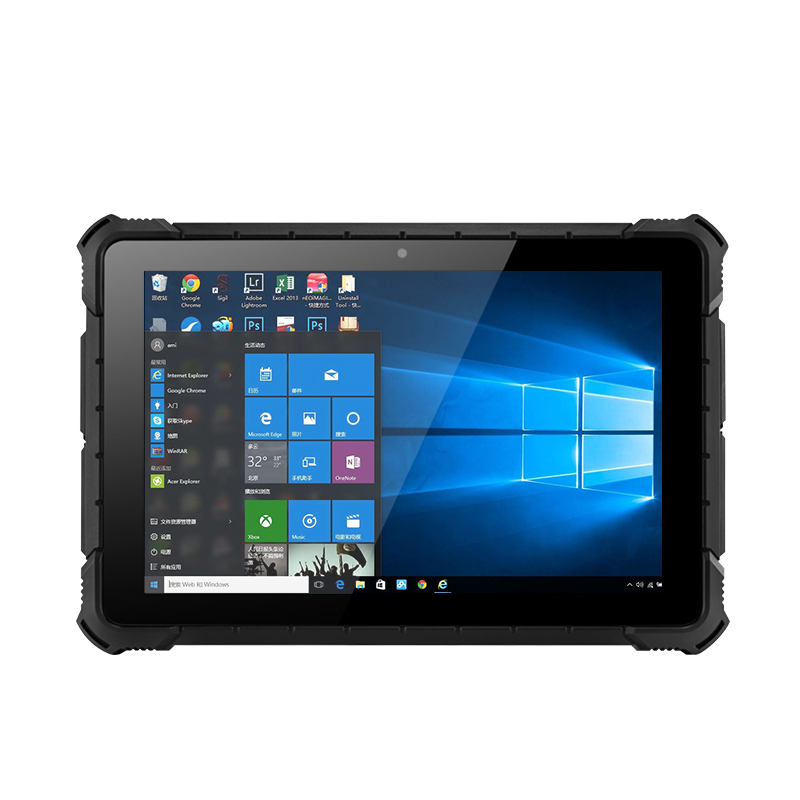
Structural and protective design is the foundation for equipment to adapt to complex environments. The core lies in implementing designs such as sealing, reinforcement, and anti-corrosion to isolate external interference and protect internal components. Most Chinese industrial touch screen computers adopt an integrated reinforced chassis design. They select industrial-grade materials that are wear-resistant, corrosion-resistant, and shock-resistant, reducing the impact of vibration and collision on the equipment. At the same time, they adopt a sealed structure design to enhance the equipment’s dust-proof, water-proof, and oil-proof capabilities. The commonly used protection grades can reach IP65 and above. Some special scene products can achieve higher protection grades, which can effectively resist the invasion of dust, oil, and moisture, and are suitable for harsh environments such as mechanical processing and chemical industries.
To address vibration interference, the equipment optimizes its internal structure layout, adopts shock-proof interfaces, reinforced screws and cushioning materials to fix the core components and interfaces, thereby reducing the impact of vibration on the circuit and interfaces, and preventing problems such as loose interfaces and component detachment. For environments with both high and low temperatures, the equipment selects wide-temperature components and screens, optimizes the body’s heat dissipation design, and most products can support a wide temperature operating range of -10°C to 60°C. Some special products can cover a wider temperature range. Through fanless cooling or efficient fan cooling solutions, the equipment ensures that it will not experience overheating, lagging or screen failure in both high and low temperature environments.
(2) Hardware selection and optimization: Ensuring long-term stable operation
Hardware is the core support for the stable operation of equipment. In the hardware selection of Chinese industrial touch screen computers, industrial-grade components are given priority. Different from consumer-grade components, industrial-grade components have higher durability, anti-interference ability and stability, and can meet the operational requirements of complex industrial environments. The main control chip uses industrial-grade CPUs or embedded processors, balancing computing power and low power consumption. This avoids data processing lag due to insufficient computing power. At the same time, through low-power design, it reduces equipment energy consumption, reduces heat generation, and improves the stability of long-term operation. Memory and storage use industrial-grade products, featuring anti-vibration and wide temperature compatibility, to avoid data loss or storage failures due to vibration or temperature changes.
The selection of the touch module also meets the requirements of industrial scenarios. For scenarios involving dust, oil stains, and glove-wearing operations, resistive touch modules are preferred, as they have the advantages of resisting oil stains, dust, and precise pressing. For scenarios that require high sensitivity and multi-point touch, capacitive touch modules are selected, and the touch control algorithm is optimized to enhance the anti-interference ability and avoid interference from electromagnetic waves and moisture affecting the touch response. In addition, industrial-grade waterproof and anti-vibration interfaces are selected for the device interfaces, and some interfaces are equipped with sealed protection covers to further improve the durability and anti-interference ability of the interfaces, ensuring the stability of the connection between the equipment and surrounding industrial control devices.
(3) Touch Control and Operation Adaptation: Tailored to On-site Work Requirements
In complex industrial scenarios, the operating environment for workers is often harsh, with situations such as wearing gloves, damp hands, and intense on-site lighting. Chinese industrial touch screen computers address these issues by optimizing touch control technology and the operation interface to meet the needs of on-site work. In terms of touch response, the touch control algorithm is optimized to enhance touch sensitivity and accuracy. Resistive touch control supports operation with gloves on, while capacitive touch control can accommodate wet hands. This avoids operational errors caused by environmental limitations. In terms of display effect, high-brightness and high-contrast industrial-grade screens are selected to improve the screen’s visibility in strong light environments, preventing data from being illegibly read due to excessive light. At the same time, the operation interface is optimized, adopting a simple and intuitive visual design to simplify the operation process and reduce the learning and operation costs for workers, adapting to the actual needs of frontline operations.
(4) Software and Protocol Adaptation: Achieving Stable Co-Operation Among Multiple Devices
In complex industrial scenarios, the stability of equipment collaboration directly affects the production process. The Chinese industrial touch screen computers ensure smooth collaboration with various industrial control devices and industrial systems through software optimization and protocol adaptation. At the software level, they are equipped with industrial-grade operating systems, which have been streamlined and optimized. The background processes are simple, reducing the occurrence of crashes and lagging, and they also have strong anti-interference capabilities, capable of withstanding electromagnetic interference in industrial sites, ensuring stable system operation. At the same time, they support remote diagnosis and remote maintenance functions. Maintenance personnel can remotely view the equipment operation status and troubleshoot faults through the network, reducing on-site maintenance workload and improving equipment maintenance efficiency.
In terms of protocol adaptation, the equipment supports mainstream industrial communication protocols such as Modbus, Profinet, and EtherNet/IP, and can seamlessly connect with various industrial control devices including PLCs, sensors, and frequency converters, enabling two-way interaction for data collection and command issuance. At the same time, customized industrial protocols can be adapted according to on-site requirements, reducing the debugging costs for equipment connection and ensuring that the equipment can quickly integrate into the existing industrial system and achieve stable operation of multiple devices in coordination. Additionally, the software has data encryption and backup functions to prevent data loss due to environmental interference, ensuring the security and integrity of production data.
III. Practical Cases of Adaptation in Different Complex Scenarios
The industrial touch screen computers of China have developed targeted adaptation solutions for various complex industrial scenarios. The effectiveness of these adaptations has been verified through practical applications. The following examples illustrate this through typical scenarios.
(1) Adaptation for mechanical processing scenarios
The mechanical processing environment is characterized by high levels of dust, strong vibrations, and heavy oil contamination, and the equipment needs to operate continuously for long periods. Industrial touchscreen computers suitable for such scenarios adopt sealed structures with IP65 or higher protection levels to prevent dust and oil from entering; they use anti-vibration interfaces and reinforced bodies to reduce the impact of mechanical vibrations on the equipment; they employ a fanless cooling solution to avoid dust blocking the cooling channels; they use resistive touch modules that support glove operation, adapting to the operating habits of frontline technicians, and also support seamless integration with CNC machines and PLCs, enabling program invocation, parameter setting, and status monitoring, ensuring the stability of the processing process.
(2) Adaptation to Chemical Industry Scenarios
Chemical production environments are subject to various interfering factors such as corrosive gases, moisture, and high temperatures, which impose high requirements on the corrosion resistance, waterproofing, and high-temperature tolerance of equipment. Products suitable for such scenarios should employ special materials with corrosion resistance and sealed structures to withstand the erosion of corrosive gases and moisture; adopt wide-temperature designs to adapt to the high-temperature environments around chemical reaction vessels; optimize circuit protection to prevent circuit short-circuits caused by corrosive gases; and support collaboration with chemical instruments and control systems, enabling real-time collection of parameters such as pressure, temperature, and flow rate, achieving precise regulation of process parameters and ensuring safe and stable production.
(III) Adaptation for Outdoor Industrial Environments
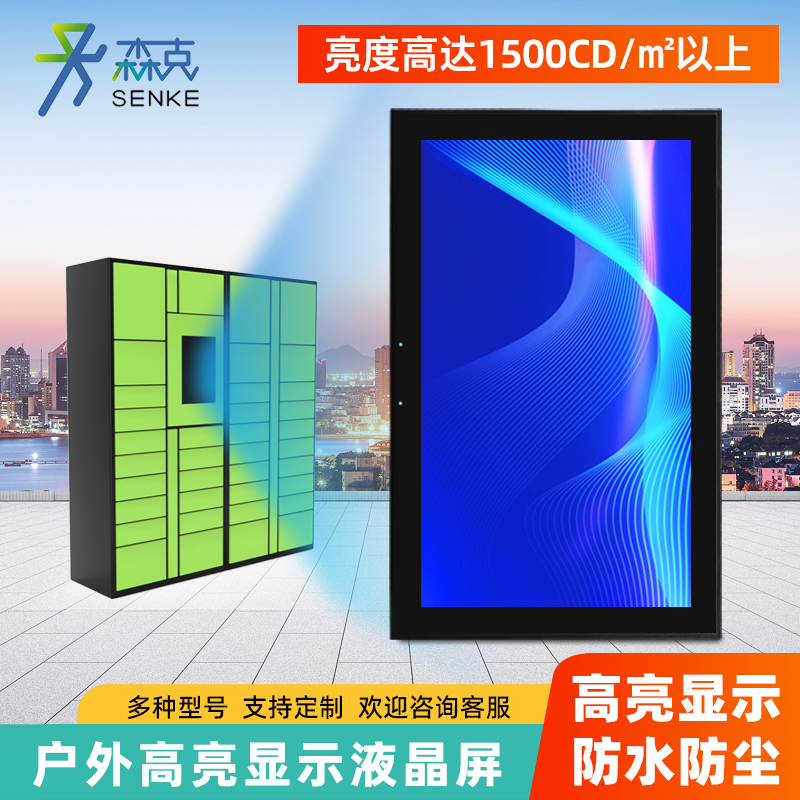
Outdoor industrial scenarios (such as photovoltaic power stations and outdoor inspection stations) encounter challenges such as temperature fluctuations, strong sunlight exposure, and water erosion. Products suitable for such scenarios adopt wide-temperature components and screens, which can operate stably within a temperature range of -20℃ to 70℃; they select high-brightness screens to enhance visibility in strong light conditions; use IP67 or higher protection levels to prevent water and dust intrusion; incorporate low-power technology to adapt to outdoor power supply conditions, and support wireless communication modules to achieve remote data transmission and monitoring, reducing on-site manual intervention.
IV. Notes and Directions for the Adaptation Process
In the process of adapting to complex industrial environments, industrial touch screen computers need to take into account the actual needs of the scenarios and avoid blindly pursuing high protection and high performance. They should adhere to the principle of “scenario adaptation and on-demand design”, balancing the adaptation effect and cost control. At the same time, attention should be paid to the later maintenance of the equipment. Products with modular design and strong component versatility should be selected to facilitate fault detection and replacement; the equipment should be cleaned and calibrated regularly to enhance its service life and operational stability.
In the future, as the industrial digitalization and intelligence continue to advance, the demands for complex industrial scenarios will become more refined. The adaptability of Chinese industrial touch screen computers will also keep upgrading. On one hand, the protective design and hardware selection will be further optimized to enhance the equipment’s adaptability to extreme environments, such as higher protection levels, a wider temperature range, and stronger anti-electromagnetic interference capabilities. On the other hand, edge computing and AI technologies will be integrated to achieve intelligent monitoring of the equipment’s operating status and early warning of abnormalities, enabling the early detection of faults and improving the stability and reliability of equipment operation. At the same time, the protocol adaptation capability will be further improved to achieve coordination with more types of industrial control equipment and industrial systems, meeting the diversified needs of complex industrial scenarios.
V. Conclusion
The diversity and harshness of complex industrial environments determine that the adaptability of industrial touch-screen computers is one of their core competencies. Chinese industrial touch-screen computers have gradually formed an adaptation solution that suits local industrial scenarios through optimized structural protection, upgraded hardware selection, software protocol adaptation, and optimized operation experience. They can effectively resist various disturbances such as dust, oil, vibration, high and low temperatures, etc., ensuring stable operation for a long time and meeting the human-computer interaction and equipment collaboration requirements of different complex industrial scenarios.
With the continuous upgrading of industrial scenarios and the continuous iteration of technologies, Chinese industrial touch screen computers will continue to make efforts in adapting to complex industrial environments, constantly optimizing the adaptation technologies and solutions, further enhancing the stability, durability and coordination of the equipment, providing more solid human-computer interaction support for the stable and efficient operation of industrial manufacturing, and helping to further promote the deepening of industrial automation and digital transformation.