Senke Industrial Display’s Multi-Scenario Compatibility Design and Cross-Domain Adaptation Technology
Product knowledge 2026-05-13
The diversity and complexity of industrial scenarios, as well as the differentiated requirements of cross-domain industrial equipment, have placed higher demands on the compatibility and adaptability of industrial displays. Based on the cross-domain application needs, Senke Industrial Displays has optimized its hardware design, software adaptation, and interface standards comprehensively to create industrial display terminals with multi-scenario compatibility, which can be adapted to various industrial scenarios such as mechanical manufacturing, chemical engineering, power, mining, and rail transit, solving the problems of poor compatibility and insufficient adaptability of traditional industrial displays, and enabling seamless collaborative operation across domains and multiple devices.
The optimization of hardware compatibility is the foundation of Senke Industrial Displays’ cross-domain adaptation. The equipment specifications and operating environments in different industrial fields vary greatly, and the hardware performance requirements for industrial displays also differ. Senke Industrial Displays adopts a standardized hardware architecture, with core components using industrial-grade general specifications, enabling hardware compatibility with industrial equipment from different fields. For example, in the mechanical manufacturing field, the equipment has a high vibration frequency, and Senke Industrial Displays uses an enhanced all-aluminum die-casting body to enhance anti-vibration and anti-shock capabilities, suitable for the vibration environment of the mechanical processing workshop; in the chemical field, the environment is highly corrosive, and the equipment adopts corrosion-resistant coating treatment, combined with a fully enclosed dust-proof and waterproof design, which can effectively resist corrosive gases and liquids; in the power field, the equipment has a high requirement for electromagnetic interference protection, and the display adopts enhanced electromagnetic shielding technology to resist strong electromagnetic interference generated by high-voltage equipment, ensuring stable operation.
The standardized design of interfaces is the key for Senke Industrial Displays to achieve cross-domain and multi-device compatibility. Different industrial equipment have different signal interface types and transmission protocols, and traditional industrial displays often can only adapt to a single type of interface, unable to meet the requirements of cross-domain applications. Senke Industrial Displays adopts multi-interface standardized design, integrating VGA, HDMI, DVI, USB, Gigabit Ethernet, etc., and supporting multiple industrial common transmission protocols such as Modbus, Profinet, and EtherNet/IP, enabling seamless connection with different types of PLCs, sensors, industrial control hosts, and monitoring devices, without the need for additional interface converters, reducing equipment connection costs and improving adaptation efficiency. For example, in the rail transit field, a Gigabit Ethernet interface can be used to connect with the train control system to display real-time train operation parameters; in the mining field, a USB interface can be used to connect data acquisition devices to display real-time mining environment data.
The flexibility of software adaptation further enhances Senke Industrial Displays’ cross-domain adaptation capabilities. Different industrial control systems and software platforms have differences, and the software compatibility requirements for displays are high. Senke Industrial Displays adopts a customizable software system, supporting personalized adaptation of display interfaces, data presentation modes, and operation processes according to the needs of different fields, and supporting the installation and operation of various industrial software, enabling seamless collaboration with different industrial control systems, big data platforms, and operation management systems. For example, in the power field, it can be adapted to power monitoring software to display grid operation parameters, fault alarm information, etc.; in the medical industrial control field, it can be adapted to medical equipment management software to precisely display medical equipment operation parameters, patient-related data, etc., meeting the special requirements of medical industrial control scenarios.
In response to environmental differences in cross-domain scenarios, Senke Industrial Displays adopts adaptive adjustment technology, which can automatically adjust the equipment operation parameters according to the environmental conditions of different fields to ensure stable operation. For instance, in outdoor industrial scenarios (such as rail transit, outdoor monitoring in mines), the display can automatically detect the ambient light intensity and adjust the screen brightness and contrast to avoid image blurring caused by strong light; in high-temperature and low-temperature environments (such as chemical high-temperature workshops, low-temperature storage in mines), the equipment can automatically activate the temperature regulation mechanism to adapt to the fluctuation of environmental temperature, without the need for additional heating or cooling equipment; in dusty and oily environments (such as mechanical processing, chemical production), the equipment can automatically activate the dust protection mode to optimize the cooling system and prevent dust blockage from causing poor heat dissipation.
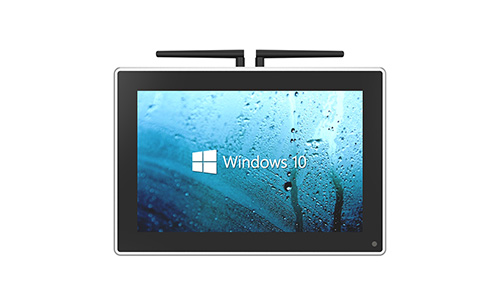
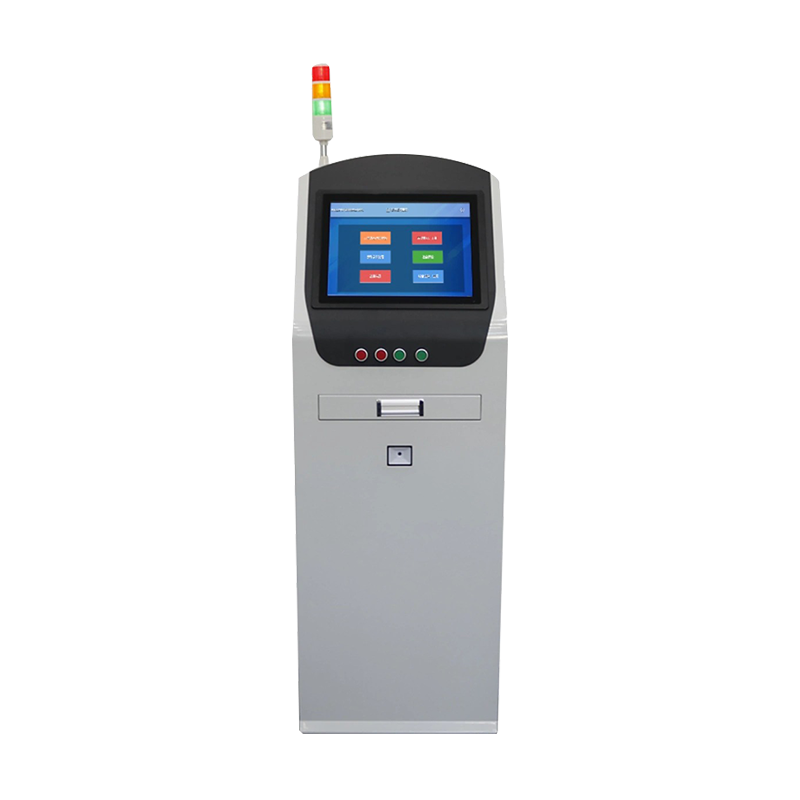
The compatibility of multiple installation methods further expands the cross-industry application scope of Senke industrial displays. The installation space and operational requirements in different industrial fields vary greatly, and the installation methods for displays also differ. Senke industrial displays support embedded, wall-mounted, bracket-mounted, and cantilevered installation methods, and each installation method adopts standardized design, which can adapt to different installation scenarios in various fields. For example, in equipment control cabinets (such as power control cabinets, chemical equipment control cabinets), embedded installation can be used, saving installation space and enhancing the overallity of the equipment; on workshop walls, monitoring centers (such as mechanical manufacturing workshops, rail transit monitoring centers), wall-mounted installation is suitable, facilitating operators to view; in mobile operation scenarios (such as mine inspection, outdoor operation), cantilevered installation can be used, allowing for flexible adjustment of the display angle and position, enhancing operational convenience.
In addition, Senke industrial displays focus on data security and stability in cross-industry applications. In software design, data encryption technology is integrated, which can encrypt the transmitted industrial data to prevent data leakage and tampering, suitable for fields with high requirements for data security such as power and medical. At the same time, the equipment adopts redundant design, with backup modules equipped for core modules. When a module fails, the backup module can automatically start, ensuring that the equipment does not stop running due to a single module failure, improving the operational reliability of the equipment, and meeting the continuous operation requirements of various industrial production fields.
In conclusion, Senke industrial displays achieve seamless adaptation across industries and multiple scenarios through hardware compatibility optimization, standardized interface design, flexible software adaptation, adaptive adjustment technology, and compatibility of multiple installation methods. They can meet the industrial scene requirements of various fields such as mechanical manufacturing, chemical, power, mines, and rail transit. Their compatibility design not only addresses the pain points of insufficient adaptability of traditional industrial displays but also reduces the cost of equipment replacement and connection across different fields, providing reliable human-computer interaction terminals support for the digital and intelligent transformation of various industrial fields, demonstrating the universality and practicality of industrial-grade display equipment.