China’s Industrial All-in-One Computers Empower Full-Scale Applications of Intelligent Manufacturing
Product knowledge 2026-03-25
During the digital transformation of the manufacturing industry, intelligent manufacturing is characterized by data interoperability, equipment collaboration, and process traceability, and it places comprehensive requirements on on-site terminal equipment, including stable operation, multi-device connectivity, and real-time data processing. China’s industrial all-in-one computers integrate computing, display, control, and communication functions, possess strong environmental adaptability, rich interfaces, and high scalability, and can be adapted to various industrial production processes, becoming an important hardware carrier in the implementation of intelligent manufacturing. This article focuses on typical application scenarios of intelligent manufacturing and analyzes the application methods and value of industrial all-in-one computers in different stages.
1. The Basic Position of Industrial All-in-One Computers in Intelligent Manufacturing
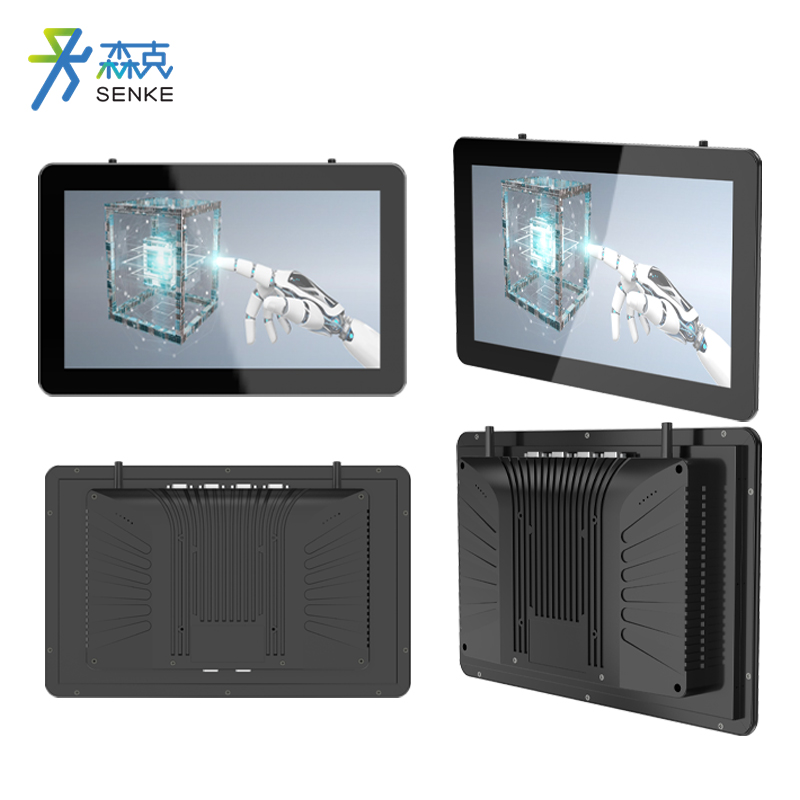
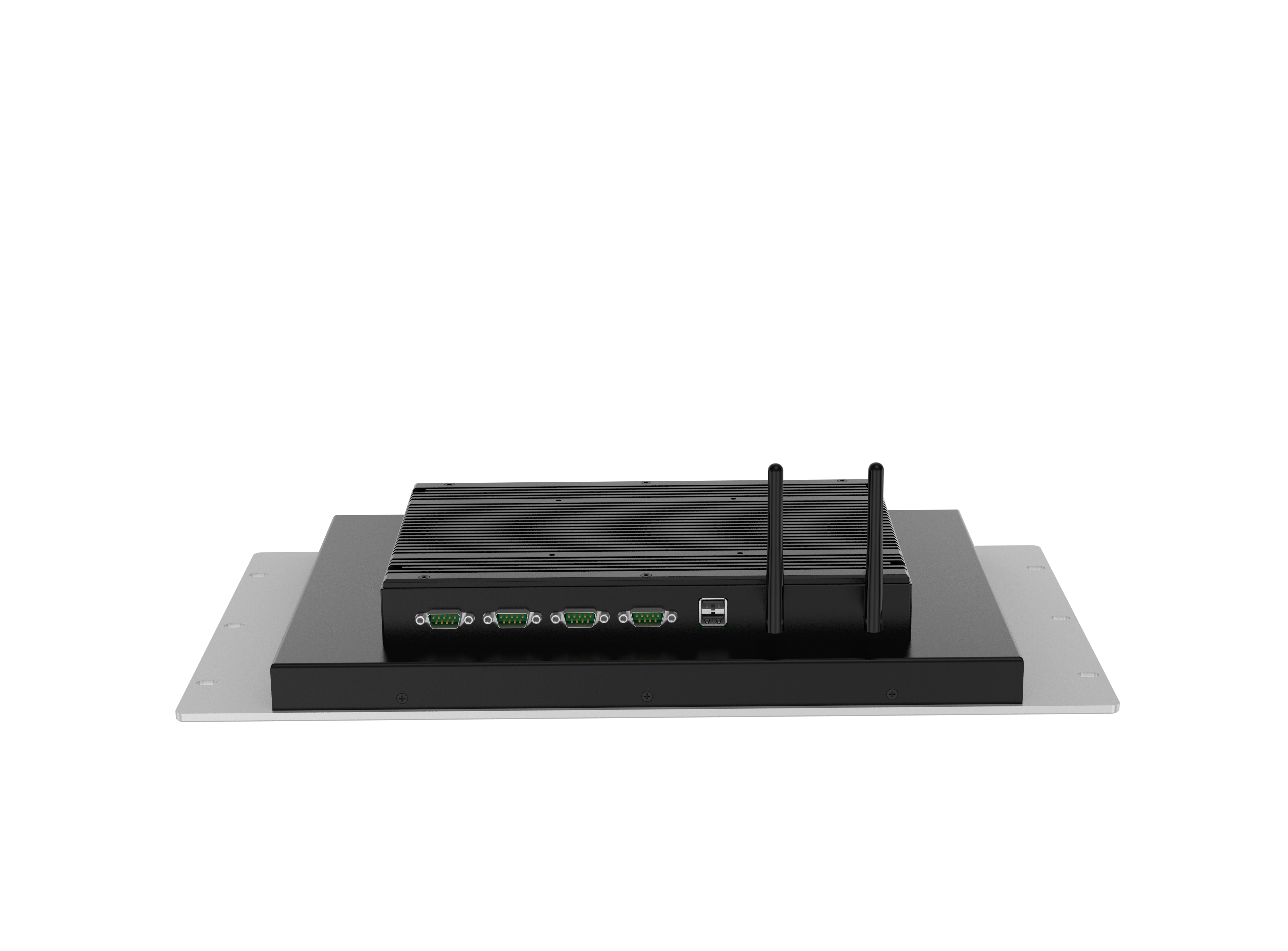
The intelligent manufacturing system consists of the field equipment layer, data collection layer, process monitoring layer and production management layer. Industrial all-in-one computers are mostly deployed in the production site, undertaking functions such as human-computer interaction, equipment control, data collection, and information forwarding. Compared with ordinary commercial computers, industrial all-in-one computers can adapt to complex working conditions such as high and low temperatures, dust, vibration, and electromagnetic interference, support 7×24-hour continuous operation, and can stably connect industrial devices such as PLC, sensors, scanning devices, and vision cameras, providing a basic support for the digitalization and automation of the production process.
With the continuous improvement of domestic technology and manufacturing processes, domestic industrial all-in-one machines have been continuously enhancing their hardware performance, system compatibility, and scene adaptability, and can meet the intelligent manufacturing application requirements of multiple industries and the entire process.
2. Production Site Control and Human-Machine Interaction Scenarios
In on-site sections such as automated production lines, CNC machines, and assembly workshops, industrial all-in-one computers are often used as the core control terminal and human-machine interaction interface. Operators can complete operations such as setting process parameters, calling programs, viewing running status, and receiving fault alarm prompts through the equipment, enabling real-time intervention and management of the production process.
In response to the characteristics of the workshop environment, the industrial all-in-one machine adopts a sealed and reinforced structure, which has good dust-proof and oil-proof capabilities. Some models support touch operation with gloves on, adapting to the actual usage habits on-site. At the same time, the equipment can be equipped with a professional industrial control system to ensure stable transmission of control instructions, reduce the risk of machine failure causing downtime during production, and enhance the continuity of on-site operations.
III. Data Collection and Edge Computing Applications
Intelligent manufacturing relies on a large amount of production data to support decision-making. Industrial all-in-one machines can serve as edge computing terminals, conducting real-time collection, local computing, and preliminary analysis of on-site equipment data. Then, the valid information is uploaded to management platforms such as MES and SCADA. Through local preprocessing, it can reduce the pressure of data transmission to the cloud, improve data response speed, and meet the real-time requirements of scenarios with faster production rhythms.
In scenarios such as energy consumption monitoring and equipment status monitoring, industrial all-in-one machines can continuously collect information such as motor operating parameters, environmental temperature and humidity, and production energy consumption, forming data records and trend curves. This helps managers understand the operating status of the equipment and provides data basis for preventive maintenance and energy optimization.
IV. Machine Vision and Quality Inspection Scenarios
In quality control processes such as product appearance inspection, size measurement, barcode recognition, and defect screening, industrial all-in-one machines can be equipped with industrial cameras and vision processing software to form a vision inspection system. The equipment has sufficient computing power and multi-interface expansion capabilities, which can quickly process image information, make judgments on the product’s qualification status, and record inspection data, enabling traceable management of production quality.
Compared with traditional manual inspection, the visual inspection solution based on industrial all-in-one machines can operate continuously on the production line, reducing errors caused by human factors, which helps enterprises stabilize product quality and optimize the human resource allocation in the inspection process.
V. Warehousing Logistics and Intelligent Sorting Scenarios
In intelligent warehousing, factory internal logistics, and automatic sorting processes, industrial all-in-one machines can be used as AGV scheduling terminals, sorting system control devices, and warehouse management workstations. The equipment supports multiple network communication methods and can be connected to barcode scanners, radio frequency identification devices, conveyor belt control systems, etc., to achieve functions such as material information recognition, storage location management, route planning, and process scheduling.
The warehousing and logistics environment is usually spacious and has significant temperature and humidity fluctuations. Industrial all-in-one machines, with their features such as wide temperature operation range and anti-interference design, can maintain stable operation in dynamic working environments, improve the efficiency of material circulation, and help enterprises achieve the coordinated connection of the warehousing and production processes.
VI. Application in New Energy and Equipment Manufacturing Industry
In fields such as new energy and high-end equipment manufacturing where production precision and safety are highly demanded, industrial all-in-one machines are widely used in scenarios like production line monitoring, process control, and data traceability. Through comprehensive electromagnetic compatibility design, the equipment can operate stably in environments with dense frequency converters and servo systems, ensuring reliable transmission of control signals and data.
Meanwhile, the industrial all-in-one machine can be integrated with industry-specific software to achieve process management for battery production, component processing, assembly and inspection, etc. This promotes the standardization and transparency of the production process, and meets the industry’s requirements for traceability of the production process and controllable quality.
VII. Centralized Monitoring and Operation Management in Smart Factories
In scenarios such as the central control room of a smart factory and the workshop monitoring room, industrial all-in-one computers can serve as centralized monitoring terminals, integrating the operation data of each production line and each equipment to form a visual management interface. Managers can view the overall production progress, equipment operation status, and abnormal alarm information through the terminal, achieving unified monitoring and scheduling of the entire factory’s production situation.
Some industrial all-in-one machines support remote management functions. Maintenance personnel can configure parameters, update programs and troubleshoot the status of on-site terminals via the network, thereby reducing the workload of on-site inspections and improving the efficiency of factory operation management.
VIII. Summary
Chinese industrial all-in-one computers, with their features of stability and reliability, rich interfaces, strong environmental adaptability, and ease of integration, have deeply integrated into all aspects of intelligent manufacturing. They have covered the entire process from on-site control, data collection, to quality inspection, warehousing and logistics, as well as centralized operation and maintenance, forming comprehensive application capabilities in various scenarios. In the context of continuous upgrading of the manufacturing industry, industrial all-in-one computers are not merely single terminal devices; they are also crucial nodes for achieving device interconnection, data interoperability, and business collaboration.
With the continuous advancement of technology and the continuous improvement of industry solutions, industrial all-in-one computers will further adapt to the needs of more specialized scenarios, providing continuous hardware support for the implementation and deepening of intelligent manufacturing.