Detailed Explanation of the Lifespan and Reliability Design of Industrial LCD Screens
Product knowledge 2026-03-10
Industrial liquid crystal displays, as the core display medium for human-computer interaction in industrial scenarios, are widely used in key fields such as intelligent manufacturing, energy and power, rail transportation, and medical equipment. Their service life and operational reliability directly affect the normal operation of industrial equipment, the control of operation and maintenance costs, and the improvement of production efficiency. Unlike consumer-level liquid crystal displays that focus on short-term visual experience, industrial liquid crystal displays need to work for a long time in complex conditions such as high dust, strong vibration, high and low temperatures, and strong light. Therefore, the requirements for their service life and reliability are even more stringent.
The service life of industrial LCD screens is not a fixed value but is influenced by multiple factors such as material selection, structural design, technological level, operating conditions and maintenance methods. Reliability design aims to reduce the probability of equipment failure and extend the service life by systematically optimizing technologies, ensuring the stable operation of LCD screens in long-term and complex working conditions. This article will provide a comprehensive explanation from the core influencing factors of the service life of industrial LCD screens, the core points of reliability design, optimization strategies for different scenarios and maintenance suggestions, to offer objective references for industry practitioners, and help with reasonable selection, scientific design and standardized maintenance, fully leveraging the application value of industrial LCD screens.
I. Core Factors Affecting the Lifespan of Industrial LCD Screens
The service life of industrial LCD screens is usually measured by “mean time between failures” (MTBF) and “normal service life”. The designed service life of conventional industrial LCD screens is mostly 5 to 10 years, while some specialized products for extreme scenarios can last for more than 15 years. The service life of LCD screens is mainly influenced by the following four major factors, which are interrelated and jointly determine the long-term operating capability of the LCD screens.
(1) Quality and Selection of Core Components
Core components are the foundation for determining the service life of industrial liquid crystal screens. Among them, the backlight module, display panel, and driving chip are the three most influential core components. Their quality and selection directly determine the aging speed and failure probability of the liquid crystal screen.
Backlight Module: As the core component for emitting light in industrial LCD screens, the lifespan of the backlight module mainly depends on the quality of the LED light beads and the driving method. The typical lifespan of regular consumer-grade LED light beads is approximately 30,000 to 50,000 hours, while industrial-grade LED light beads, after undergoing special process optimization, can have a lifespan of 50,000 to 100,000 hours, and some highly reliable light beads can even exceed 100,000 hours. Additionally, the stability of the backlight driving circuit also affects the lifespan of the backlight module. Inappropriate driving current will accelerate the aging of the LED light beads, leading to brightness reduction and the appearance of dark spots, etc.
- Display Panel: The lifespan of the panel is mainly related to materials such as liquid crystal, ITO conductive layer, and polarizer. Industrial-grade liquid crystal materials must have good thermal stability and anti-aging properties to prevent problems such as failure of liquid crystal molecules and display distortion under long-term high-temperature and strong-light conditions; the thickness and uniformity of the ITO conductive layer will affect the touch control performance and lifespan; the polarizer needs to be selected as an industrial-grade product that is resistant to high and low temperatures and anti-ultraviolet radiation to avoid problems such as aging, yellowing, and decreased light transmittance.
- Driving Chip: Industrial-grade driving chips must undergo aging tests such as high and low temperature tests and anti-electromagnetic interference tests, and should possess excellent stability and anti-interference capabilities. Inferior driving chips are prone to signal transmission abnormalities and overheating damage, which directly leads to black or distorted screens on the LCD panel and shortens its service life.
(2) Operating environment factors
The complex working conditions in industrial scenarios are the key external factors affecting the service life of industrial LCD screens. Among them, conditions such as high and low temperatures, humidity, dust, vibration, and electromagnetic interference cause the most significant damage to LCD screens, and these are also the issues that reliability design needs to focus on addressing. - High and low temperature environments: The operating temperature range of industrial LCD screens is typically -20℃ to 70℃. Special products for extreme scenarios can extend to -40℃ to 80℃. In low-temperature environments, the fluidity of liquid crystal molecules decreases, leading to problems such as black screens and slow response. Long-term exposure to low temperatures can cause the sealing materials to become brittle and the interfaces to loosen. In high-temperature environments, the backlight module generates more heat, accelerating the aging of LED light beads, while also causing the liquid crystal materials to deteriorate and the polarizing films to age, shortening the service life.
- Humidity and Dust: In a high-humidity environment, the internal components of the LCD screen may get damp and short-circuit, especially the driving circuits and interface parts, which are prone to malfunction; in a dusty environment, dust will adhere to the surface of the screen, affecting the display effect, and at the same time, it may penetrate into the interior, wear down the conductive layer and block the heat dissipation channels, accelerating the aging of the equipment.
- Vibration and Impact: Continuous vibration or unexpected impacts generated during the operation of industrial equipment can cause the internal components of the LCD screen to loosen or fall off, result in poor interface contact, and in severe cases, cause the panel to crack and the backlight module to be damaged, directly affecting the service life.
- Electromagnetic Interference: Strong electromagnetic signals in scenarios such as power supply and rail transportation can interfere with the signal transmission of the driving chip, causing display abnormalities. Long-term electromagnetic interference can also damage the core components and shorten the service life.
(III) Design and Manufacturing Standards
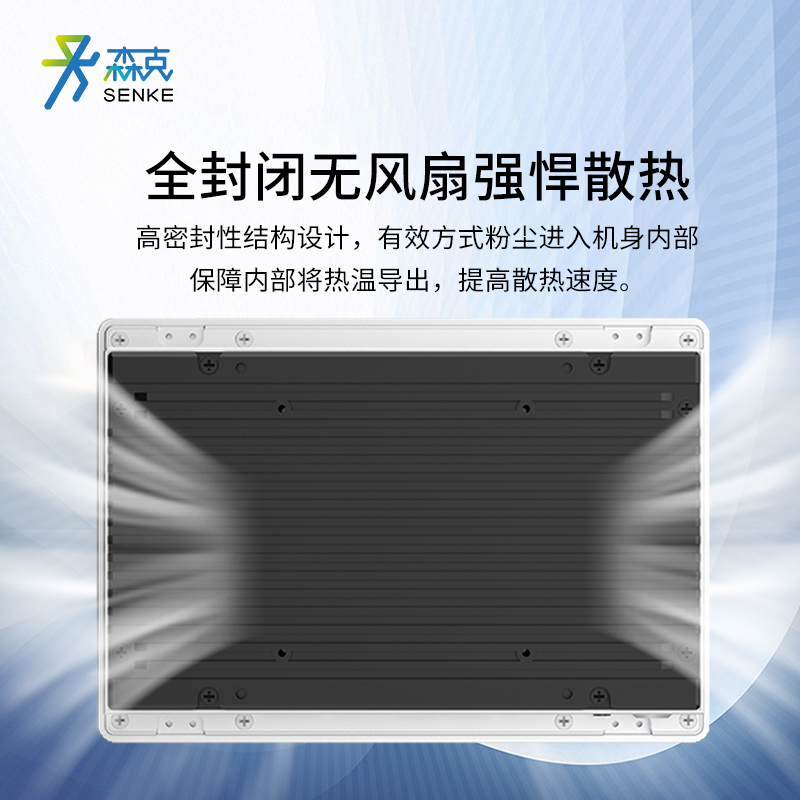
The structural design, heat dissipation design, sealing design and production process of industrial LCD screens directly affect their reliability and service life. Unreasonable design and process can lead to frequent equipment failures and accelerated aging. - Heat dissipation design: When the backlight module is operating, it generates a large amount of heat. If the heat dissipation design is not reasonable, the heat cannot be promptly released, and it will accumulate inside the LCD screen, causing the LED light beads, driving chips and other components to overheat and age prematurely, thereby shortening the service life. Industrial LCD screens usually enhance the heat dissipation efficiency by adding heat sinks, optimizing heat dissipation channels, and using heat-conductive materials.
- Sealing Design: The core of the sealing design is to prevent dust and moisture from entering the interior of the LCD screen, protecting the core components. The sealing grade of industrial LCD screens usually needs to reach IP65 or above, and in some harsh scenarios, it needs to reach IP68 level. By using heat-resistant and low-temperature-resistant sealing materials (such as silicone, fluororubber), optimizing the sealing structure, full sealing protection can be achieved.
- Structural reinforcement design: For industrial scenarios involving vibration and shock conditions, the LCD screen needs to be structurally reinforced. This can be achieved by using reinforced enclosures, shock-absorbing pads, and reinforced interfaces to secure the internal components, thereby reducing the damage to the equipment caused by vibration and shock.
- Production Process: The precision of the production process can affect the stability of the LCD screen. For instance, the coating process of the ITO conductive layer, the injection process of the liquid crystal molecules, and the welding process of components are all factors that can influence the stability. Defects in the process can lead to frequent equipment failures and shorten the service life. Industrial-grade LCD screens usually adopt high-precision production processes and strictly control the production procedures to reduce the defect rate of the processes.
(4) Maintenance and Usage Methods
Scientific operation and proper usage can effectively extend the service life of industrial LCD screens. On the contrary, improper operation and usage will accelerate the aging of the equipment and increase the probability of failures. - Daily Cleaning: In industrial settings, the surface of the screen is prone to accumulate dust and stains. If not cleaned regularly, it will affect the display quality. Moreover, the dust may penetrate into the interior and damage the components. It is necessary to clean the screen surface regularly with a soft cleaning cloth. Do not use corrosive cleaning agents to prevent scratching the screen.
- Brightness adjustment: Operating with high brightness for a long time will accelerate the aging of the backlight module and shorten its service life. It is necessary to adjust the screen brightness according to the intensity of the ambient light to avoid long-term high-brightness operation. At the same time, the intelligent brightness adjustment function can be enabled to achieve automatic brightness adaptation.
- Fault Troubleshooting: Regularly check the operating status of the LCD screen to promptly identify and resolve any abnormalities (such as brightness reduction, display distortion, loose interface, etc.), preventing small faults from escalating and damaging the core components.
- Environmental Control: When conditions permit, control the usage environment of industrial LCD screens. This includes reducing environmental humidity, minimizing dust, and avoiding direct sunlight exposure. By providing a relatively stable working environment for the LCD screens, their lifespan can be extended.
II. Core Points of Reliability Design for Industrial LCD Screens
The reliability design of industrial LCD screens focuses on “preventing failures and extending lifespan”. Through targeted design optimization, it enhances the equipment’s adaptability to complex working conditions, reduces the probability of failures, and ensures long-term stable operation. The reliability design covers the entire process from material selection, structural design, process optimization, and functional design, and the key points mainly lie in the following five aspects.
(1) Selection of Reliability for Core Components
Component selection is the foundation of reliability design. It should follow the principles of “industrial-grade standards and scenario adaptation”. Priority should be given to selecting components that have been verified in industrial scenarios, have stable quality, and have strong anti-aging capabilities. Consumption-grade components should be avoided.
Backlight module selection: Preferentially choose industrial-grade high-brightness LED chips, which should have wide temperature range characteristics, long lifespan, and low attenuation. At the same time, a stable backlight driving circuit should be matched, using constant current driving method to avoid accelerated aging of the chips due to current fluctuations; the heat dissipation structure of the backlight module needs to match the power of the chips to ensure the heat dissipation efficiency. - Display panel selection: Industrial-grade wide-temperature liquid crystal panels are selected. The liquid crystal material should have good thermal stability and anti-aging properties, and be suitable for the temperature range of the application scenario. The ITO conductive layer uses products with uniform thickness and wear resistance. The polarizing film uses industrial-grade models that are resistant to high and low temperatures and UV radiation. For touch screens, anti-scratching and highly sensitive touch panels are also selected to adapt to industrial operation scenarios.
- Chip selection for driving: Select industrial-grade wide-temperature driving chips. The working temperature range of these chips should be suitable for the specific application requirements, and they should have excellent anti-electromagnetic interference capability and stability. They must pass aging tests under high and low temperatures, vibrations, etc., to ensure no malfunctions during long-term operation. Additionally, the interface of the driving chip should have a design to prevent loosening, thereby enhancing the stability of signal transmission.
(2) Environmental Adaptability Design
Environmental adaptability design is the core for addressing complex industrial conditions. It focuses on optimizing for various conditions such as high and low temperatures, humidity, dust, vibration, and electromagnetic interference, thereby enhancing the environmental tolerance of equipment. - Wide temperature design: By selecting wide-temperature components, optimizing circuit design, and adding a temperature compensation module, the LCD screen can operate stably within a wide temperature range. In low-temperature environments, the backlight module’s heat generation can assist in warming up, preventing the crystallization of the liquid crystal molecules; in high-temperature environments, the heat dissipation structure is optimized to quickly dissipate heat, avoiding overheating and aging of the components.
- Sealing and Dust/Waterproof Design: Utilizing a fully sealed structure, combined with high-temperature resistant, low-temperature resistant, waterproof and moisture-proof sealing materials, the sealing level is enhanced to IP65 or above, effectively preventing dust and moisture from entering the interior; the screen surface is made of anti-glare and scratch-resistant glass, reducing dust adhesion and facilitating cleaning.
- Anti-vibration and anti-shock design: A reinforced metal casing is adopted. The internal components are fixed by means of shock-absorbing pads and reinforcing screws to prevent loosening and detachment due to vibration; the interfaces are designed with reinforcement features to enhance connection stability; the panel uses high-hardness tempered glass to increase the impact resistance and prevent cracking.
- Anti-electromagnetic interference design: Optimize the circuit layout, adopt shielding layer design to reduce the interference of electromagnetic signals on the driving chip and signal transmission; Select components with strong anti-electromagnetic interference capability to avoid display abnormalities and component damage caused by electromagnetic signals; At the same time, the grounding design is reasonable to reduce the impact of electromagnetic radiation on the equipment.
(III) Heat Dissipation Reliability Design
The core of the heat dissipation design is to promptly dissipate the heat generated during the operation of the LCD screen, preventing heat accumulation and protecting the core components, thereby extending the service life. The heat dissipation design for industrial LCD screens needs to be combined with power and working conditions, and adopt targeted heat dissipation solutions. The key points are as follows:
Heat dissipation structure optimization: Add heat dissipation plates at the heat-generating components such as the backlight module and the driver board. Select materials with good thermal conductivity (such as aluminum alloy and copper) to increase the heat dissipation area and enhance the heat dissipation efficiency; optimize the heat dissipation channels to ensure smooth air circulation and facilitate heat dissipation. - Application of heat-conducting materials: Apply heat-conducting silicone grease between the heating component and the heat sink, and attach heat-conducting pads to enhance the heat-conducting performance, reduce the resistance of heat transfer, and ensure that the heat is quickly transferred to the heat sink.
- Temperature Monitoring and Protection: Install temperature sensors to continuously monitor the internal temperature of the LCD screen. If the temperature exceeds the preset threshold, automatically adjust the backlight brightness, reduce the driving current, or activate the cooling fan (if necessary) to prevent damage to components due to excessive temperature. Additionally, set an overheating protection function. When the temperature is abnormally high, automatically shut down the device to prevent the failure from escalating.
(4) Design of Structural and Interface Reliability
The reliability of the structure and interface directly affects the installation stability and signal transmission stability of industrial LCD screens. It is necessary to prevent faults caused by loose structure or poor interface contact. - Structural Design: An integrated reinforced structure is adopted. The outer shell is made of high-strength metal material to enhance the equipment’s resistance to vibration and impact. The connection between the screen and the shell is tight to avoid gaps and prevent dust and moisture from entering. The installation method is suitable for industrial scenarios. Various installation structures such as embedded and wall-mounted are designed to ensure a firm installation and reduce the impact of vibration.
- Interface Design: The interface adopts industrial-grade standard interfaces and is equipped with anti-loosening and anti-oxidation designs. For example, using threaded interfaces or snap-in interfaces can prevent the interface from loosening due to vibration. The interface areas are coated with anti-oxidation coatings to prevent oxidation and rusting, which may affect signal transmission. At the same time, the number and type of interfaces are adapted to the requirements of the scenarios to avoid unnecessary interfaces and reduce potential failure risks.
(5) Function Reliability Design
The functional reliability design mainly aims to enhance the performance of software and hardware, improve the operational stability of the LCD screen, reduce the probability of failures, and facilitate the troubleshooting by maintenance personnel. - Fault Warning Function: An additional fault monitoring module is added to continuously monitor the operating status of the LCD screen (such as brightness, temperature, signal transmission, etc.). In case of any abnormalities, an early warning signal (such as flashing indicator lights, signal feedback) will be promptly issued, facilitating the timely troubleshooting by maintenance personnel.
- Intelligent Adjustment Function: Equipped with intelligent brightness adjustment and temperature automatic compensation functions. It can automatically adjust operating parameters according to changes in environmental light and temperature, thereby enhancing display quality while prolonging service life. For instance, it automatically increases brightness in strong light conditions and reduces brightness in weak light conditions, avoiding prolonged operation at high brightness.
- Redundant Design: For critical industrial scenarios, redundant design can be adopted. For instance, dual backup drive circuits can be used. In the event that one circuit fails, the other circuit can automatically switch over, ensuring the normal operation of the equipment and minimizing the impact of faults on production.
III. Optimization Strategies for Reliability Design in Different Industrial Scenarios
The working conditions and usage requirements vary in different industrial scenarios. The reliability design of industrial LCD screens needs to be tailored to the characteristics of each scenario for targeted optimization, ensuring that they can meet the requirements of the scenarios and extend the service life. The following presents specific design optimization strategies for three typical industrial scenarios.
(1) Outdoor industrial scenarios (such as outdoor photovoltaic power stations, open-air operation equipment)
Operating conditions: Significant temperature fluctuations (ranging from -30℃ to 80℃), intense direct sunlight, high dust content, exposure to rain, strong vibration, and severe electromagnetic interference.
Optimization strategy: 1. Select wide-temperature components, ensuring compatibility of the LCD panel and backlight module within the temperature range of -30℃ to 80℃, and adding a temperature compensation module to handle extreme high and low temperatures; 2. Increase the sealing level to IP68, adopting a fully sealed structure and weather-resistant sealing materials to prevent rain and dust from entering; 3. Use anti-glare and anti-reflective glass on the screen surface, combined with a high-brightness backlight module (brightness ≥ 800cd/m²), to ensure clear display under strong light; 4. Strengthen the anti-vibration design.