How to set up a smart factory data dashboard? The Senke MES dedicated all-in-one machine enables real-time visualization of production data.
Product knowledge 2026-04-08
The core of building a smart factory lies in achieving digital and transparent control of the entire production process. The data dashboard, as the key carrier connecting the production execution layer and the management decision-making layer, can transform scattered production data into intuitive and perceptible visual information, helping managers quickly grasp the dynamics of the production line and accurately identify bottlenecks. During the process of building the data dashboard, the adaptability of terminal equipment, the stability of data transmission, and the targeted nature of functions directly determine the implementation effect of the dashboard. The Senke MES dedicated all-in-one machine, relying on deep adaptation to the MES system and precise matching of industrial scenarios, has become a practical terminal for building data dashboards in smart factories, helping enterprises achieve real-time visualization of production data and solving the pain points of data dispersion and delayed decision-making in traditional production management.
The construction of a smart factory data dashboard is not a simple screen display, but requires completing a full-chain closed-loop of “data collection – data transmission – data processing – visual presentation”. Each link imposes specific requirements on terminal equipment. In traditional data dashboard construction, problems such as poor adaptation between the terminal and the MES system, untimely data collection, unclear screen display, and unstable operation of the equipment in industrial environments often occur, resulting in the dashboard being unable to play its actual role and failing to meet the management needs of smart factories.
As a dedicated terminal for MES, the Senke MES dedicated all-in-one machine starts from the core requirements of data dashboard construction, optimizes in aspects such as system adaptation, data interaction, and scene adaptation, providing reliable support for data dashboard construction. At the system adaptation level, this device deeply complies with various mainstream MES systems, does not require complex secondary development, can quickly connect with the enterprise’s existing MES system, achieve seamless data synchronization, reduce system adaptation costs and construction cycles, and this is the basis for the quick implementation of the data dashboard.
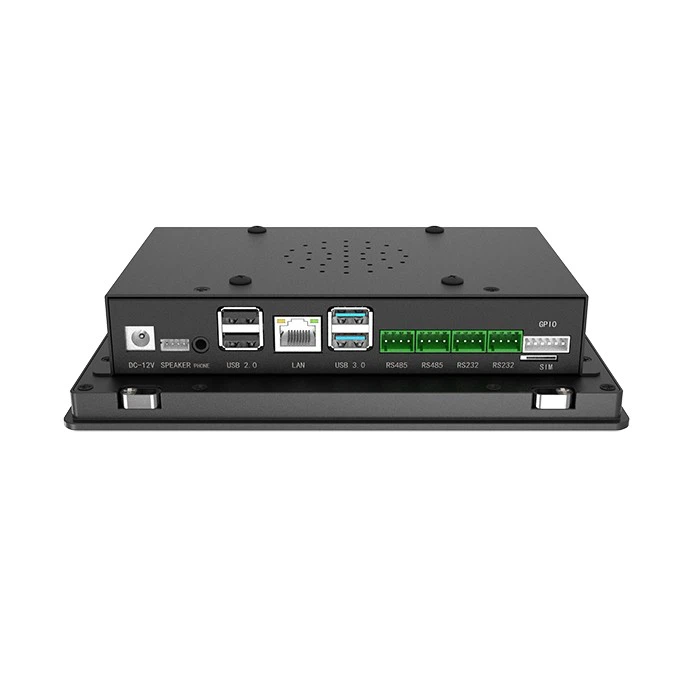
Data collection and transmission are the core of data dashboard to achieve real-time visualization. The Senke MES dedicated all-in-one machine is equipped with complete I/O interfaces and various communication modes, can seamlessly connect with various peripheral devices such as PLC, sensors, industrial cameras, and barcode scanners on the production line, real-time collect core production data such as the achievement rate of production plans, equipment operation parameters, output data, quality inspection results, material consumption, etc., and complete data collection and upload automatically without manual intervention. At the same time, the equipment optimizes the data transmission module, supports various communication methods such as wired networks and WiFi, ensures stable and smooth data transmission, avoids data loss and delay, and guarantees the real-time and accuracy of the data dashboard, allowing managers to promptly grasp the actual operation status of the production line.
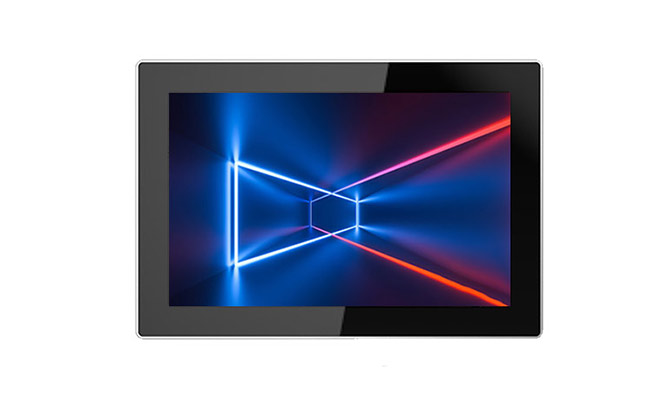
In terms of visual presentation, the Senke MES dedicated all-in-one machine adopts industrial-grade high-definition touch screens, supports high-brightness display and wide-angle design, even in complex environments such as strong light and dust in the workshop, the charts and data on the screen can be clearly visible, suitable for different deployment scenarios such as smart factory production workshops and control rooms. The device supports various visual chart displays, can convert production data into intuitive forms such as line graphs, bar charts, and pie charts, clearly presenting key information such as production progress, comprehensive efficiency of equipment, distribution of quality defects, etc., allowing managers to quickly identify production bottlenecks and equipment abnormalities without entering the workshop.
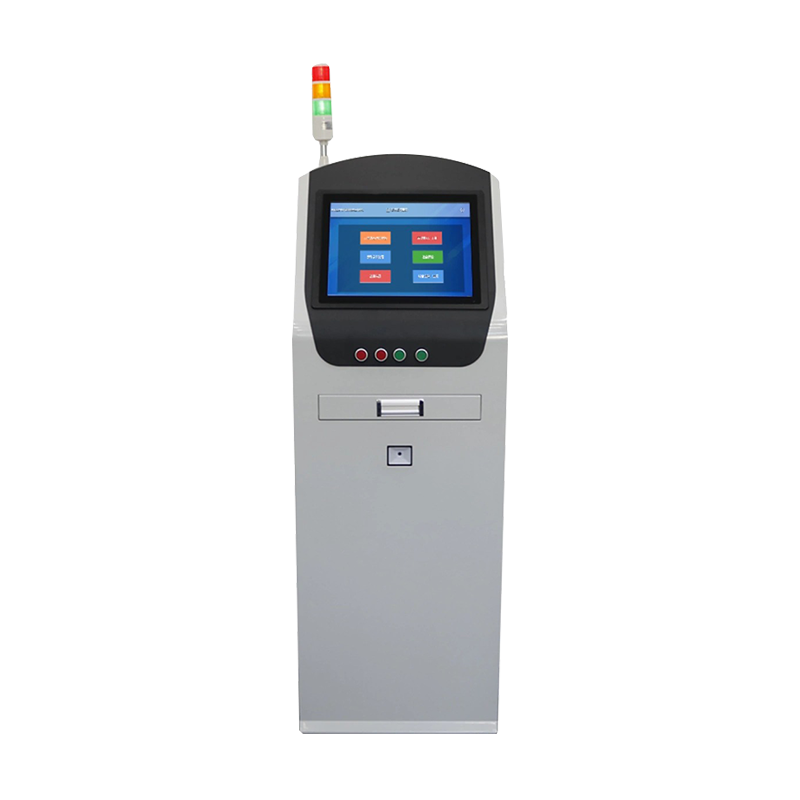
In addition, the scene adaptation capability of the Senke MES dedicated all-in-one machine further guarantees the long-term stable operation of the data dashboard. Smart factory production workshops often have complex working conditions such as high temperature, dust, and vibration. The equipment adopts a fully enclosed non-fan design, combined with an aluminum die-casting integrated body, has certain waterproof, dustproof, and anti-vibration capabilities, can adapt to complex workshop environments, achieve stable operation 24/7, and reduce the impact of equipment failures on the data dashboard. At the same time, the equipment supports various installation methods such as embedded, wall-mounted, and desktop, and can be flexibly deployed according to the layout of the workshop space. It can serve as a centralized monitoring terminal for the control room or a distributed display terminal for production line positions, meeting the construction requirements of different-sized smart factories.
From the perspective of actual application scenarios, an electronic manufacturing enterprise in a smart factory completed the deployment of the data dashboard quickly by introducing the special all-in-one machine of Senske MES. Through this device, the enterprise achieved real-time collection and visual presentation of production process data. Managers could view the production progress and equipment operation status of each production line in real time. When there was a production delay or equipment anomaly, it could be detected and handled in time, effectively shortening the decision-making cycle and improving production management efficiency. At the same time, the real-time visualization of data made the production process more transparent, facilitating the optimization of production processes and the rational allocation of resources, and promoting the transformation of production management towards refinement and intelligence.
The core of building a smart factory data dashboard is to select the appropriate terminal equipment to achieve real-time data collection, stable transmission, and intuitive presentation. The special all-in-one machine of Senske MES, with its deep adaptation to the MES system, stable operation performance, and flexible scene adaptation capabilities, provides a convenient and reliable solution for data dashboard construction, helping enterprises break through the limitations of traditional production data management and achieve real-time visualization of production data. In the process of smart factory construction, such dedicated terminals can effectively connect production execution and management decision-making, helping enterprises improve production management levels and promoting the implementation of intelligent manufacturing.