China Industrial Touchscreen Computers: Senke Helps Upgrade Production Lines Digitally
Product knowledge 2026-04-20
In the process of manufacturing industry’s transformation towards digitalization and intelligence, the digital upgrade of production lines has become an important path for enterprises to optimize production processes and enhance operational efficiency. The core of production line digitalization lies in achieving real-time data flow, equipment interconnection, and refined control management. Industrial touchscreen computers, as the core terminal for human-computer interaction and data processing, are the basic hardware for implementing the digitalization of production lines. Senke industrial touchscreen computers, based on the actual working conditions of domestic production lines and their digital upgrade needs, with stable operation performance and flexible adaptability, integrate into various industry production line upgrade scenarios, providing practical hardware support for enterprises’ digital transformation.
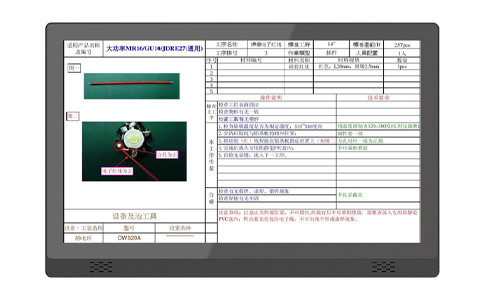
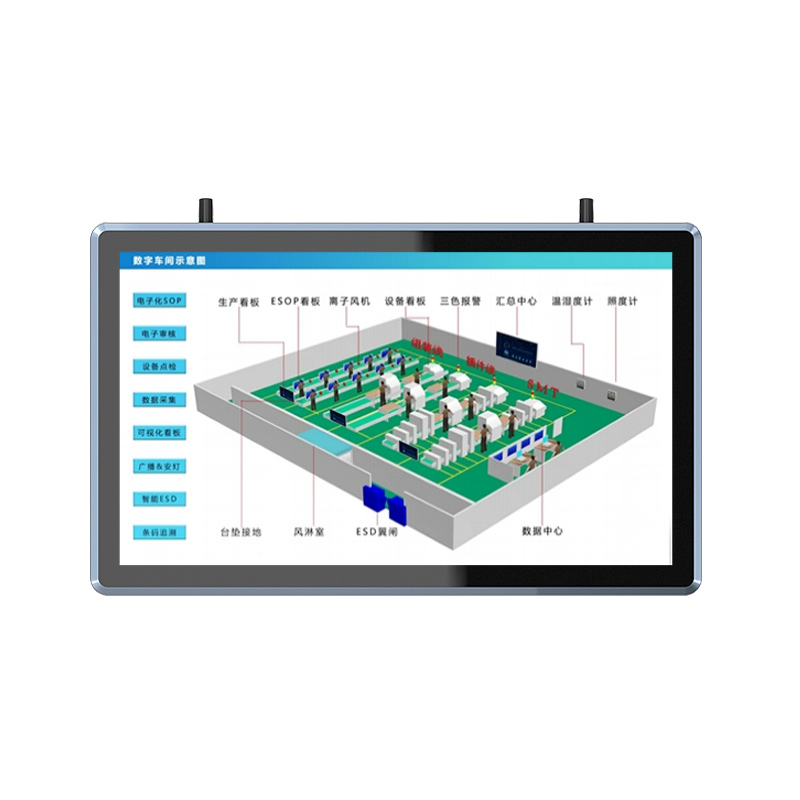
The digital upgrade of production lines involves optimizing the entire production process, from raw material entry, production processing to finished product delivery. Each stage requires terminal equipment to perform functions such as data collection, instruction transmission, and status monitoring. This demands high compatibility, stability, and adaptability of the equipment. Senke industrial touchscreen computers can seamlessly connect with various industrial control devices such as PLC, sensors, frequency converters, and barcode scanning devices in the production line. They can collect core data such as production parameters, equipment operation status, and material consumption in real time and present it to operators and managers, providing precise data references for production scheduling, parameter adjustment, and fault troubleshooting, helping managers grasp the overall operation of the production line and make scientific decisions. At the same time, the terminal supports multi-device linkage control, allowing operators to issue scheduling instructions through touch control, optimizing the production process, reducing manual intervention, and promoting more efficient and orderly production line operation.
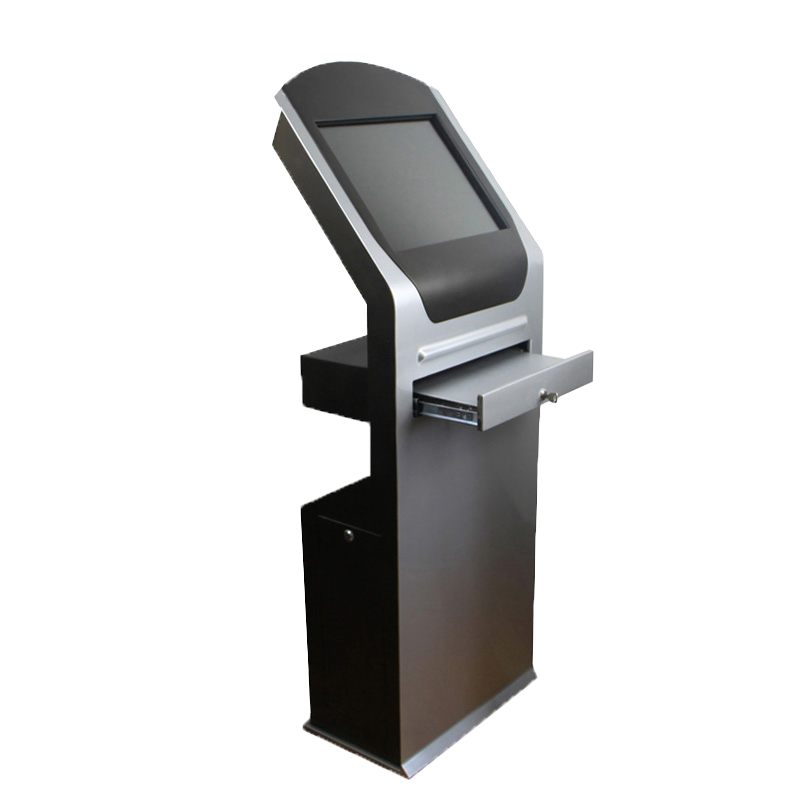
Different industries and enterprises of various scales have different layouts of production lines, production processes, and digital upgrade progress, and their demands for industrial touch control terminals also vary. Some enterprises focus on centralized monitoring of production line data, some need the terminal to fit into narrow installation spaces, and some emphasize compatibility between equipment and existing software systems. Senke industrial touchscreen computers offer various sizes, installation methods, and configuration options, which can be flexibly adjusted according to the actual conditions of the production line. They support embedded, wall-mounted, and other installation modes, suitable for production lines in various industries such as electronic manufacturing, mechanical processing, food processing, and automotive parts. They are compatible with common industrial operating systems and various industrial software, allowing them to quickly integrate into the enterprise’s digital system without large-scale renovations of the production line, reducing the implementation cost of production line digitalization.
The industrial production line environment is complex, with factors such as dust, oil stains, and temperature fluctuations affecting the stability of equipment operation. The digital upgrade of production lines has high requirements for the continuous operation capability of equipment. Senke industrial touchscreen computers optimize the structure for industrial scenarios, use industrial-grade durable materials, have certain dust-proof and oil-proof capabilities, and can adapt to the complex environment of the workshop, reducing the interference of external factors on equipment operation. At the same time, the equipment is equipped with low-power industrial-grade processors, supports long-term continuous operation, can meet the 7×24-hour uninterrupted production requirements of the production line, reduces production interruptions caused by equipment failures, and ensures the smooth progress of production line digitalization.
As domestic industrial touchscreen computers, Senke focuses on the needs of the domestic manufacturing industry in product design and optimization. It fully combines the characteristics and usage habits of domestic production lines in its design and optimization, making targeted adjustments in data transmission efficiency, equipment adaptability, and operation convenience. For example, to meet the needs of workshop operators working with gloves, the touch response performance is optimized to ensure smooth and precise touch control even when wearing gloves; for the special needs of different industries, custom adjustments can be made in interfaces, functions, etc., making the product more in line with the digitalization requirements of specific production line scenarios. The digitalization upgrade of the production line is not the upgrade of a single device, but the collaborative optimization of the entire production system. The Senke industrial touch screen computer, as an important link connecting operators, equipment and systems, not only undertakes the function of human-computer interaction, but also can achieve efficient data flow and collaborative linkage of equipment, helping enterprises break through the information islands in the production process and realize the visualization of production processes, refined management and efficient operation. In the wave of digital transformation in the manufacturing industry, such domestically produced industrial touch screen computers that meet the needs of the production line and are stable and reliable are gradually becoming practical choices for enterprises to promote the digitalization upgrade of the production line, providing solid hardware support for the digital and intelligent development of China’s manufacturing industry.
Wide temperature resistance and anti-interference Senke creates high-performance Chinese industrial touch screen computers
The diversity of industrial scenarios has put forward diversified requirements for the performance of industrial touch screen computers, among which wide temperature operation and anti-interference ability are important foundations for ensuring the stable operation of the equipment in complex working conditions. Senke bases on the actual needs of Chinese industrial scenarios and conducts targeted optimization of the wide temperature and anti-interference performance of industrial touch screen computers, creating high-performance products that are adapted to complex industrial environments, meeting the usage requirements of various harsh scenarios.
The temperature differences in industrial production sites are large, and some outdoor industrial control scenarios or high-temperature workshops, low-temperature storage environments have clear requirements for the wide temperature adaptability of the equipment. Senke industrial touch screen computers improve the wide temperature operation ability of the equipment through the selection of core components and process optimization, enabling the equipment to maintain stable operation within a large temperature range, avoiding equipment freezing, failure or function loss due to excessive temperature or low temperature, and adapting to the temperature requirements of different regions and types of industrial scenarios.
During the optimization of wide temperature performance, Senke fully combines the actual working conditions of industrial scenarios, selects core components and machine body materials that can withstand high and low temperatures, ensuring that the touch display, data transmission, command execution and other core functions of the equipment are not affected in extreme temperature environments. At the same time, the optimization of the equipment’s heat dissipation and insulation design enables it to quickly disperse the heat generated by the equipment operation in high-temperature environments and ensure the normal startup of core components in low-temperature environments, meeting the 7×24-hour continuous operation requirements of industrial scenarios.
Industrial sites often have various electromagnetic interferences. Electromagnetic signals generated by frequency converters, servo motors, high-voltage equipment, etc., can easily affect the stability of industrial control equipment, causing data transmission errors, operation response delays and other problems. Senke industrial touch screen computers optimize the circuit design and structural layout, adopt targeted anti-electromagnetic interference technologies, reduce the influence of external electromagnetic signals on the equipment, ensuring that the equipment can operate stably, accurately transmit data, and run smoothly in complex electromagnetic environments, meeting the 7×24-hour continuous operation requirements of industrial scenarios.
The optimization of anti-interference performance enables Senke industrial touch screen computers to adapt to complex industrial scenarios with complex electromagnetic environments, such as mechanical processing workshops, power energy control sites, etc., avoiding production interruptions or operational errors caused by electromagnetic interference. At the same time, the anti-interference design of the equipment and the wide temperature performance complement each other, forming a synergistic advantage, allowing the product to cope with multi-dimensional complex working conditions, further enhancing the practicality and stability of the equipment.
The optimization of wide temperature and anti-interference performance by Senke is a practical exploration in the performance improvement of industrial touch screen computers in China. This optimization meets the actual needs of domestic industrial scenarios, solves the pain point of unstable equipment operation in complex working conditions, enables industrial touch screen computers to better adapt to various harsh industrial scenarios, providing reliable human-computer interaction terminal support for industrial automation and digital production, and promoting the development of industrial touch screen computers towards more adaptable and stable directions.