Chinese Industrial All-in-One PC: Senke Industrial Terminal Technology Analysis
Product knowledge 2026-04-17
In the process of upgrading to intelligent manufacturing, industrial all-in-one PCs have become the core hardware carriers for digitalization and automation control in workshops. Senke industrial terminals, based on the demands of industrial scenarios, have developed a set of technical solutions adapted to the domestic industrial environment, covering structural design, hardware compatibility, system compatibility, and application scenarios. They provide stable hardware support for production line monitoring, equipment control, data collection, and other links.
I. Structure and Protection: Adapting to Complex Industrial Environments
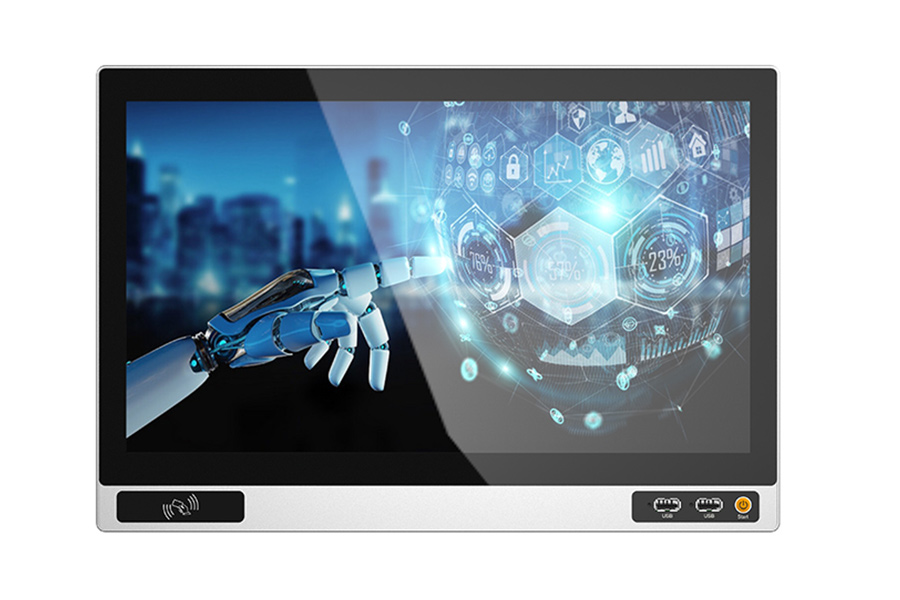
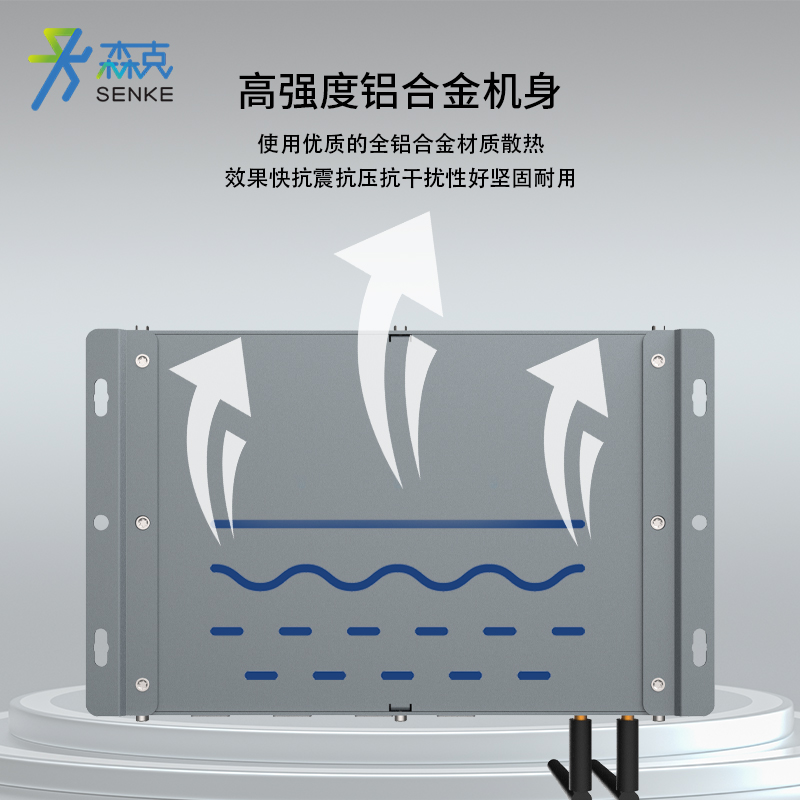
The Senke industrial control all-in-one computer features an aluminum alloy unibody that combines structural strength with efficient heat dissipation. The entire machine adopts a fully enclosed fanless design, relying on the metal casing for passive heat dissipation, reducing the intrusion of dust and oil, and lowering the probability of failure.
The front panel of the device is dustproof and waterproof, capable of withstanding high-dust, high-humidity, and slightly liquid-splashing workshop environments. The body incorporates shock-absorbing and vibration-damping structures to enhance operational stability under vibrating conditions, meeting the long-term operation requirements of assembly lines, CNC machines, and other scenarios.
II. Hardware and Computing Power: Balancing Stability and Scalability
Industrial-grade components are selected at the hardware level, supporting a wide temperature range for operation and maintaining functionality in various temperature environments. Equipped with multi-specification processors, it strikes a balance between computing power and power consumption, meeting the requirements of conventional industrial tasks such as data collection, real-time monitoring, and simple visual processing.
The interface configuration is rich, including network ports, multiple USB ports, serial ports, and display output interfaces, enabling connection to PLCs, sensors, barcode scanners, displays, and other peripherals. It adapts to the connection and expansion needs of different devices, reducing the difficulty of on-site wiring and modification.
III. Touch and Interaction: Adapting to Industrial Operating Habits
The device adopts an industrial touch solution, supporting multi-touch. It can maintain smooth operation responses even when gloves are worn or the screen has slight oil stains or water mist. The screen’s brightness and contrast have been adapted, ensuring clear display of data and interfaces in the strong light environment of workshops, enhancing the readability of on-site operations.
The system interface can be adapted to industrial control software, supporting full-screen display, fixed layout, and other modes, reducing the possibility of misoperation and aligning with the usage habits of front-line operators.
IV. System and Compatibility: Adapting to the Domestic Industrial Software Ecosystem
The Senke industrial control terminal supports multiple operating systems and can be matched with mainstream domestic industrial software, configuration software, and MES systems, reducing software migration and adaptation costs. The hardware is optimized for stability in industrial scenarios, minimizing abnormal situations such as blue screens and system crashes, ensuring 24-hour continuous operation.
It also supports network expansion and can be connected to the workshop local area network via wired or wireless means, enabling data upload, remote monitoring, and equipment interconnection, facilitating digital management in the workshop.
V. Scene Application: Covering Industrial Demands in Multiple Fields
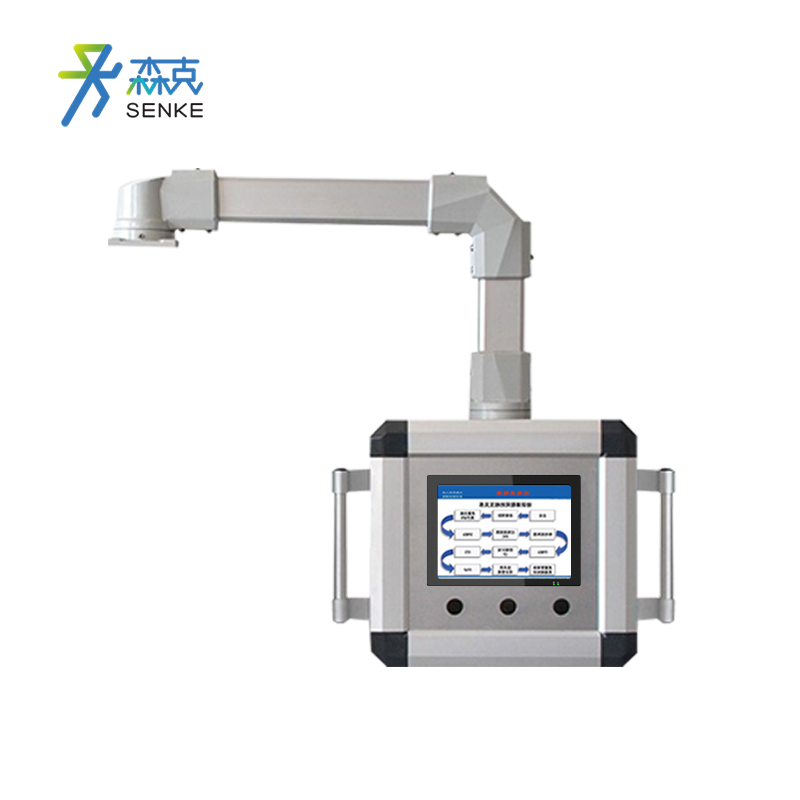
This series of industrial control all-in-one machines can be widely applied in scenarios such as intelligent manufacturing lines, smart warehousing, new energy workshops, rail transit operation and maintenance, and medical equipment control. On the production site, they undertake functions such as data display, equipment control, parameter setting, and status monitoring. With an integrated form, they reduce space occupation and enhance the flexibility of on-site deployment.
To meet the special requirements of different industries, they can be adapted in terms of size, interfaces, and installation methods, satisfying the usage requirements of non-standard equipment and customized scenarios.
Conclusion
As an all-in-one product tailored for domestic industrial scenarios, the Senke industrial control terminal focuses on core technical directions such as environmental adaptability, stable operation, and flexible expansion, closely aligning with the actual needs of digital transformation in domestic manufacturing. During the advancement of industrial hardware localization, this type of product offers practical hardware options for the automation and intelligence upgrade of workshops, helping enterprises enhance their production control efficiency.