Wide temperature and voltage range, dust-proof and shock-resistant – how does the Senke factory forge the “steel frame” of industrial tablets?
Product knowledge 2026-04-03
The complexity of industrial scenarios has special requirements for the durability of industrial tablet computers. From hot and humid production workshops to cold and harsh outdoor work sites, from dusty mining sites to vibrating assembly lines, industrial tablets need to maintain stable operation in various harsh environments. Wide temperature and voltage range, dust-proof and shock-resistant have become the core capabilities of industrial tablets to adapt to complex working conditions, and the realization of these features cannot be separated from the meticulous refinement and strict control in the production process. Entering the Senke factory, we will explore together how it forges the “steel frame” suitable for industrial scenarios for industrial tablet computers.
The temperature fluctuation range in industrial sites often exceeds the tolerance of ordinary electronic devices. Both excessively high or low temperatures will affect the performance and lifespan of components, and subsequently lead to equipment failures. To achieve wide temperature adaptation, the Senke factory bases its product design and component selection on industrial scenario requirements, prioritizing the use of core components with excellent temperature resistance, including industrial-grade motherboards, displays, power modules, etc. These components undergo special processing and can maintain stable operation within a wide temperature range, adapting to temperature changes in different regions and scenarios.
During the production process, the Senke factory conducts professional environmental simulation tests to verify the wide temperature performance of the products. The workshop is equipped with dedicated high and low temperature testing equipment, placing the assembled industrial tablets in the test chamber to simulate extreme environments from low to high temperatures. Continuous monitoring of the equipment’s operation status, electrical performance, and interaction functions ensures that the product can start and operate normally within the set temperature range, without lag or failure. This early simulation and repeated verification method reduces the operational risks of the equipment in extreme temperature environments from the source.
In addition to temperature challenges, voltage fluctuations in industrial sites are also common. Unstable voltages can damage internal components of the equipment, affecting the lifespan and operational stability of the equipment. To achieve wide voltage adaptation, the Senke factory optimizes the product’s power supply design, adopting industrial-grade wide-voltage power modules that can be compatible with different voltage ranges, effectively resisting the impact of voltage fluctuations, and also equipping overvoltage and overcurrent protection mechanisms to further ensure the safety of the equipment, ensuring that the equipment can still operate continuously and stably in an industrial environment with unstable voltages.
Dust-proof and shock-resistant are another key capability of industrial tablet computers to cope with complex industrial environments. Industrial production sites often have a lot of dust and debris, which if entered into the equipment, will wear out components and block interfaces, causing equipment failures; while assembly line operations and outdoor operations may also cause internal components to loosen and have poor contact. To address these issues, the Senke factory optimizes the product structure design.
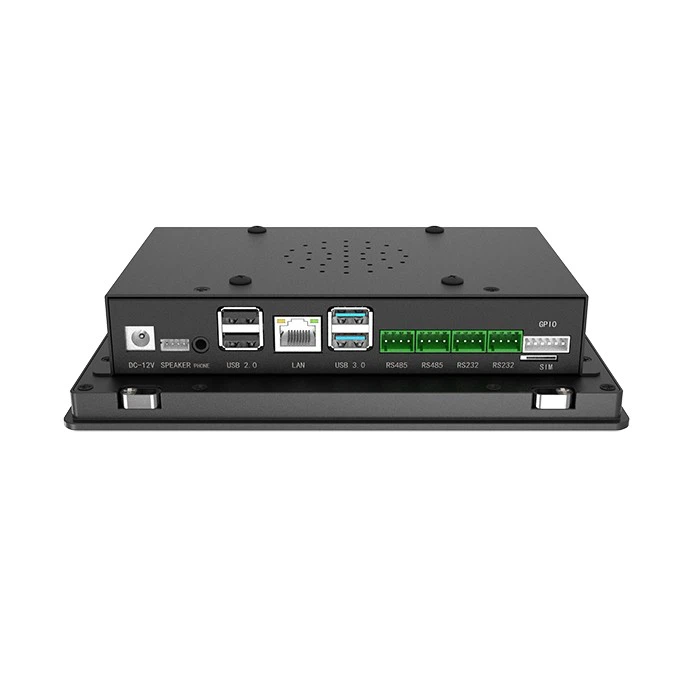
In the dust-proof design, the Senke industrial tablet adopts a fully enclosed structure, with dedicated sealing parts at the interface of the body, effectively blocking dust, water vapor, etc., from entering the internal body, reducing component wear. At the same time, the body adopts an integrated molding process, reducing the generation of gaps, further enhancing the dust-proof performance, suitable for industrial scenarios with a lot of dust. In the shock-proof design, the factory optimizes the body structure layout, selects high-strength metal materials to create the body frame, enhancing the overall rigidity of the body, and at the same time, strengthens the internal core components, reducing the impact of vibrations on components, ensuring that the equipment can still operate stably in a vibrating environment.
Before each industrial tablet leaves the factory, it undergoes strict dust-proof and shock-resistant tests. In the dust-proof test, the equipment is placed in a dust test chamber, after a specified period of dust spraying, the test checks whether dust has entered the equipment interior and whether the equipment’s operation status is normal. The seismic resistance test uses professional vibration testing equipment to simulate the vibration frequency and intensity of industrial sites, verifying the stability and reliability of the equipment in a vibrating environment. Only products that pass all the tests can enter the market and be delivered to users for use.
The characteristics of wide temperature and voltage range, dust-proof and seismic resistance cannot be achieved through the optimization of a single aspect. They are integrated throughout the entire process of product design, component selection, production assembly, and quality inspection. The Senke factory always focuses on industrial scene requirements and adheres to industrial-grade standards in every production stage. Through meticulous manufacturing and strict quality control, it gradually develops industrial tablet products that are suitable for complex working conditions.
For industrial production, stable and reliable hardware equipment is the foundation for ensuring production continuity. Through continuous refinement of core characteristics such as wide temperature and voltage range, dust-proof and seismic resistance, Senke factory endows industrial tablets with stronger environmental adaptability, enabling them to operate stably in various harsh industrial environments and providing solid hardware support for the digitalization and intelligentization transformation of manufacturing enterprises. In the future, as industrial scenarios continue to expand, Senke factory will also continuously optimize production processes and further enhance the environmental adaptability of products to meet the practical application needs of more industries.