Chinese Industrial All-in-One Computer Company: Serving Intelligent Manufacturing with a Full-Chain Industry Strength
Product knowledge 2026-03-30
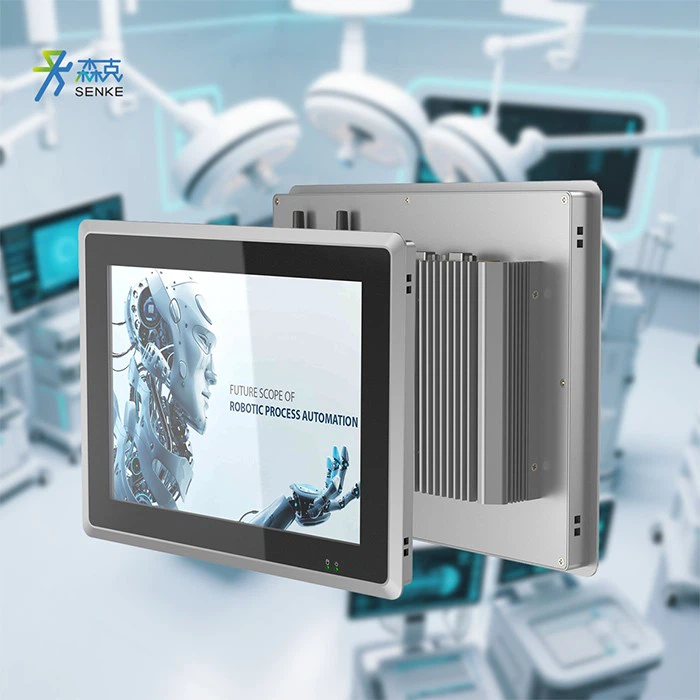
As intelligent manufacturing progresses further, industrial all-in-one computers, as key terminal carriers connecting equipment, data and management systems, their performance, stability and adaptability directly affect the efficiency of enterprises’ digital transformation. The Chinese industrial all-in-one computer company, relying on a full-chain layout including research and development, production, adaptation and service, continuously provides solutions that meet the actual needs of the manufacturing industry, helping industrial production steadily move towards automation, digitalization and intelligence.
1. Comprehensive Industry Chain Layout, Strengthening the Foundation of Industrial Control Products
The application scenarios of industrial all-in-one machines are diverse and complex, demanding high reliability, compatibility, and environmental adaptability of the products. Local enterprises with a comprehensive industry chain capability can control the entire process from core component selection, structural design, hardware manufacturing to system integration, thereby enhancing the overall quality of the products.
In the R&D stage, enterprises focus on the characteristics of industrial sites and design the structure and circuit based on requirements such as wide temperature operation, anti-vibration, dust and moisture prevention, and wide voltage adaptation. They optimize the stability of the product under complex conditions. In the production stage, by combining standardization with flexible manufacturing, they balance product consistency and the ability to provide customized delivery. From core components to complete machine assembly and final inspection, the full chain of independent control helps to reduce supply chain risks and improve product delivery efficiency.
2. Deeply Adapt to Industrial Scenarios and Support Digital Production
The advancement of intelligent manufacturing cannot be achieved without stable and reliable hardware terminals as the foundation. Industrial all-in-one machines are widely used in production line control, equipment monitoring, data collection, human-computer interaction, etc., and they need to work in coordination with multiple devices and software such as PLC, sensors, robots, and MES systems.
The Chinese industrial all-in-one computer company, based on its understanding of industry scenarios, continuously optimizes interface configurations, communication protocols and system compatibility, supporting multiple mainstream industrial protocols to ensure smooth interconnection between devices. At the same time, it provides differentiated product solutions tailored to the characteristics of different industries such as new energy, automotive manufacturing, rail transportation, warehousing and logistics, and mechanical processing, enabling end devices to better integrate into actual production processes and improving the accuracy of data collection and the efficiency of production scheduling.
III. Strengthening Technological Collaboration and Promoting the Upgrade of Intelligent Manufacturing
With the widespread application of technologies such as edge computing and the Internet of Things in the industrial sector, industrial all-in-one machines are no longer merely single control terminals. Instead, they are gradually taking on functions such as edge data processing and on-site intelligent decision-making. Local enterprises, leveraging their advantages in the entire industrial chain, are accelerating technological integration and product iteration, integrating more intelligent capabilities into terminal devices.
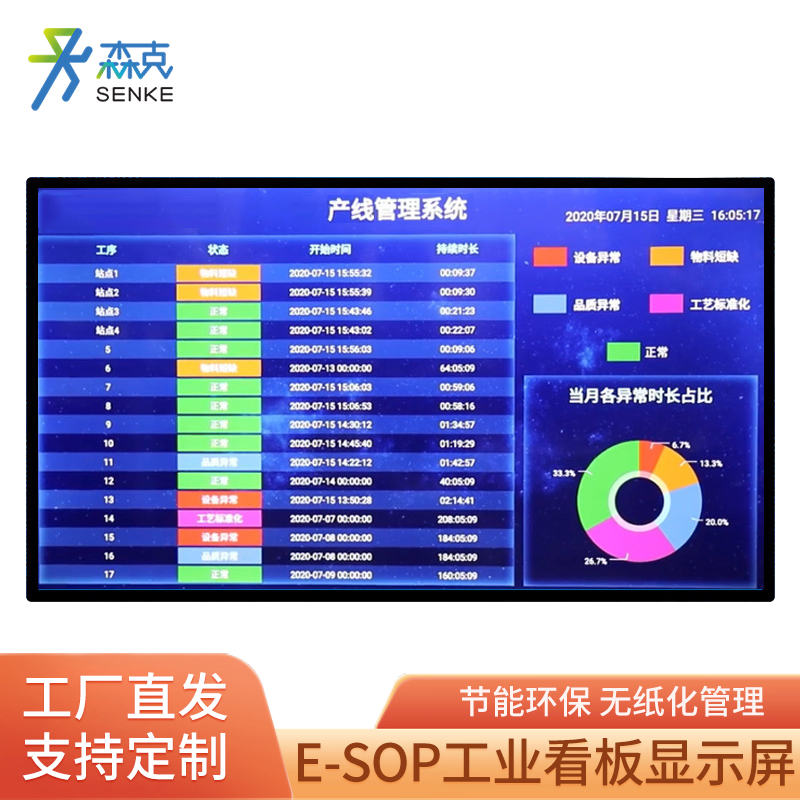
By optimizing the allocation of computing power, enhancing data processing speed, and expanding network communication capabilities, industrial all-in-one machines can complete data processing locally on-site, reducing the pressure of cloud transmission and improving system response speed. At the same time, in conjunction with industrial software and platform systems, it helps enterprises achieve production process visualization, real-time monitoring of equipment status, and timely warning of abnormal situations, providing hardware support for lean production and intelligent scheduling.
IV. Improve Service System to Ensure Long-Term Stable Operation
Industrial equipment often requires continuous operation for a long period of time. After-sales service and technical support are crucial links for ensuring uninterrupted production. Industrial integrated machine enterprises with a complete industrial chain strength usually have a relatively well-developed technical service system, which can provide customers with full-cycle support including scheme consultation, on-site debugging, system adaptation, and post-operation maintenance.
For compatibility issues, functional expansion requirements, and equipment troubleshooting encountered by enterprises during use, timely responses and technical assistance are provided to reduce equipment downtime and enhance user experience. This complete closed-loop from product to service also makes local industrial control terminals more practical in the intelligent manufacturing scenarios.
V. Supporting Industrial Development and Building an Industrial Digital Ecosystem
From basic hardware supply to overall solution output, Chinese industrial all-in-one computer companies have participated in the construction of intelligent manufacturing with their full-chain capabilities. They not only provided stable and reliable terminal products to manufacturing enterprises but also promoted the continuous improvement of the local industrial control chain. Through continuous technological accumulation and scenario implementation, they have continuously enhanced product performance and ecological compatibility, providing solid support for the digital and intelligent upgrading of key industries.
In the future, as intelligent manufacturing continues to advance, local industrial all-in-one machine enterprises will remain focused on meeting industrial demands, optimize the collaborative capabilities of the industrial chain, and provide more mature products and services to support the high-quality development of the industry.