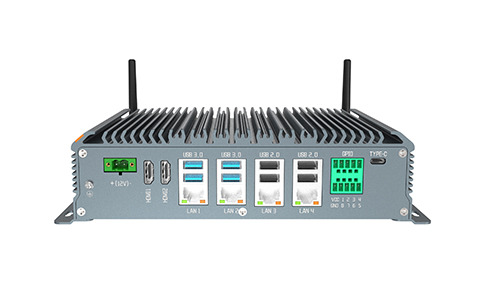
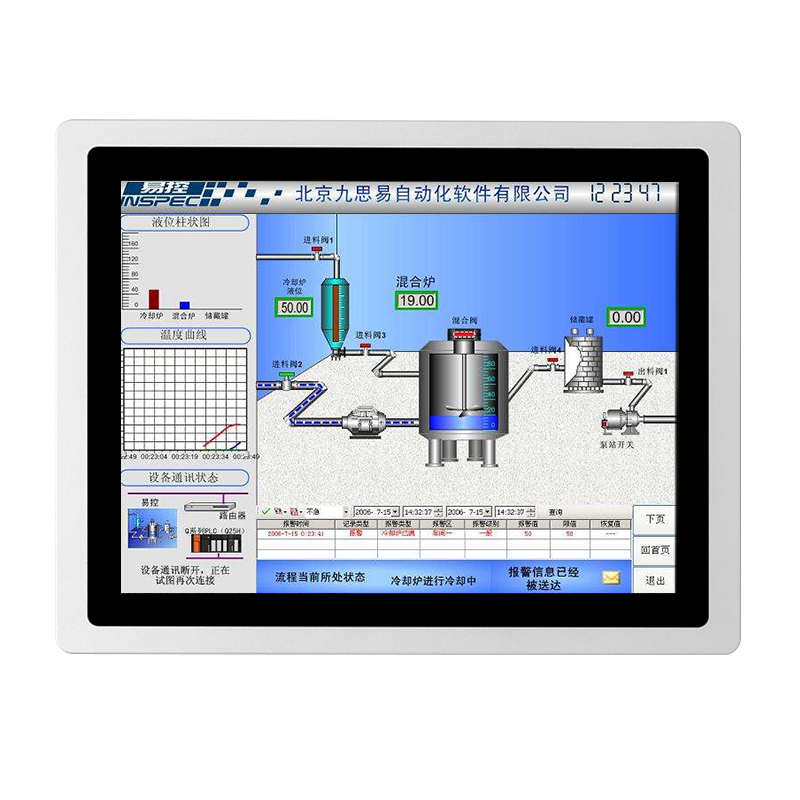
Factory standardization operation upgrade: Full-process application of ESOP all-in-one machine
Product knowledge 2026-03-06
Standardized operations are the core foundation for factories to achieve efficient production, stable product quality, and ensure production safety. They are also an important support for enterprises to enhance their core competitiveness. Traditional factory standardized operations rely on paper documents, oral instructions, and manual supervision, which have problems such as inconsistent operation standards, large execution deviations, difficult process traceability, and insufficient updates. They are unable to meet the production needs of modern factories with multiple varieties, small batches, and fast changeover lines, thereby hindering the implementation effect of standardized operations. The ESOP (Electronic Job Instruction Book) integrated machine, as a digital tool, can run through the entire process of factory standardized operations, achieving closed-loop management of operation instructions, execution, supervision, and traceability, and providing a feasible solution for the upgrade of factory standardized operations. This article is based on the actual production of factories and discusses the application scenarios, implementation key points, and application value of the ESOP integrated machine in the entire process of standardized operations, avoiding marketing nature, extreme words, and sensitive advertising expressions throughout the process, providing a reference for enterprises to promote the upgrade of standardized operations.
I. Core Pain Points of Factory Standardized Operations and the Compatibility of ESOP Integrated Machines
The core objective of factory standardized operations is to achieve “everyone has a standard, everything has a specification, and every step has a basis”. However, in the traditional implementation model, numerous problems have made standardization difficult to be implemented effectively. Firstly, the transmission of operation instructions is not precise. Paper documents are prone to damage and have inconsistent versions. Manual explanations are prone to information deviations, resulting in inconsistent standard execution among different operators. Secondly, there is a lack of effective supervision during the execution process. It is difficult to control in real time whether the operators strictly follow the standards, which may lead to non-compliant operations and affect product quality and production safety. Thirdly, it is difficult to trace the process. The operation records, parameter adjustments, and abnormal situations during the process are difficult to be fully retained. After problems occur, it is impossible to quickly locate the cause and trace the responsibility. Fourthly, standard updates are lagging. After process optimization and specification adjustments, the process of updating and distributing paper documents is cumbersome, and there is a tendency to mix old and new standards.
The core advantage of the ESOP all-in-one machine lies in solving the aforementioned problems in a digital manner. Its adaptability to factory standardized operations is mainly reflected in three aspects: Firstly, it can achieve digital and centralized management of operation standards, ensuring precise standard transmission and timely updates; Secondly, it can realize the visualization and interactivity of the operation execution process, facilitating standardized operations by operators and real-time supervision by managers; Thirdly, it can record and trace the entire operation data, providing a reliable basis for standard optimization and problem investigation. As a terminal device that runs through the entire process of standardized operations, the ESOP all-in-one machine can effectively connect the “standard formulation – standard transmission – standard execution – supervision and traceability – standard optimization” loop, promoting the upgrade of standardized operations from “formalism” to “effectiveness”.
II. The complete process application scenarios of the ESOP all-in-one machine in factory standardized operations
The application of ESOP integrated machines is not limited to a single process, but runs through the entire process of factory standardized operations, from standard formulation and distribution, on-site execution, process supervision, to data traceability and standard optimization. Each stage can leverage its digital advantages to promote the implementation and effectiveness of standardized operations.
(1) Standard formulation and issuance: Achieving standardized initial norms
The prerequisite for standardized operations is to have clear, standardized and unified operation standards. The ESOP integrated machine can serve as a carrier for standard formulation and distribution, achieving source control. The technical department and management department of the factory can use the ESOP system backend to sort out the operation standards for each process and each workstation, including operation steps, process parameters, quality requirements, safety precautions, diagrams, operation videos, etc., and complete the digital compilation and review of standardized documents.
After the document is approved, the management personnel can use the back-end system to push the corresponding operation standards to each workstation’s ESOP integrated machine at one click, achieving precise distribution of the standards. Compared with the traditional paper document distribution, this method does not require manual printing, transmission, or recycling. It not only saves labor costs but also ensures that each workstation receives the latest and most standardized operation standards, preventing problems such as version confusion and transmission deviations from the source, laying the foundation for standardized operations.
(2) On-site operation execution: Standardize operational behaviors and reduce execution deviations
On-site operation execution is the core part of standardized operations and is also the most widely applied scenario for the ESOP integrated machine. Operators at their workstations can directly view the corresponding operation standards through the ESOP integrated machine, without having to carry or refer to paper documents. The operation is convenient and efficient. The integrated machine presents the operation content in various forms such as text, images, videos, and animations. Compared to the purely textual descriptions in traditional paper documents, it is easier for operators to understand, especially suitable for complex processes and multi-parameter operations, which can effectively reduce violations and defective products caused by understanding errors.
During the operation process, the ESOP all-in-one machine can achieve operation guidance and confirmation. After the operator completes a certain process, they need to confirm through touch operation. The system automatically records information such as the completion time of the process, the operator, and the operation situation, ensuring that the operator strictly follows the standard procedures. At the same time, the all-in-one machine can set key process verification nodes. When the operator fails to complete the previous operation or the operation does not meet the standards, they cannot proceed to the next process. This further standardizes the operation behavior and ensures the implementation of standardized operations. In addition, when the production line changes models or the process is optimized, resulting in a standard update, the background system is updated, and all workstation all-in-one machines take effect simultaneously. The operators can view the latest standards in real time to ensure that the execution does not lag behind.
(III) Process Supervision and Exception Handling: Ensuring the Effectiveness of Standardized Execution
The implementation of standardized operations cannot be achieved without effective process supervision and exception handling. The ESOP integrated machine can be integrated with the factory management process to achieve real-time supervision of the operation process and rapid response to abnormalities. Managers can view the operation status and operation records of each workstation in real time through the background system, understand whether the operators strictly follow the standards, promptly identify violations and operational deviations, and send reminders to the operators through the integrated machine to urge them to rectify, ensuring that the standardization is not compromised.
When abnormal situations such as equipment failures, quality issues, or material shortages occur at the site, preventing the operation from following the standard procedures, the operators can quickly submit the abnormal feedback through the ESOP integrated machine. They can select the type of abnormality, fill in the description of the abnormality, and trigger the back-end management system and the alarm light system in one click, promptly notifying the relevant responsible persons for handling. During the abnormal handling process, the integrated machine can display the processing progress and results in real time, facilitating the operators to understand the situation. After the abnormality is resolved, the standardized operation can be quickly restored. This approach can effectively reduce the impact of abnormalities on standardized operations, ensuring production continuity and the effectiveness of standard implementation.
(4) Data Traceability and Standard Optimization: Promoting Continuous Upgrading of Standardization
Standardized operations are not static; they need to be continuously optimized and improved based on actual production conditions. Data traceability is an important basis for standard optimization. The ESOP integrated machine can record all kinds of data during the operation process, including operation execution records, process confirmation information, abnormal feedback and handling records, standard viewing records, etc., forming a complete standardized operation data ledger. These data are uploaded in real time to the background system, making it convenient for managers to query and analyze.
When there are issues such as product quality problems or low production efficiency, managers can trace the operation process through the data ledger, identify the root cause of the problem, and determine whether it is due to the inadequate execution by the operators or the unreasonable nature of the operation standards. For cases where the standards are unreasonable, based on the data feedback and actual production conditions, the operation standards can be optimized and adjusted. After updating through the ESOP system backend, they will be pushed to each workstation computer, achieving continuous upgrading of standardized operations. At the same time, the data ledger can be used for internal audits and employee training, helping employees better master the operation standards and improving their ability to implement standardization.
III. Key Points for Implementing the Whole Process Application of ESOP All-in-One Machine
The application of ESOP all-in-one machine in the entire process of factory standardized operations requires considering the actual production scenarios of the factory and the existing management model. It is necessary to focus on practicality, operability and stability to avoid resource waste caused by blind deployment. During the implementation process, the following points should be given particular attention:
(1) Review and refine the operation standards, and achieve digital transformation.
The improvement of operation standards is the prerequisite for the application of ESOP all-in-one machines. Enterprises need to first sort out the operation processes of each process and each workstation, clearly define the operation steps, process parameters, quality requirements, safety precautions, etc., and form a standardized and unified operation standard document. At the same time, convert the paper-based standard documents into digital format. In combination with the display characteristics of ESOP all-in-one machines, optimize the content presentation form, appropriately add visual contents such as pictures and videos, to enhance the understanding efficiency of operation personnel, ensure that the standard content is clear, easy to understand and operable.
(2) Reasonably deploy equipment to match the production scenario
Based on the layout of the factory production lines, the number of workstations, and the characteristics of the operations, the installation location and quantity of the ESOP integrated machines should be reasonably planned to ensure that each workstation can conveniently view the operation standards. The equipment selection should give priority to industrial standards, featuring dust-proof, moisture-proof, oil-proof, wide-temperature operation, and anti-interference capabilities, and being suitable for the complex production environment of the factory. At the same time, based on the size of the workstation space and the viewing distance, an appropriate screen size and touch control method should be selected, supporting glove operation, and conforming to the on-site operation habits.
(3) Strengthen personnel training to enhance operational capabilities
The application effect of the ESOP all-in-one machine depends on the operational capabilities of the operators and managers. During the implementation process, targeted training is required: for the operators, key points include the basic operation of the all-in-one machine, the method of viewing operation standards, the operation procedures for process confirmation and abnormal feedback, to ensure that they can independently complete daily operations; for the managers, key points include the standard management, data viewing, abnormal handling, and standard optimization functions of the ESOP system backend, to ensure that they can efficiently manage the system and equipment and fully leverage the supervisory and management value of the all-in-one machine.
(4) Establish a long-term management mechanism to ensure the effectiveness of the application.
The full-process application of ESOP all-in-one machines requires the establishment of a long-term management mechanism to prevent “deployment and then idleness”. Enterprises need to formulate comprehensive management systems, clearly define the responsibilities of each position, standardize the entire process of standard formulation, issuance, implementation, supervision, traceability, and optimization; regularly inspect and maintain the operating status of the all-in-one machines, promptly identify equipment failures to ensure stable operation; regularly review operation data, analyze the implementation effect of standardized operations, and, in response to existing problems, optimize operation standards and management processes, promoting the continuous upgrade of standardized operations.
IV. Summary
The upgrade of factory standardized operations focuses on achieving the standardization of operation processes, the precision of execution, and the refinement of management. The ESOP integrated machine, as a digital tool, provides reliable support for the implementation of the entire process of standardized operations. Its application throughout the entire process, covering standard formulation, on-site execution, process supervision, data traceability, and standard optimization, can effectively address the pain points of traditional standardized operations, promoting the transformation of standardized operations from “formality” to “effectiveness”, and achieving the goals of stable product quality, increased production efficiency, and enhanced production safety.
When enterprises are promoting the full-process application of the ESOP integrated machine, they should base themselves on their actual production conditions, avoid blindly pursuing complex functions, and focus on improving operation standards, adapting equipment to specific scenarios, enhancing personnel’s operational capabilities, and establishing long-term management mechanisms. Reasonable application of the ESOP integrated machine can promote the continuous improvement of factory standardization operation levels, laying a solid foundation for the enterprise’s digital transformation and high-quality development.