One-stop industrial control terminal: Senke provides full-scenario hardware support for intelligent manufacturing
Product knowledge 2026-04-02
The deepening promotion of intelligent manufacturing has driven industrial production to transform from single-process automation to full-process intelligence. Different scenarios and different processes have shown diversified and differentiated demands for industrial control terminals. As the core hardware connecting devices, data, and people, the adaptability, stability, and compatibility of industrial control terminals directly affect the efficiency and quality of intelligent manufacturing implementation. Currently, in the intelligent manufacturing scenarios, there are common problems such as complex types of industrial control terminals, insufficient adaptability, and poor multi-device collaboration. This not only increases the deployment and operation costs for enterprises but also hinders the realization of full-process digital collaboration. Senke has深耕 the industrial control field for many years and relies on its full-category product layout and scenario-specific adaptability to create a one-stop industrial control terminal solution, providing reliable hardware support for the full-scenario of intelligent manufacturing, and meeting the actual needs of the industry development.
The full-scenario coverage of intelligent manufacturing means that industrial control terminals need to be adapted to multiple scenarios from workshop production lines to outdoor inspections, from equipment control to data collection. The environmental conditions and functional requirements of different scenarios are significantly different. In the workshop production line scenario, industrial control terminals need to have high stability, anti-interference ability, be adaptable to high-temperature and high-dust environments, and meet the requirements of equipment control, MES system connection, and real-time data collection; in the outdoor inspection scenario, they need to have strong protection, wide temperature adaptation ability, and be able to cope with complex environments such as rain, wind, and vibration; in the data center cabinet scenario, they need to conform to standardized dimensions, achieve efficient heat dissipation and convenient operation and maintenance; in the intelligent warehouse scenario, they need to have lightweight, mobile adaptability, and be able to connect with AGV scheduling and inventory management systems. Traditional industrial control terminals often focus on a single scenario and are difficult to achieve full-scenario coverage. Enterprises often need to purchase multiple types of terminals, resulting in increased deployment costs and increased operational difficulties.
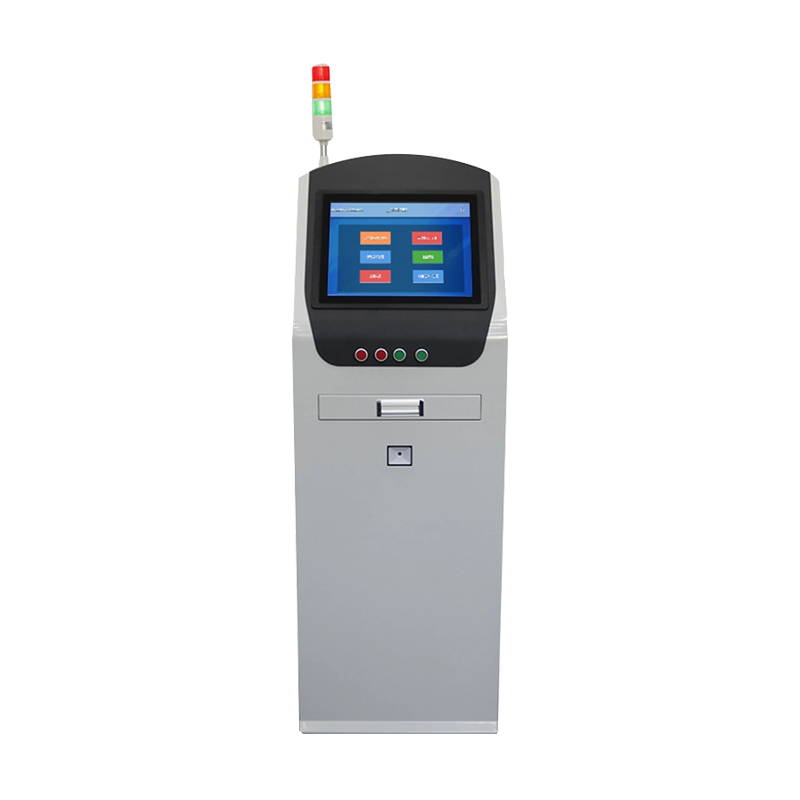
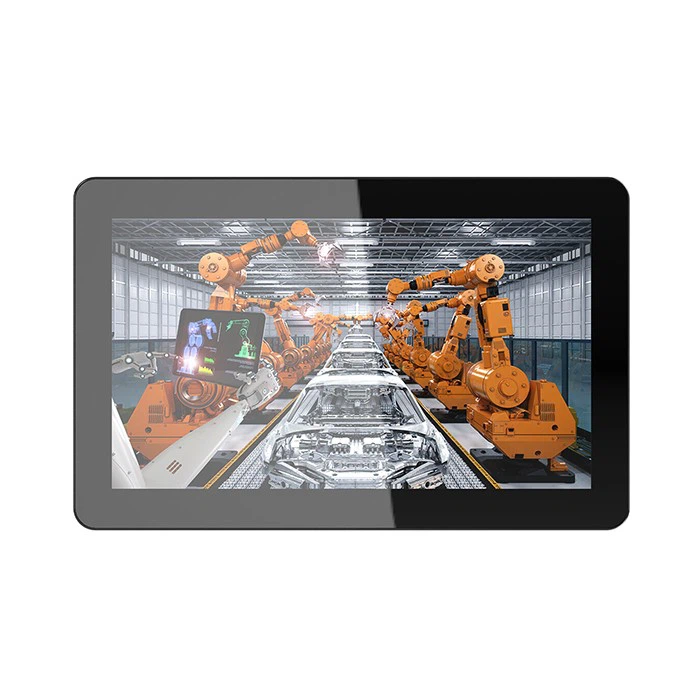
The core advantage of Senke’s one-stop industrial control terminal lies in building a product matrix covering all scenarios, without the need for enterprises to additionally match different types of equipment, to meet the hardware requirements of multiple links of intelligent manufacturing. After more than a decade of development and accumulation, Senke has formed a layout integrating industrial three-proof terminals, industrial computers, industrial tablet computers, and other multi-category products, covering key areas such as industrial internet, internet of things, and high-end equipment, and can adapt to the full-scenario requirements of intelligent manufacturing. Among them, industrial tablet computers cover various forms such as embedded, rack-mounted, vehicle-mounted, and three-proof types, with screen sizes covering mainstream specifications, and can flexibly adapt to the installation and usage requirements of different scenarios; industrial three-proof terminals focus on outdoor and complex environment adaptation, while industrial computers focus on high computing power data processing and equipment control, forming a complementary and collaborative product system.
The full-scenario adaptability stems from Senke’s in-depth insight into the needs of intelligent manufacturing scenarios and technical optimization. In response to the core pain points of different scenarios, products are adjusted in terms of structural design, protection level, and performance configuration to achieve “one product adapting to one scenario, one solution covering the entire process”. In the workshop production line scenario, the product adopts an all-aluminum alloy one-piece die-casting process, has an IP65 protection level and a fanless cooling design, can withstand high temperatures, dust, and electromagnetic interference, operates stably 24/7, seamlessly connects with PLC, MES, etc., and realizes real-time data collection and command issuance from the production line; in the outdoor inspection scenario, the product strengthens wide temperature adaptation and anti-vibration ability, can operate stably in -20°C to 60°C environments, has waterproof and dustproof characteristics, and is adapted to the mobile operation requirements of outdoor complex environments.
In addition to the full-category product layout, the core support of Senke’s one-stop industrial control terminal lies in its flexible customization capability and system compatibility, meeting the individualized and collaborative needs of intelligent manufacturing scenarios. The production processes and equipment configurations in different industries and enterprises vary greatly. Standardized products are difficult to fully meet individualized demands. Senke has the capability to customize hardware interfaces, functional modules, and appearance structures. Based on the actual needs of enterprises, it can adjust product configurations and functions, shorten the customization cycle, and meet the requirements of specific scenarios such as AGV cluster scheduling and machine vision inspection. At the same time, the product fully supports Windows, Linux, Android and domestic operating systems, integrates multiple industrial communication protocols, can seamlessly connect with various industrial equipment and software, break through data transmission barriers, and achieve collaborative and data communication of all scenarios of equipment.
The full life cycle of operation and maintenance support further improves the service system of one-stop industrial control terminals, reducing the operating costs of enterprises. Senke relies on its service network across the country to provide enterprises with full-process support for pre-sales consultation, scheme design, installation and commissioning, and after-sales maintenance. For the continuous production needs of intelligent manufacturing scenarios, it provides remote debugging and fault detection services, shortening the response time of operation and maintenance and reducing production interruptions caused by equipment failures. At the same time, the product adopts standardized and modular design, facilitating later upgrades and maintenance, and can flexibly expand functions according to the upgrade needs of enterprises for intelligent manufacturing, extending the service life of equipment and meeting the long-term development needs of enterprises.
The practice of Senke’s one-stop industrial control terminal is not simply the addition of products, but a systematic layout based on the full-scenario requirements of intelligent manufacturing. The core is to solve the pain points of scattered deployment of industrial control terminals, insufficient adaptation, and cumbersome operation and maintenance. Currently, its products have been widely applied in multiple intelligent manufacturing fields such as automotive manufacturing, 3C electronics, power energy, and warehousing logistics, providing targeted hardware support for different scenarios and helping enterprises achieve full-process digitalization and intelligence transformation. This one-stop solution oriented towards scenario requirements not only reflects the practical value of industrial control terminals but also provides a reference practice for domestic industrial control brands to serve intelligent manufacturing, promoting the deep integration of industrial control hardware and intelligent manufacturing scenarios.