Chinese Industrial All-in-One Computer Companies: New Forces in Industrial Control
Product knowledge 2026-03-30
In today’s era where the domesticization substitution in the industrial control field is continuously advancing and intelligent manufacturing is deeply implemented, industrial all-in-one computers, as the core terminals for human-machine interaction, data collection, and equipment control in industrial production, are entering a critical stage of industry development. Previously, the industrial control terminal market was dominated by overseas brands, but now, a group of Chinese industrial all-in-one computer companies, with a profound understanding of local scenarios, continuous technological accumulation, and collaborative capabilities in the industrial chain, have gradually emerged as new forces in the domestic industrial control sector, breaking the industry pattern while providing autonomous and demand-aligned terminal solutions for China’s manufacturing digital transformation, and becoming an important force driving the high-quality development of the industrial control industry.
- Rise of New Forces: From Following and Adaptation to Autonomous Breakthrough
The rise of Chinese industrial all-in-one computer companies did not happen overnight; it was a process of years of accumulation and gradual breakthrough. Initially, the domestic industrial all-in-one computer market was dominated by imported products, and local enterprises mostly focused on basic hardware assembly and simple scene adaptation, relying on external supply for core technologies and components, only able to meet the simple needs of basic industrial scenarios. In complex working conditions and high-end applications, they lacked competitiveness.
With the acceleration of digital transformation in the manufacturing industry and the enhancement of supply chain security awareness, the demand for domestic industrial control terminals has continued to grow. Chinese industrial all-in-one computer companies seized the development opportunities, transitioning from following and adapting to independent innovation, gradually building their own core capabilities. Driven by policy guidance and market demand, enterprises increased R&D investment, focused on industrial scene pain points, and continuously strived in areas such as hardware design, software adaptation, and protocol compatibility, gradually breaking away from reliance on imported core components and launching products and solutions that are adapted to local industrial scenarios. Today, domestic industrial all-in-one computers have achieved a leap from “usable” to “good to use”, gradually narrowing the gap with international advanced levels in terms of stability, compatibility, and scene adaptation capabilities, becoming an indispensable new force in the industrial control market, driving profound changes in the market pattern of the industrial control field. - Core Characteristics: Based on Localization, Creating Differentiated Competitive Advantages
As new forces in the domestic industrial control sector, the core competitiveness of Chinese industrial all-in-one computer companies stems from deep adaptation to local industrial scenarios and the collaborative efforts of the entire industrial chain, forming a differentiated advantage that is different from overseas brands. This advantage is reflected in multiple aspects such as technology, scenarios, and services.
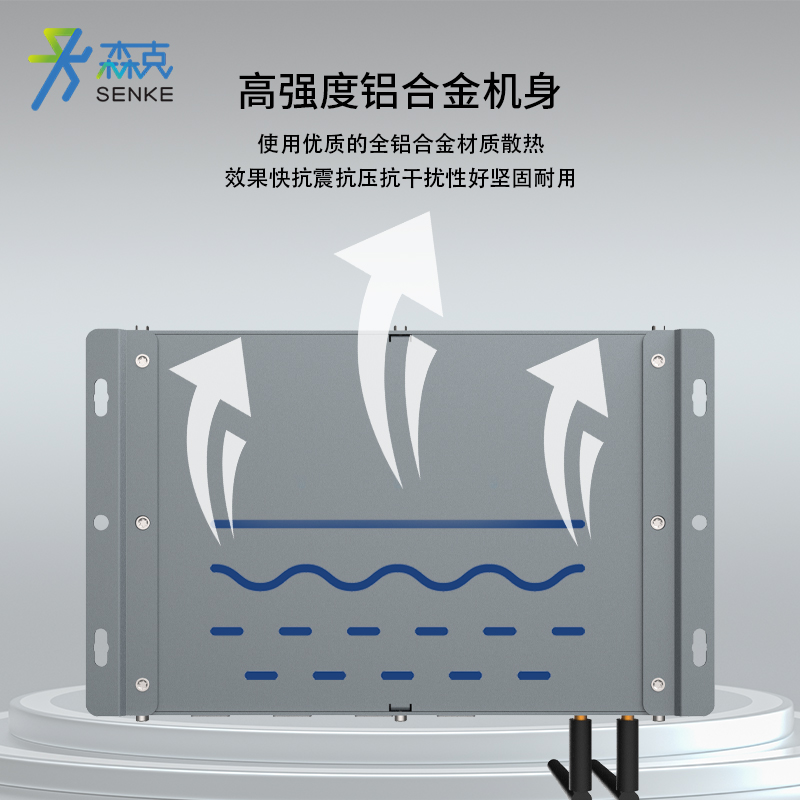
In terms of technology adaptation, enterprises focus on the complex needs of local industrial scenarios, optimizing product design and technical solutions. Industrial sites often encounter complex working conditions such as high and low temperatures, dust, vibration, and electromagnetic interference. Chinese industrial all-in-one computer companies optimize hardware structures, adopt fully enclosed non-fan designs, wide-temperature components, and high-protective-grade enclosures, and some products can operate at -40°C to +70°C wide temperature ranges and IP65 or above protection levels, adapting to special industrial scenarios, solving the problem of insufficient adaptability of overseas products in local complex working conditions. At the same time, enterprises accelerate the domestication of core software and hardware, compatible with Loongson, Phytium, and Zhigheng processor platforms, and deeply collaborate with domestic operating systems such as Kunpeng and UOS, forming a closed-loop technology ecosystem of “chip – system – application”, and some enterprises have achieved full-stack autonomous control from chips to computing platforms, processing all data locally, ensuring data security, and meeting the information technology innovation needs of key fields such as energy and military industry.
In terms of scenario implementation, enterprises abandon the “one-size-fits-all” model and delve into the production frontlines of various industries, identifying the core needs of different scenarios, and providing customized solutions. For the battery production line of new energy vehicles, they launch industrial all-in-one computers with micrometer-level precision control to improve assembly success rates; For the semiconductor manufacturing sector, optimize product adaptation capabilities and support the processing needs of 12-inch wafers; for scenarios such as smart mines and chemical industries, develop terminals with dust-proof, shock-resistant, and anti-electromagnetic interference features, suitable for complex conditions in underground mines and workshops; for office and government affairs scenarios, launch intelligent all-in-one machines that integrate data analysis and content creation, achieving universal access to capabilities. This scenario-based adaptation capability enables domestic industrial all-in-one machines to better integrate into local production processes, truly realizing the enabling value of the terminals, and this is an advantage that overseas brands cannot match.
In terms of industrial chain collaboration, Chinese industrial all-in-one computer companies actively collaborate with upstream and downstream enterprises to build an industrial ecosystem that develops collaboratively. The stable operation of industrial all-in-one machines is inseparable from the support of upstream industries such as chips, operating systems, industrial software, and sensors. Local enterprises actively carry out compatible adaptation with domestic chip manufacturers, operating system manufacturers, and industrial software enterprises to improve the industrial ecosystem. For example, some enterprises jointly form a national production line of smart all-in-one machines with multiple local enterprises, achieving full-stack autonomy integration from hardware complete machines, core chips to operating systems and large models. At the same time, some enterprises build vertical integrated manufacturing systems to achieve full autonomous control from R&D design to complete assembly, improving product quality and delivery stability. Some projects have achieved an annual production capacity of tens of thousands of AI all-in-one machines, filling regional industrial gaps.
III. Practical Enabling: Rooted in Industry, Helping Industrial Control Domestication Upgrade
As a new force in domestic industrial control, the development of Chinese industrial all-in-one computer companies has always been in sync with China’s digital transformation of manufacturing. Through product innovation and scenario implementation, it helps with the domestication replacement in the industrial control field and injects power into the upgrading of various industries.
In traditional manufacturing sectors, domestic industrial all-in-one machines are widely used in industries such as mechanical processing, warehousing and logistics, and food processing, replacing traditional control terminals and ordinary computers to achieve functions such as production parameter display, equipment status monitoring, and simple command issuance, improving production automation levels and reducing enterprise production costs. For example, in an automotive parts factory, domestic industrial all-in-one machines simultaneously connect 12 CNC machines, using an embedded MES system to achieve real-time production data collection, with a fault warning accuracy rate of 98%; in the smart warehousing scenario, by linking with AGV systems, it realizes cargo positioning and inventory warning, increasing sorting efficiency by 25% and reducing manual operation error rate to below 0.3%.
In high-end manufacturing and key fields, Chinese industrial all-in-one computer companies have gradually achieved breakthroughs, launching products and solutions that are adapted to high-end scenarios. In the fields of new energy, rail transit, and energy and power, domestic industrial all-in-one machines, with stable performance and customization capabilities, gradually replace imported products and achieve domestic adaptation of core terminals. For example, in wind farms, industrial control all-in-one machines integrate PLC data collection and Kirin system security protection, real-time displaying the operation status of wind turbines; in a pilot project of a heavy machinery enterprise, domestic industrial all-in-one machines seamlessly connect with domestic PLCs, achieving digital control of the entire production process, with the project acceptance cycle shortened by 60%. At the same time, under the promotion of the information security policy, domestic industrial all-in-one machines have been widely applied in fields with high security requirements such as government affairs and military industry, ensuring data security through hardware-level encryption and zero-trust terminal architecture, achieving “data not leaving the domain” security intelligence.
In addition, Chinese industrial all-in-one computer companies also extend the value boundary of their products through service model innovation. Enterprises have broken away from the traditional model of “merely selling products”, and have constructed a full-cycle service system of “products + services”, providing customers with one-stop services such as solution consultation, on-site debugging, system adaptation, and post-service maintenance. They address compatibility issues, functional expansion demands, and equipment fault troubleshooting encountered during usage, offering prompt responses and technical assistance to reduce equipment downtime and enhance user experience. Some enterprises have even established a 72-hour emergency response service covering the entire country, helping enterprises successfully complete the replacement of industrial control equipment with domestic products.
IV. Growth Path: Opportunities and Challenges Coexist, Proceed Steadily
As a new force in domestic industrial control, China’s industrial all-in-one computer company has experienced rapid development while also facing numerous challenges. Currently, there are still shortcomings in some high-end core components and core technologies, and the self-innovation ability for the development of high-end chips and specialized sensors needs to be improved. Some key technologies still require further breakthroughs; some small and medium-sized enterprises in the industry lack core competitiveness, with products showing obvious homogeneity and relying on price competition, which affects the overall development quality of the industry; at the same time, there is a shortage of compound technical talents, and industrial all-in-one computers involve multiple fields such as hardware design, software development, and industrial scene adaptation, and the shortage of talents restricts the innovation speed and implementation efficiency of enterprises; moreover, industry technical standards are not unified, and there are differences in product interfaces and protocol specifications among different enterprises, which affects the interconnection of equipment and the coordinated development of the industry.
However, it is undeniable that the development opportunities for China’s industrial all-in-one computer company far outweigh the challenges. With the continuous deepening of digital transformation in the manufacturing industry, the market demand for industrial control terminals will continue to expand, especially the demand for high-end intelligent industrial all-in-one computers and domestic industrial all-in-one computers will gradually increase; from the policy perspective, the country continuously supports the domestic research and development and application of core software and hardware in the industrial control field, providing a favorable policy environment for the development of enterprises; at the industrial chain level, the gradual improvement of domestic chips, operating systems, and industrial software provides solid support for the technological upgrade of industrial all-in-one computers.
In the future, China’s industrial all-in-one computer company will continue to focus on core technology research and development, increase investment in research and development, promote the self-innovation and adaptation of high-end core components, improve the full-stack autonomous control level, deepen the focus on specific industry scenarios, continuously enhance the scene adaptation and customization capabilities to create differentiated competitive advantages; strengthen industry collaboration, participate in the formulation of industry standards, promote the standardization of product interfaces and protocols, build an open and win-win industrial ecosystem; strengthen talent cultivation and recruitment, fill the talent gap, promote technological innovation and product iteration, and actively expand overseas markets to enhance the international influence of domestic industrial control terminals. Conclusion
From imitation to innovation, from basic adaptation to high-end breakthroughs, as a new force in domestic industrial control, Chinese industrial all-in-one computer companies are steadily advancing, gradually breaking the monopoly of overseas brands and promoting the domestication upgrade in the industrial control field. These enterprises base themselves on local demands, deeply engage in technological innovation, and align with scenarios for implementation. They not only provide stable and reliable terminal support for the digital transformation of China’s manufacturing industry, but also improve the domestic industrial control industry chain, demonstrating the innovative resilience of China’s manufacturing industry.
Although there are still challenges on the growth path, with the continuous iteration of technology, the continuous improvement of the industry chain, and the continuous strengthening of industry collaboration, Chinese industrial all-in-one computer companies will continue to exert efforts in the domestic industrial control field, gradually enhancing their core competitiveness, becoming the core force driving the high-quality development of China’s industrial control industry, and also occupying an important position in the global industrial control market, writing a new chapter in the development of domestic industrial control.