Architecture Design and Application Practice of Industrial MES System in Intelligent Manufacturing
Product knowledge 2026-03-05
In the intelligent manufacturing system, the industrial MES (Manufacturing Execution System) plays a crucial role in linking upper-level planning with on-site execution, serving as a vital hub connecting ERP, PLM and other management systems with on-site equipment, personnel, and materials. With the continuous improvement of factory digitalization, networking, and intelligence, MES is no longer merely a simple reporting and recording tool, but is evolving towards data integration, business collaboration, intelligent scheduling, and closed-loop management. This article starts from the perspective of intelligent manufacturing scenarios, sorting out the architecture design, core functions, application practices, and implementation key points of the MES system, providing references for enterprises to promote MES construction.
I. Core Requirements of MES Systems in Smart Manufacturing
Compared with traditional MES, MES in the context of smart manufacturing places greater emphasis on real-time performance, integration, flexibility, and scalability, which are mainly reflected in the following aspects:
- Real-time Data Interoperability
Data from production, equipment, quality, materials, and processes can be collected, processed, and presented in real time, supporting dynamic scheduling. - Deep Integration of Multiple Systems
Seamless integration with ERP, WMS, SCADA, PLM, and IoT platforms, reducing data silos and duplicate data entry. - Closed-loop Process for All Business Flows
From plan issuance, work assignment, production, inspection, warehousing to anomaly handling, a traceable and trackable closed-loop process is formed. - Adaptability to Flexible Production
Supports multi-variety, small-batch, and mixed-line production, quickly responding to scenarios such as process changes, order insertion, and material substitution. - Platformization and Scalability
Adopts a modular, low-coupling architecture, facilitating subsequent functional expansion, line replication, and system upgrades.
II. Overall Architecture Design of Industrial MES System
In the context of intelligent manufacturing, MES typically adopts a layered and distributed architecture, which takes into account stability, real-time performance, and scalability. Generally, it is divided into five layers:
1. Perception and Acquisition Layer
This layer is responsible for obtaining raw data from the site, mainly including:
- Device Layer: PLC, CNC, robots, sensors, instruments, AGVs, etc.
- Terminal Layer: Workstation touch screens, PDAs, barcode scanners, RFID, and andon buttons, etc.
- Acquisition Methods: Automatic acquisition, semi-automatic acquisition, and manual assisted entry.
2. Network and Communication Layer
Provides channels for data transmission:
- Industrial Ethernet, industrial wireless AP
- Industrial switches, firewalls, edge gateways
- Supports common protocols such as Modbus, OPC UA, MQTT, TCP/IP, etc.
3. Data and Service Layer
As the core support layer of the system:
- Database: Relational database, time series database (specific for device data)
- Data Services: Data cleaning, transformation, standardization, storage, and query
- Message Services: Real-time messaging, instruction push, and anomaly notification
- Interface Services: Provide APIs externally to achieve integration with systems such as ERP, WMS, and SCADA
4. Business Application Layer
Core functional modules of MES, covering the entire production process:
- Production planning and scheduling
- Production order management and dispatching
- Process execution and reporting
- Equipment data collection and status monitoring
- Quality management and inspection
- Material management and traceability
- Process document management
- Exception management and andon collaboration
- Man-hour and personnel management
- Reporting and data analysis
5. Display and Application End
Provide interfaces for different roles:
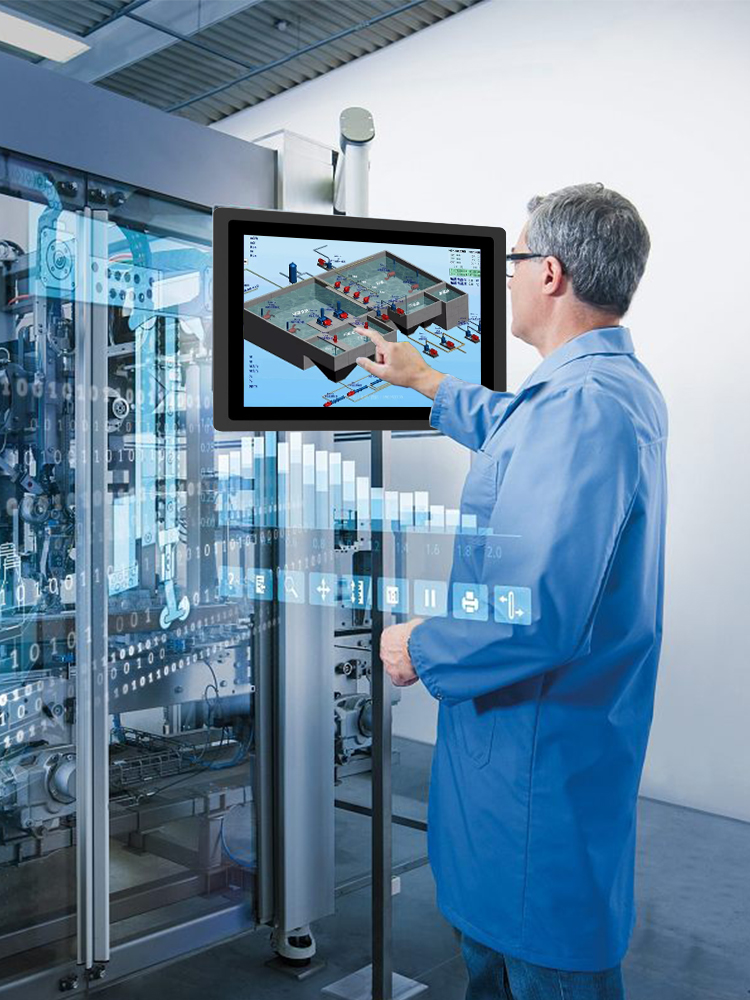
- PC Management End: Planning, scheduling, quality inspection, warehouse, equipment management, etc.
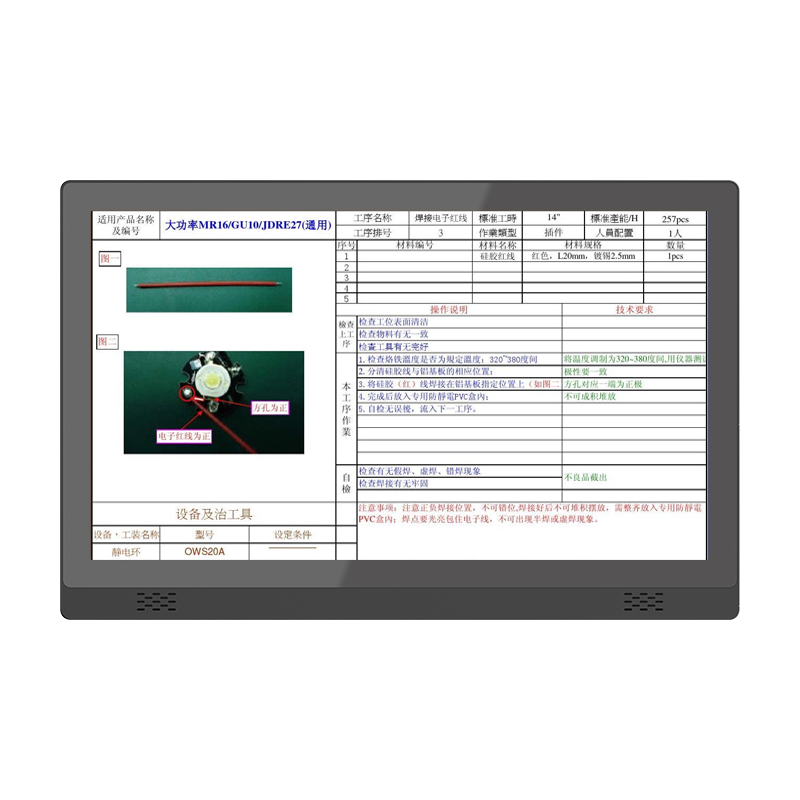
- Workstation End: Job guidance, process reporting, abnormal call, data confirmation
- Visual Board End: Workshop large screen, production line board, management cockpit
- Mobile End: Message notification, approval, inspection, remote viewing
This architecture enables the upper-level plans to be issued, the lower-level execution to provide feedback, and the global data to be interconnected, meeting the requirements of intelligent manufacturing for collaboration and transparency.
III. Core Modules and Business Process Practices of MES System
1. Planning and Scheduling Management
- Receive production orders from ERP, break them down into work orders, processes, shifts, and personnel
- Conduct finite capacity scheduling based on equipment capabilities, material status, and process routes
- Support scenarios such as emergency insertion of orders, batch production, and process splitting
2. Production Execution Management
- Work orders are issued to workstations, and operators follow the instructions to execute.
- Supports operations such as starting work, completing work, pausing, reworking, and scrapping.
- Records production volume, number of qualified items, number of defective items, and processing time in real time.
- Enables real-time updates of production progress, reducing manual statistics.
3. Equipment Data Collection and Maintenance Operations
- Connect to equipment via gateways to automatically collect operational status, rotational speed, current, energy consumption, and alarm information, etc.
- Calculate equipment utilization rate, downtime, and classify the reasons for downtime.
- Generate equipment maintenance reminders, and form a closed loop of maintenance work orders and records.
- Provide a data foundation for OEE analysis.
4. Quality Management and Traceability
- Supports first inspection, in-process inspection, and final inspection, with inspection items linked to process parameters
- Records defective phenomena, defective locations, and handling measures
- Enables forward and backward traceability by work order number, batch number, and serial number
- Forms quality trends to provide a basis for process improvement
5. Material and Warehouse Collaboration
- Real-time display of material requirements, shortage situations, and delivery status
- Automatic recording of material entry and exit from the warehouse, issuance, consumption, and return
- Support for batch and serial number management to prevent wrong and mixed materials
6. Abnormality Reporting and Andon Closed Loop
- Supports reporting of abnormalities in equipment, quality, materials, processes, safety, etc.
- Real-time push of abnormality information to relevant responsible persons
- Records response time, handling process, and handling results
- Generates abnormality statistics reports to drive continuous improvement
IV. Typical Application Value of MES in Intelligent Manufacturing
- Enhance Production Transparency
Real-time visibility of information such as plans, progress, equipment, and quality reduces communication costs. - Improve Execution Efficiency
Reduce manual documents and repetitive data entry, lower human errors, and enhance the stability of production rhythms. - Strengthen Process Controllability
Shift from passive post-event handling to in-process monitoring and early warning. - Enable Full-Process Traceability
Complete records of data on personnel, machines, materials, methods, and environment meet compliance and quality control requirements. - Support Data-Driven Decision Making
Quantifiable indicators such as capacity, efficiency, quality, and cost provide a basis for management improvement.
V. Key Points for the Implementation and Deployment of MES Systems
- Clarify Business Processes Before Implementing the System
Define the process flow, organizational responsibilities, data standards, and forms and reports to prevent the system from being disconnected from the actual operations. - Emphasize the Foundation of Data Collection
First address equipment networking, point identification, and protocol adaptation, then proceed with advanced applications. - Stress System Integration
Unify coding, interfaces, and data standards to avoid creating new information silos. - Implement in Stages
Prioritize the launch of core modules such as planning, work reporting, quality control, and traceability, and expand to scheduling and data analysis after stability is achieved. - Strengthen Training and Institutional Support
Integrate MES usage into daily management, clarify operational norms and responsibilities, and enhance acceptance among frontline staff. - Continuously Iterate and Optimize
Constantly refine processes, reports, and functions in response to changes in products, processes, and management requirements.
VI. Conclusion
The industrial MES system is the core execution layer in the intelligent manufacturing architecture. Its value lies not only in software functions but also in achieving closed-loop management from planning to execution through reasonable architecture design, standardized business processes, reliable data collection, and deep system integration. When enterprises promote the construction of MES, they should combine their own industry characteristics, production models, and digitalization foundations, adopt scientific implementation methods, and make MES truly an important support for production transparency, management refinement, and decision-making dataization, continuously empowering intelligent manufacturing.