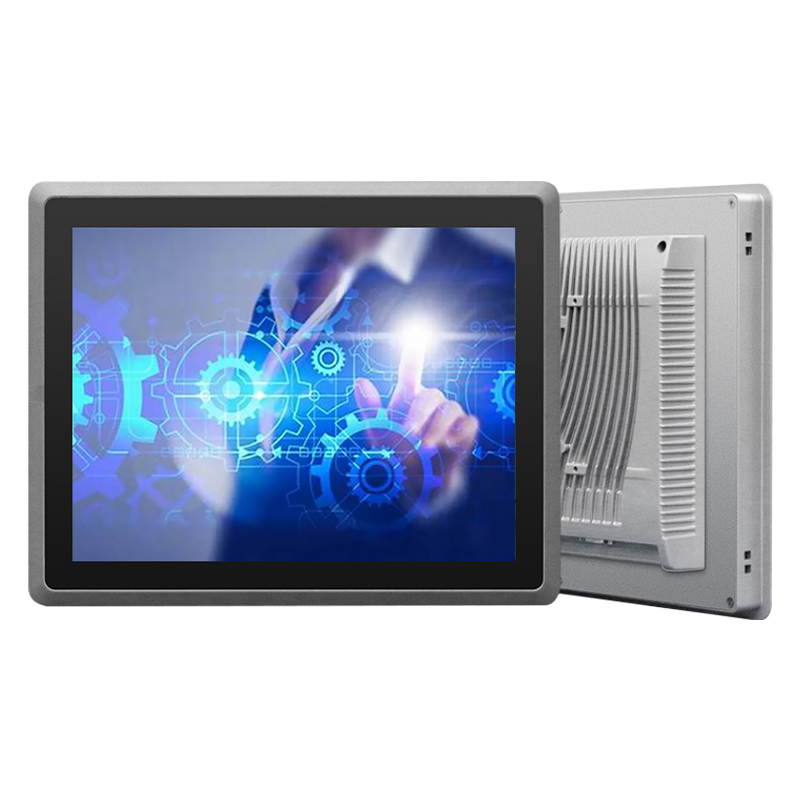
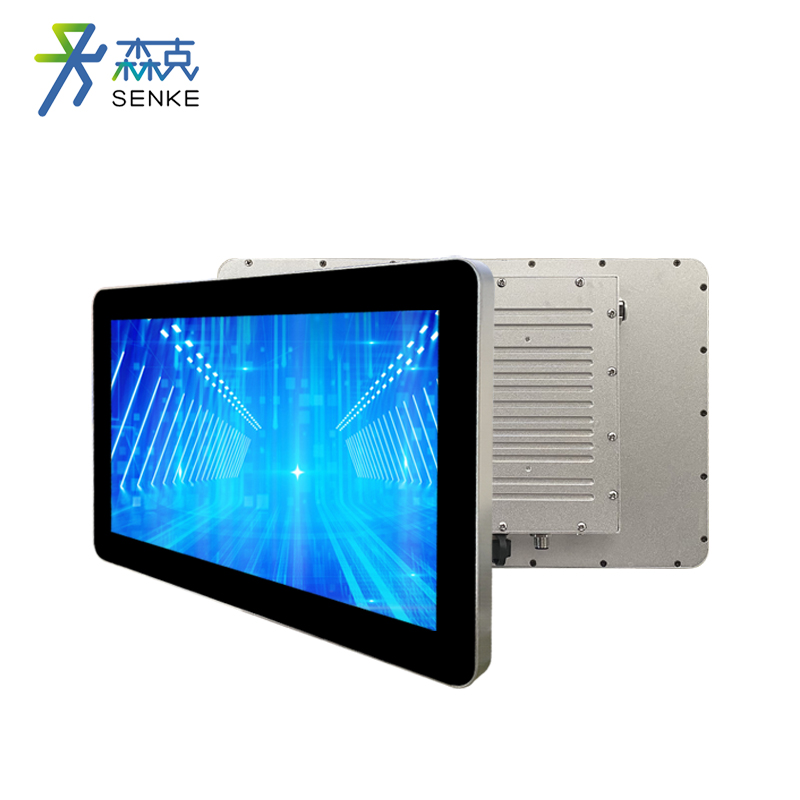
Industrial touch control, from adaptation to reliability
Product knowledge 2026-03-03
In the process of industrial automation and intelligent manufacturing’s industrial upgrading, industrial touch devices, as the core carrier of human-machine interaction, run through the entire process of various industrial scenarios. Their operating status directly affects production efficiency, operational convenience, and equipment stability. The core value of industrial touch lies not only in achieving “smooth communication between humans and equipment”, but also in building a reliable guarantee throughout the entire life cycle from the initial scene adaptation to the later stable operation. Adaptation is the prerequisite for the effectiveness of industrial touch, and reliability is the core for industrial touch to continuously create value. The two complement each other and are indispensable. This article, based on practical application experience in industrial scenarios, analyzes the core logic, key links, and practical points of industrial touch from adaptation to reliability, avoiding marketing-oriented expressions, providing objective and implementable references for industrial practitioners, and helping industrial touch devices fully realize their application value.
I. Adaptation: The fundamental prerequisite for industrial touch control, identifying the matching points between the scenario and the requirements
The diversity and complexity of industrial scenarios determine that industrial touch devices cannot adopt a “one-size-fits-all” application model. The adaptability directly affects whether industrial touch can function properly and is also the foundation for achieving reliable operation in the future. Adaptation, in essence, is to ensure that the performance, parameters, and functions of industrial touch devices precisely match the environmental conditions, operational requirements, and equipment linkage requirements of specific industrial scenarios, avoiding operational inconvenience, abnormal operation, and even equipment damage due to improper adaptation. The adaptation of industrial touch needs to be carried out around three core dimensions: scene environment, equipment linkage, and operational requirements, to ensure that each adaptation is in line with the actual application needs.
(1) Scene Environment Adaptation: The Foundation for Withstanding Complex Conditions
Industrial scenarios typically encounter complex conditions such as dust, moisture, extreme temperatures, strong electromagnetic interference, and vibration. These factors directly affect the operational stability of industrial touch control devices. The adaptation to the specific environment is the primary step in the adaptation of industrial touch control. The differences in conditions across various scenarios are significant, and the adaptation priorities also vary: in scenarios with a lot of dust and oil stains (such as in metallurgy, mining, and mechanical processing workshops), the focus should be on the protection level of the equipment, choosing touch control devices with excellent dust and oil resistance, sealing performance, and preventing dust and oil from entering the equipment interior, which could cause touch control failure and interface corrosion; in extreme temperature scenarios (such as outdoor cold or hot production workshops), wide-temperature touch control devices should be selected to ensure that the touch control sensitivity and display effect remain stable in both high and low temperature environments; in strong electromagnetic interference scenarios (such as in areas with centralized frequency converters or power equipment workshops), touch control devices with strong electromagnetic interference resistance should be chosen to avoid electromagnetic signal interference that leads to touch control errors and abnormal data transmission; in high-frequency vibration scenarios (such as in construction machinery or mobile industrial control terminals), reinforced touch control devices should be selected to optimize the fixed structure to prevent vibration from causing equipment loosening and internal component displacement.
The core of scene environment adaptation is “following the trend”. Based on the core working conditions of the scene, select industrial touch control equipment with corresponding tolerance capabilities in a targeted manner. Do not blindly pursue overly high configurations, nor ignore the impact of the working conditions on the equipment. This lays a solid foundation for the subsequent reliable operation of the environment adaptation.
(2) Equipment Interconnection Adaptation: The Key to Achieving Human-Machine Collaboration
Industrial touch control equipment does not operate independently; instead, it needs to be linked with various industrial equipment such as CNC machines, PLCs, MES systems, sensors, and frequency converters, as well as management systems to achieve a closed loop for command issuance, data transmission, and status feedback. The key to equipment linkage adaptation is to ensure that the interface types and communication protocols of the industrial touch control equipment are consistent with those of the linked equipment, to avoid problems such as abnormal linkage, data transmission interruption, and delayed command issuance.
During the actual adaptation process, it is necessary to clearly define the interface types of the linked devices (such as Ethernet, RS485, USB, etc.) and the communication protocols (such as Modbus, Profinet, etc.) in advance. Select industrial touch control devices that have compatible interfaces and matching protocols; at the same time, based on the number of linked devices and the data transmission volume, reasonably choose the interface quantity and transmission rate of the touch control devices to ensure smooth data transmission and timely response to instructions. For example, in an automated production line, industrial touch control devices need to be linked with multiple CNC machines and PLCs, so it is necessary to select touch control devices that support multiple interfaces and high-speed transmission to ensure that they can simultaneously receive the operation data of multiple devices and uniformly issue production instructions; in a small industrial control terminal, there are fewer linked devices, so a touch control device with simple interfaces and strong adaptability can be selected to meet the basic linkage requirements.
(3) Adaptation to operational requirements: The core for enhancing user experience
The core function of industrial touch control equipment is to achieve human-computer interaction. The adaptability of operation requirements directly affects the working efficiency and operation experience of the operators, and is also an important link to avoid errors and improve operational stability. The adaptation of operation requirements needs to be combined with the operation habits of the operators and the complexity of the processing procedures, and optimize parameters such as the size, touch sensitivity, and interface layout of the touch control equipment.
For example, in scenarios with frequent operations and complex parameter settings (such as CNC machines and intelligent machines), a touch device with moderate size, high touch sensitivity, and support for multi-window display can be selected. Common functions and core parameter settings can be placed in prominent positions to simplify the operation steps. For small portable industrial control devices, a touch device that is small, lightweight, and simple to operate can be chosen, suitable for handheld operation requirements. In outdoor scenarios, a touch device with high brightness and wide viewing angle can be selected to ensure that operators can clearly view the display content and operate precisely even in strong light conditions. At the same time, the touch interface can be customized according to operational needs, adapting to the operating habits of different position operators, reducing the operational threshold and minimizing errors.
II. Reliability: The core value of industrial touch control, ensuring stable protection throughout the entire lifecycle
If adaptation is the “entry threshold” for industrial touch control, then reliability is the “core competitiveness” of industrial touch control. The continuity and high precision requirements of industrial scenarios determine that industrial touch control equipment must have the ability to operate stably for a long time, be able to withstand the continuous impact of complex working conditions, reduce the occurrence of faults, and lower the operation and maintenance costs. The reliability of industrial touch control is not a single-dimensional performance indicator, but a comprehensive manifestation throughout the entire life cycle of equipment selection, installation and commissioning, daily use, and maintenance and repair, and it needs to be controlled through multiple links to build a stable guarantee system.
(1) At the selection level: Build a solid foundation of reliability
The reliability of industrial touch control primarily stems from the quality and performance of the equipment itself. The selection process is crucial in establishing the foundation of reliability. During the selection stage, in addition to meeting the requirements for scene adaptation, attention should also be paid to the quality of the core components, the manufacturing process, and the durability of the equipment: The touch layer uses wear-resistant and anti-aging conductive materials to prevent the decline in touch sensitivity caused by long-term high-frequency operation; The display module selects components with strong stability and long lifespan to avoid display issues such as screen flickering, ghosting, and brightness reduction; The internal circuits use industrial-grade components to enhance anti-interference and anti-aging capabilities and reduce circuit failures; The shell and sealing structure use high-quality materials to ensure the long-term stability of the protective performance and avoid equipment damage due to sealing failure.
At the same time, based on the operational requirements of the specific scenario, it is necessary to select touch devices that have been verified in long-term industrial environments and have a good reputation. Avoid choosing products with inconsistent quality, in order to reduce the probability of faults from the very beginning.
(2) Installation and Commissioning: Avoiding Potential Problems in Later Operation
Standard installation and commissioning are crucial for ensuring the reliable operation of industrial touch control equipment, effectively preventing potential faults caused by improper installation in the future. During the installation process, it is necessary to select an appropriate installation location, avoiding areas with high temperatures, strong electromagnetic interference sources, vibration sources, and those prone to dust and oil contamination. Ensure the installation is firm to prevent loosening or displacement during equipment operation. The wiring connection should be standardized, strictly following the power-off operation procedures to ensure the firm connection of interfaces and orderly arrangement of lines. Avoid pulling, wearing, or poor contact of the lines. At the same time, properly seal the interfaces to prevent dust and moisture from entering.
During the debugging phase, comprehensive tests need to be conducted on the touch sensitivity, display effect, data transmission, command issuance and other functions of the touch device to verify its collaborative operation with the associated equipment; core functions such as fault indication, parameter saving and retrieval should also be tested to ensure that the device’s various performances meet the application requirements; targeted debugging and optimization should be carried out based on the specific working conditions, for example, in extreme temperature scenarios, the temperature adaptability of the device should be tested to ensure that it can operate stably under different temperatures, and it can be put into use only after passing the debugging.
(3) Daily Use and Maintenance: To extend service life and ensure continuous reliability
The reliability of industrial touch control equipment can be ensured through regular daily use and periodic maintenance, reducing faults caused by human operational errors and equipment aging, and extending the service life of the equipment. During daily use, operators need to undergo professional training to be familiar with the operation methods and functional layout of the touch control equipment, follow standardized operation procedures, avoid pressing the touch screen forcefully, making incorrect operations on core parameters, etc., to prevent damage to the touch layer and internal components; avoid contact with non-standard media on the touch screen to prevent screen scratches and touch failure.
Regular maintenance is a crucial step in ensuring the reliability of equipment. It is necessary to formulate a reasonable maintenance plan based on the specific working conditions: regularly clean the surface and interfaces of the touch screen, using a clean and soft dust-free cloth for wiping, avoiding the use of corrosive cleaning agents, and cleaning the dust and oil stains at the interface to ensure good contact; regularly check the operating status of the equipment, test the touch sensitivity, display effect, and data transmission situation, promptly identify and address potential problems such as touch failure, display abnormalities, and loose interfaces; regularly back up data such as equipment parameters and fault records to prevent data loss and facilitate quick recovery when the equipment has issues; based on the usage of the equipment, regularly inspect and maintain the core components, promptly replace aging or damaged components to ensure stable equipment performance.
(4) Fault Handling: Prompt Response, Minimizing Losses
During the long-term operation of industrial touch control equipment, various faults are inevitable. Quick and standardized fault handling is an important link to ensure the reliability of the equipment and reduce production losses. When the equipment malfunctions, the operator should promptly stop the machine and cut off the power supply to prevent the fault from escalating. Record the fault phenomena (such as touch control failure, display with distorted images, data transmission interruption, etc.), and combine the equipment fault prompts to preliminarily identify the cause of the fault. For simple faults, targeted handling can be carried out according to the maintenance manual, such as reconnecting loose interfaces or cleaning dirty screens; for complex faults, professional technicians should be consulted for troubleshooting, and do not attempt to disassemble the equipment by yourself to avoid secondary damage.
At the same time, a fault ledger needs to be established to record information such as the time of the fault occurrence, the type of the fault, the handling method, and the handling result. The patterns of fault occurrence should be analyzed, potential faults should be predicted in advance, preventive measures should be taken, and the probability of fault recurrence should be reduced.
III. Adaptation and Reliable Collaboration: Maximizing the Value of Industrial Touch Control
The adaptation and reliability of industrial touch control are not independent of each other; instead, they are interrelated and work together. Adaptation is the prerequisite for reliability. Only by achieving precise adaptation of scenarios, equipment, and operations can a foundation be provided for the reliable operation of the equipment; reliability is the extension of adaptation. Only when the equipment has a long-term and stable operation capability can the value of adaptation be fully exerted, and avoid the situation where the adaptation loses its significance due to the unreliability of the equipment.
In practical industrial applications, it is necessary to abandon the misconceptions of “emphasizing adaptation while neglecting reliability” or “emphasizing reliability while neglecting adaptation”, and achieve the coordinated advancement of both: During the selection stage, not only the scene adaptation requirements but also the reliability of the equipment should be considered; during the installation and commissioning stage, not only the equipment’s adaptation to the scene and the linkage with other equipment should be ensured, but also the operation should be standardized to avoid potential operational risks in the future; during the daily use and maintenance stage, not only should the operation be standardized to ensure the reliable operation of the equipment, but also the adaptation parameters should be adjusted in a timely manner according to changes in the scene to ensure that the equipment always meets the requirements of the scene.
For instance, in the application of numerical control machines, industrial touch control devices need to first adapt to the processing requirements of the machine tools, the dusty and oily environment of the workshop, and the linkage requirements with PLC and servo systems. At the same time, through standardized installation and regular maintenance, it is ensured that the equipment can operate stably for a long time, achieving precise setting of processing parameters, real-time monitoring of operation status, and rapid troubleshooting of faults. This not only meets the requirements of scene adaptation but also ensures the reliability of operation, ultimately improving the processing efficiency and quality of the numerical control machines.
IV. Summary
The core of industrial touch control application lies in achieving a two-way pursuit of “adaptation” and “reliability”. Adaptation addresses the issue of “whether it can be used”, enabling industrial touch control devices to fit the scenarios and meet the requirements, thus becoming an effective medium for human-computer interaction; reliability addresses the issues of “whether it is good to use and whether it can be used for a long time”, ensuring the stable operation of industrial touch control devices and their continuous creation of value, providing reliable support for industrial production.
With the continuous development of industrial automation and intelligent manufacturing technologies, industrial scenarios have placed higher demands on the adaptability and reliability of industrial touch control devices. Industrial practitioners need to base themselves on the actual situation of the scenarios, accurately grasp the key points of adaptation, and build a solid guarantee for reliability. Through precise management of all aspects including selection, installation, maintenance, and fault handling, they can achieve the upgrade from adaptation to reliability of industrial touch control, fully exerting its core role in human-machine interaction, and helping industrial production develop towards efficiency, stability, and intelligence.