Hardware Architecture and Environmental Adaptation Technology of Senke Industrial Displays
Product knowledge 2026-05-13
In industrial production and automation scenarios, displays serve as the core terminal for human-machine interaction, and their stability, environmental adaptability, and display accuracy directly affect production efficiency and maintenance quality. Relying on mature hardware design and precise technical calibration, Senke industrial displays are adapted to various complex industrial conditions and have become practical devices in the field of industrial visualization. Compared with civilian displays, the core requirements for industrial equipment focus on environmental tolerance, operational stability, and long-term reliability. Senke industrial displays achieve comprehensive adaptation to industrial scenarios through targeted technical optimization.
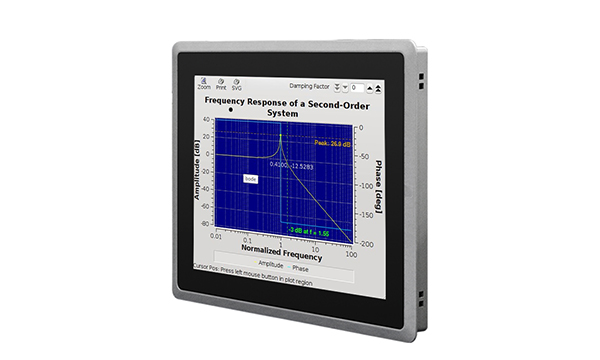
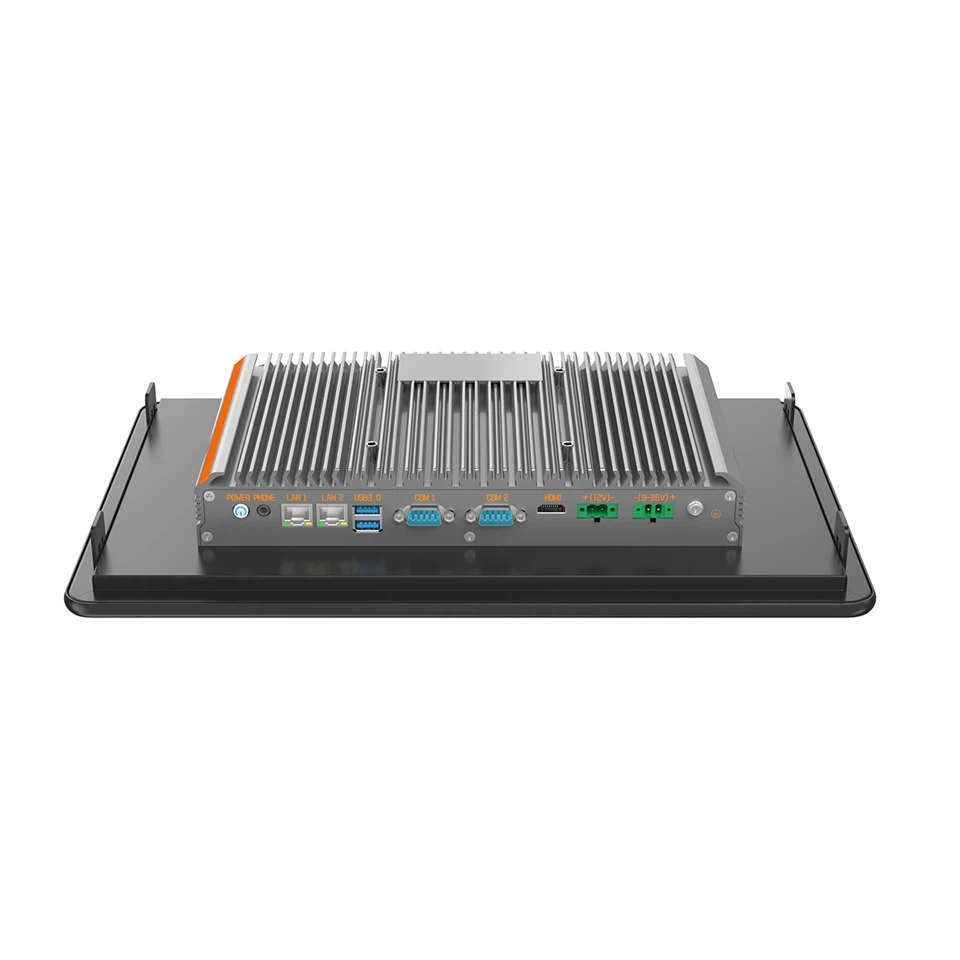
The hardware architecture is the foundation for the stable operation of industrial displays. Senke industrial displays adopt a full aluminum die-casting body design, which not only effectively reduces the weight of the equipment but also enhances the structural strength and heat dissipation performance of the body. In industrial scenarios, equipment often needs to operate continuously for long periods, and the heat dissipation effect of the body directly determines the service life and operational stability of the equipment. The thermal conductivity of full aluminum is much higher than that of ordinary plastic bodies, enabling rapid conduction of heat generated by internal components to the outside, avoiding problems such as component aging and operational lag caused by overheating. At the same time, the full aluminum die-casting process makes the body structure more compact, effectively resisting vibrations and impacts in industrial sites and reducing the influence of the external environment on internal components, thus adapting to complex scenarios such as frequent start-stop and mechanical vibrations in industrial production.
In terms of protection performance, Senke industrial displays adopt a fully enclosed dust-proof design, combined with IP65 sealing technology, which can effectively prevent dust, oil, water vapor, and other impurities from entering the equipment. In industrial production environments, the long-term accumulation of dust and oil can cause short circuits and component damage in the display’s internal circuits, while the intrusion of water vapor may lead to circuit board corrosion, affecting the normal operation of the equipment. Senke industrial displays’ sealing design uses dedicated sealing strips and a fully enclosed housing structure, with precise sealing treatment at the seams, effectively isolating various impurities and ensuring long-term stable operation of the equipment in industrial scenarios with high dust, humidity, and oil content, without the need for frequent cleaning and maintenance.
Wide-temperature operation technology is one of the core technologies of Senke industrial displays for adapting to complex industrial environments. The temperature fluctuations in industrial scenarios are significant, and in some outdoor industrial sites or high-temperature production workshops, the temperature can range from -20°C to 60°C. Ordinary civilian displays may experience screen blackouts, color distortion, and operational failures within this temperature range. Senke industrial displays optimize the selection of internal components and circuit design, using wide-temperature-adapted displays and driver chips, enabling normal operation within the temperature range of -20°C to 60°C without the need for additional heating or cooling equipment. Additionally, the equipment is equipped with a temperature monitoring module that can monitor the internal temperature in real time. When the temperature exceeds the safe range, an automatic temperature regulation mechanism is activated to ensure the stability and safety of the equipment’s operation.
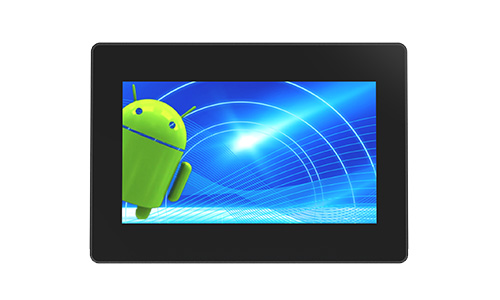
Anti-interference performance is an indispensable technical characteristic for industrial displays in industrial automation scenarios. Industrial sites have a large number of frequency converters, motors, high-voltage equipment, etc., which generate strong electromagnetic interference during operation, easily affecting the signal transmission and display effect of the display, causing problems such as screen flickering, flashing, and signal interruption. Senke industrial displays adopt electromagnetic shielding technology in the circuit design, with dedicated shielding layers inside the body, effectively blocking external electromagnetic interference and ensuring the stability of signal transmission. At the same time, the signal interfaces of the equipment are designed to resist interference, optimizing the interface circuits and transmission lines to reduce interference during signal transmission and ensuring the clarity and stability of the display image, thus adapting to scenarios with high requirements for signal stability, such as industrial automation production lines and intelligent control systems. Display accuracy and picture quality performance are also the core technical highlights of Senke industrial displays. In industrial scenarios, operators need to precisely view production data, equipment operation parameters, monitoring images, etc. through the display, and have high requirements for display accuracy and color reproduction. Senke industrial displays adopt high-definition and high-brightness screens, with pixel density reaching industrial-grade standards, capable of clearly presenting various detailed data and images. The color reproduction is close to the real scene, avoiding operational errors caused by blurred images and color distortion. At the same time, the display screen adopts anti-glare technology, which can effectively reduce the impact of strong light in industrial sites on the display image. Operators can clearly view the screen content from different angles and under different lighting conditions, improving the convenience and accuracy of operation.
Overall, Senke industrial displays achieve all-round adaptation to complex industrial scenarios through the optimization of hardware architecture, the upgrade of protection technology, and the application of wide-temperature and anti-interference technology. Its stable operation performance, precise display effect, and reliable protection capability can meet the usage requirements of various scenarios such as industrial production, automation control, and on-site monitoring, providing practical and reliable terminal solutions for industrial visualization and assisting in the efficient and stable operation of industrial production.