The upgrading path of Chinese industrial touch screen computer companies in the context of Industry 4.0
Product knowledge 2026-03-18
Industry 4.0 is centered on intelligence, networking and digitization, promoting the transformation of manufacturing from traditional automation to intelligent collaboration. Industrial touch screen computers, as the core terminals for human-computer interaction, data collection and equipment linkage, are the key hubs connecting physical production and digital systems. Under the wave of Industry 4.0, the single control function of traditional industrial touch screen computers has been unable to meet the demands of new industrial scenarios such as flexible production, intelligent management and remote collaboration. Chinese industrial touch screen computer companies are facing comprehensive pressure and opportunities in terms of technology, products, models and ecosystems. This article will objectively review the core changes in industry requirements under the background of Industry 4.0, clarify the core upgrade path for Chinese industrial touch screen computer companies, and the entire text does not contain marketing-oriented expressions, no extreme words or advertising-sensitive content, and does not involve specific enterprise names, focusing on the overall upgrade laws and practical directions of the industry.
I. Core Transformation of Industry Demand in the Context of Industry 4.0
The in-depth implementation of Industry 4.0 has led to a leap from “automation” to “intelligence” and “collaboration” in industrial scenarios. This has raised new requirements for the functions, performance, and adaptability of industrial touch-screen computers. The shift in demand has become the core driving force for enterprise upgrades. This transformation is reflected not only in hardware performance but also extends to software adaptation and application scenarios.
From the perspective of functional requirements, industrial touch-screen computers are no longer merely “operation terminals”, but have transformed into “intelligent data nodes”, needing to possess comprehensive functions such as data collection, edge computing, intelligent analysis, and fault warning, to achieve seamless integration with PLCs, MES systems, industrial robots, sensors, etc., breaking the information silos of equipment and supporting the digital control of production processes. For instance, in a smart workshop, industrial touch-screen computers need to collect real-time operating parameters of equipment at each workstation, conduct preliminary data analysis through edge computing, simultaneously push fault warnings and maintenance suggestions, and provide decision support for production scheduling.
From the perspective of performance requirements, the complexity of the industrial 4.0 scenarios sets higher standards for product reliability, compatibility, and real-time performance. Industrial-grade basic functions such as wide temperature adaptation, high protection level (IP65 and above), anti-electromagnetic interference, and fanless cooling have become standard features. At the same time, higher computing power support is required to accommodate multi-task parallel processing and the operation of complex industrial software. In some high-end scenarios, special requirements are also imposed on screen display accuracy and touch sensitivity, such as using IPS screens to enhance multi-angle visibility, and through optical bonding technology to reduce reflection and improve readability in strong light conditions.
From the perspective of scene requirements, Industry 4.0 has driven the application scenarios to extend towards specialization, flexibility and diversification. The individualized demands in specialized fields such as new energy, rail transportation, intelligent warehousing, precision manufacturing, and medical equipment have become increasingly prominent. At the same time, the demand for intelligent upgrading of outdated equipment is gradually being released, requiring enterprises to be able to provide customized products and low-cost upgrade solutions that can adapt to the working conditions and transformation requirements of different industries. Moreover, the enhancement of cybersecurity requirements for industrial control systems has also raised new demands for access control and data encryption functions of industrial touch screen computers.
II. The Core Upgrade Path of Chinese Industrial Touchscreen Computer Companies
In response to the demand changes brought about by the background of Industry 4.0, the upgrading of Chinese industrial touch screen computer companies should be carried out around four key dimensions: “technology iteration, product optimization, model transformation, and ecological collaboration”. A comprehensive and systematic upgrading system should be formed. Not only should the hardware foundation be strengthened, but also the software and service capabilities should be enhanced. The transformation from “hardware supplier” to “comprehensive solution service provider” should be achieved, while also taking into account the demands for domestication, self-control, and green development.
(1) Technological Upgrade: Strengthen Core Defenses and Promote the Implementation of Multi-Technology Integration
Technological iteration is the core support for enterprise upgrading. Under the background of Industry 4.0, Chinese industrial touch screen computer companies need to focus on breakthroughs in core technologies and integration of new technologies, fill in the technical gaps, enhance the core competitiveness of products, and concentrate their efforts on three major directions.
One is the upgrade of hardware core technologies. The selection and adaptation of core components such as processors, display panels, and touch modules are optimized. A differentiated hardware spectrum is constructed based on the requirements of different scenarios. For low-end scenarios, a high-performance 32-bit ARM processor with good cost-effectiveness is adapted. For mid-to-high-end scenarios, high-performance multi-core processors are adopted to support complex data visualization and edge computing functions. The display and touch technologies are upgraded, and new display solutions such as IPS and OLED are promoted to enhance screen clarity and visibility. Resistor or capacitive touch modules are flexibly selected based on the requirements of different scenarios, balancing ease of operation and environmental adaptability. The structural design is strengthened, and heat dissipation and protection processes are optimized. The IP protection level is enhanced for different scenarios, such as food and beverage, pharmaceutical industries, which are adapted to IP69K protection against high-pressure, high-temperature water jet flushing, and outdoor scenarios, which are strengthened for wide temperature (-30℃ to 80℃) adaptation and high-brightness display capabilities. At the same time, the design of power modules and storage modules is improved. A wide-voltage input scheme is adopted to adapt to fluctuations in industrial power grids, and large-capacity storage is equipped to meet the retention requirements of historical data and fault logs.
The second aspect is the upgrade of software and algorithm technologies. It adopts an industrial-grade operating system to optimize system stability and compatibility, streamline redundant functions, reduce the risks of lag and crashes, and enhance compatibility with industrial control software and configuration software. It supports mainstream industrial protocols such as Profinet, EtherNet/IP, and Modbus TCP, enabling seamless integration with industrial internet, MES systems, PLCs, and other devices. It introduces artificial intelligence and edge computing algorithms, develops functions such as fault prediction, intelligent operation and maintenance, and data visualization. By analyzing equipment operation data, it can predict potential faults in advance, reducing unplanned downtime. For the upgrade needs of old equipment, it develops adaptation software for protocol conversion and data collection, reducing upgrade costs and achieving interconnection between old equipment and new systems. Additionally, it strengthens the application of cybersecurity technologies, complies with the requirements for cybersecurity protection of industrial control systems, and adopts measures such as user identity authentication and two-factor authentication to ensure the security of industrial data.
The third point is the independent upgrade of domestic technology. Under the dual demands of Industrial 4.0 and the autonomous control of the supply chain, increase investment in the independent research and development of core components, industrial-level operating systems, and core algorithms, promote the domestic substitution of core components such as processors, display panels, and touch control modules, enhance supply chain resilience, and reduce external dependence. Strengthen collaboration with domestic upstream and downstream enterprises, jointly develop core technologies that are adapted to local industrial scenarios, build a domestic technology system, and at the same time explore the in-depth adaptation of domestic operating systems (such as HarmonyOS), utilize distributed technology to achieve multi-device collaboration, and break the isolation of devices.
(2) Product Upgrade: Focus on Scenario Adaptation, Build a Diversified Product System
The segmented requirements of the Industrial 4.0 scenario have determined that product upgrades need to break free from the dilemma of homogeneity, focus on scenario adaptation, and create a differentiated product system of “standardization + customization”. At the same time, it is necessary to take into account the upgrade needs of old equipment, and enhance the product’s scenario adaptation ability and application value.
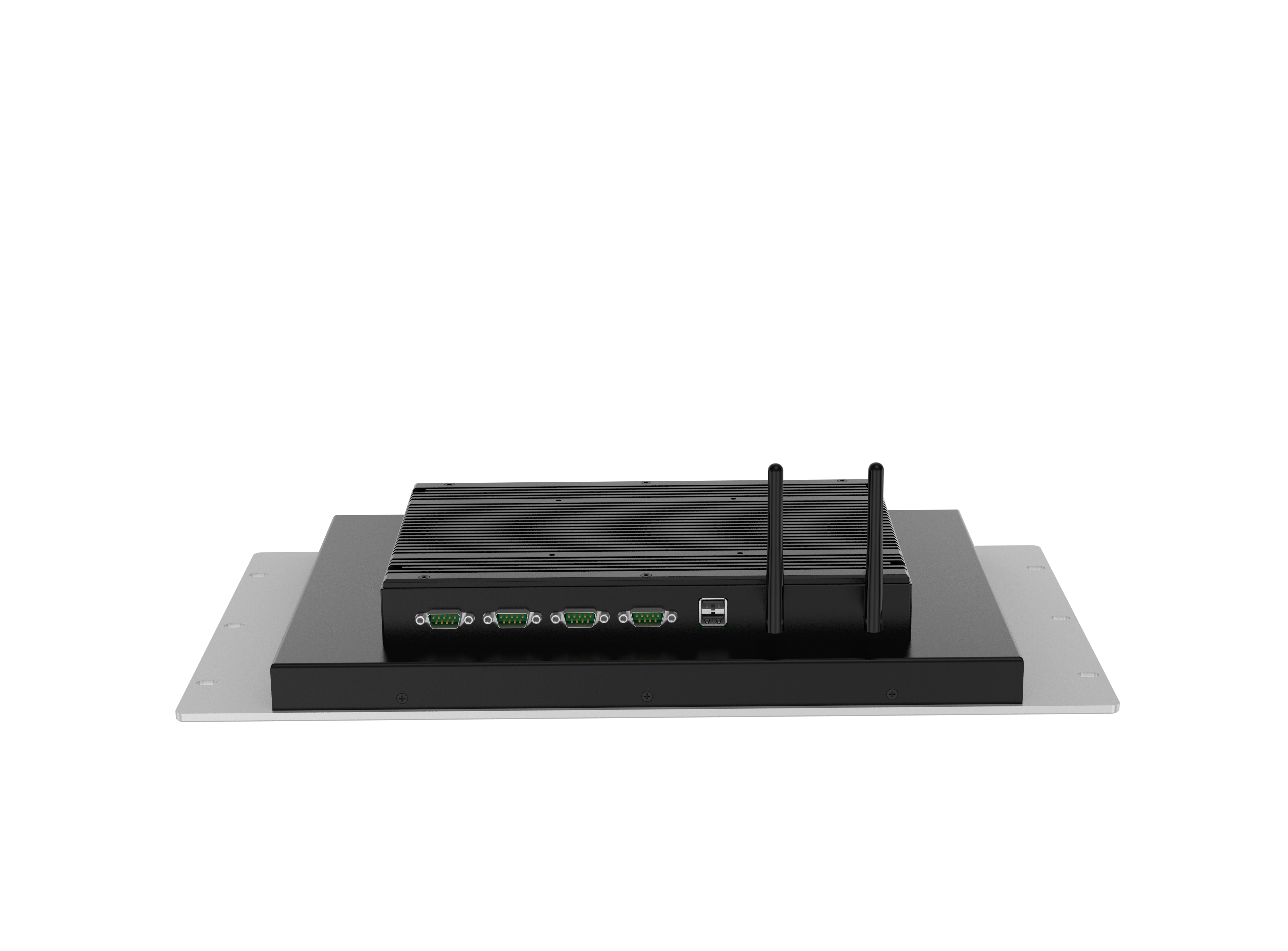
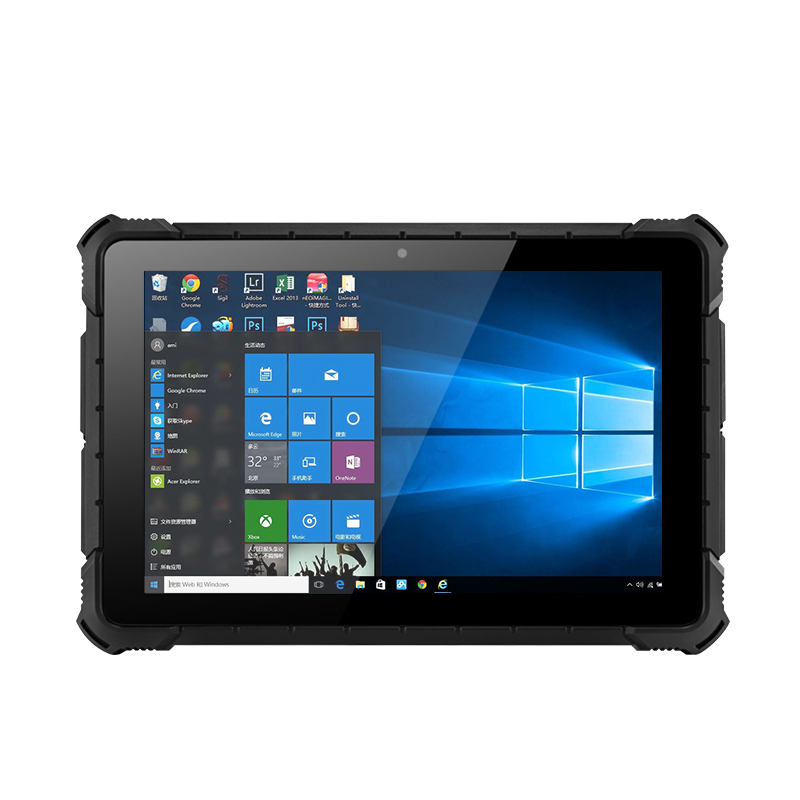
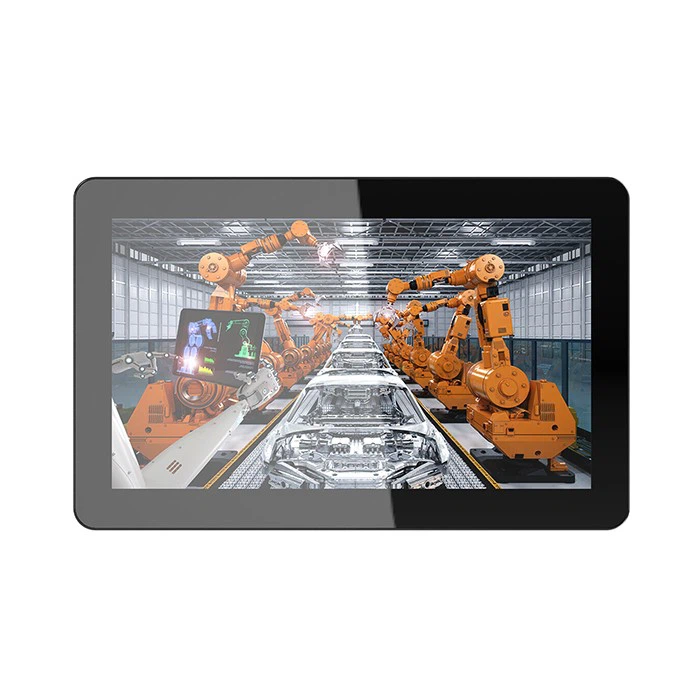
One is the optimization of product form and specifications. Based on the installation and usage requirements in the context of Industry 4.0, we have improved the layout of various product forms such as embedded, wall-mounted, rack-mounted, and desktop models, optimized the product size and structure design, and adapted to different installation scenarios such as flexible production lines, intelligent equipment, and outdoor terminals. We have established a full-size product gradient, covering specifications ranging from 7 inches to 21.5 inches and above. Small-sized products focus on supporting small devices and mobile operations, large-sized products emphasize data visualization and centralized control, and medium-sized products balance versatility and convenience, meeting the display and operation needs of different scenarios.
The second is customized product development based on scenarios. We deeply explore the operational pain points and demands of various industry segments, and develop customized products accordingly. For instance, in the field of new energy, we focus on anti-electromagnetic interference, wide temperature compatibility and high protection performance, and these products are suitable for scenarios such as lithium battery production and photovoltaic power stations; in the rail transportation industry, we enhance anti-vibration and long-life design to meet the needs of train dispatching and equipment monitoring; in the medical industry, we optimize easy-cleaning and hygiene protection designs to comply with industry disinfection and hygiene standards; in the smart warehousing industry, we launch portable and three-proof products that support barcode recognition and RFID data interaction, and are suitable for mobile operation scenarios. At the same time, for the upgrade needs of old equipment, we develop low-cost compatible products. Through accessories such as serial port servers and protocol conversion gateways, we achieve seamless connection between old equipment and new systems, reducing the cost of enterprises’ intelligent transformation.
The third aspect is the optimization of the product’s entire life cycle. By adhering to the concept of green manufacturing, low power consumption, long lifespan, and recyclable design are integrated throughout the entire process of product development, production, use, and recycling. Low-power components and environmentally friendly materials are selected, production processes are optimized, and energy consumption and pollutant emissions are reduced. The maintainability and upgradability of the product are enhanced. A modular design is adopted to facilitate future hardware upgrades and fault repairs, thereby extending the product’s service life and reducing resource waste. A product recycling system is established to dismantle, recycle, and reuse used terminals, achieving resource recycling and meeting the requirements of green development in Industry 4.0.
(3) Mode Upgrade: Transition from a single hardware solution to an integrated model of “hardware + software + services”
Industry 4.0 emphasizes full-process digitization and collaboration. A single hardware product is no longer sufficient to meet the comprehensive needs of enterprises. Chinese industrial touch screen computer companies need to promote business model transformation, shifting from “hardware sales” to an integrated solution of “hardware + software + services”, in order to enhance product value and customer loyalty.
One is to expand software and system integration services. We no longer limit ourselves to hardware production. Instead, we gradually extend the service chain and provide customers with value-added services such as software customization, system debugging, and protocol adaptation. Based on the customer’s production process, we integrate hardware, software, sensors, and other resources to create an integrated industrial control solution, helping customers achieve digital and intelligent upgrades in their production processes. For example, we provide upgrade solutions for old looms in textile factories. By installing sensors, adapting serial port servers and industrial touch screens, we enable monitoring of equipment operation parameters, fault warnings, and connection of production data, thereby enhancing production efficiency.
Second, improve the full life cycle operation and maintenance services. Establish local operation and maintenance service outlets, equip with professional technicians, and provide services such as rapid fault handling, regular inspections, product upgrades, etc., to ensure the long-term stable operation of the equipment; build a remote operation and maintenance platform, through the remote control function of industrial touch screen computers, realize real-time monitoring of equipment status, remote debugging and fault troubleshooting, reduce on-site operation costs, and improve operation efficiency; provide technical training services for customers, guiding customers to correctly use and maintain the equipment, reducing faults caused by improper operation, and at the same time transmitting new product functions and intelligent application skills.
Thirdly, explore new models for service-oriented transformation. In response to the cost pressure faced by some customers, we are exploring service models such as leasing and pay-per-use. We will provide customers with integrated services of “equipment + operation and maintenance”, reducing their initial investment costs. By integrating with the industrial internet platform, we will promote the transformation of products from “hardware + physical services” to “hardware + cloud services”, enabling data to be stored, analyzed and shared in the cloud, and providing production optimization suggestions to customers to enhance their production efficiency and management level.
(4) Ecological Upgrade: Strengthen coordination and collaboration, and build an industrial ecosystem.
The core of Industry 4.0 is collaborative development. The upgrading of Chinese industrial touch screen computer companies cannot be achieved without the collaborative interaction among the upstream and downstream enterprises in the industrial chain. It is necessary to break the limitations of single enterprises and build an industrial ecosystem featuring “collaboration between upstream and downstream, and interaction among academia, industry and research”. This will enhance the overall competitiveness of the industry.
One is to enhance the synergy between the upstream and downstream of the industrial chain. Deeply cooperate with core component manufacturers at the upstream, jointly develop core components suitable for the industrial 4.0 scenario, improve the compatibility and reliability of the components, and ensure the stability of the supply chain; collaborate with downstream intelligent manufacturing enterprises and system integrators to understand the specific requirements of the scenarios, make advance arrangements for product research and development and adaptation, promote the collaborative linkage of products with industrial robots, intelligent equipment, and industrial internet platforms, and achieve data exchange and functional complementarity. For example, cooperate with construction machinery enterprises, deeply integrate industrial touch screen computers with hydraulic equipment and control systems to achieve precise control and data traceability in the production process.
Second, promote collaborative innovation among industry, academia and research institutions. Cooperate with universities and research institutions, focusing on research and development in areas such as core technologies related to Industry 4.0, new display technologies, and the integration and application of artificial intelligence. Break through technical barriers, cultivate professional technical talents; participate in the formulation of industry standards, promote the standardization and normalization of industrial touch screen computer products, technologies and services, enhance industry discourse power, and guide the industry to upgrade in an orderly manner.
Thirdly, expand overseas markets and international cooperation. Leveraging the domestic technological and cost advantages, expand the emerging manufacturing markets in overseas regions, promote product exports, and at the same time absorb international advanced technologies and experiences to optimize products and services; participate in the construction of the global Industrial 4.0 ecosystem, conduct technical exchanges and cooperation with international enterprises, enhance the global competitiveness of the enterprise, and promote the products of China’s industrial touch screen computers to enter the global market.
III. Challenges and Countermeasures During the Upgrade Process
Under the backdrop of Industry 4.0, the upgrading process of Chinese industrial touch screen computer companies has not been smooth. They still face multiple challenges such as technical bottlenecks, shortage of talents, insufficient scene adaptation, and overseas competition. They need to adopt targeted strategies to actively respond and ensure the steady progress of the upgrading process.
First, address technical bottlenecks: Continuously increase research and development investment, focus on key areas such as high-end core components, core software, integration of artificial intelligence and edge computing, and intensify collaborative innovation with upstream and downstream enterprises and research institutions. Gradually break through technical limitations; based on local scenario needs, conduct differentiated technological research and development to avoid blind imitation and form one’s own technological advantages; promote the transformation of technological achievements, quickly implement laboratory technologies into marketable products to enhance the commercial value of the technology.
Second, addressing the issue of talent shortage: Establish a complete system for talent cultivation and recruitment, collaborate with universities to conduct targeted training, and cultivate interdisciplinary talents who possess capabilities in hardware research and development, software programming, and scenario adaptation; attract high-level technical and management talents from the industry to enhance the company’s R&D and management capabilities; establish a sound incentive mechanism to encourage technological innovation and the transformation of achievements, and retain core talents.
Third, address the issue of insufficient scene adaptation: Conduct in-depth industry research, establish a scene demand database, accurately grasp the working conditions and pain points of different industries, and enhance the product customization capability; Strengthen in-depth cooperation with downstream customers, carry out joint research and development, optimize products and solutions based on the customer’s production process, and improve the accuracy of scene adaptation; For the upgrade needs of old equipment, launch low-cost and easily implementable adaptation solutions to expand the market coverage.
Fourth, dealing with overseas competition: Strengthen domestic production advantages and cost advantages, improve product quality and service levels, and create differentiated competitiveness; Familiarize with overseas market rules and technical standards, optimize products specifically to meet overseas market demands; Enhance overseas market promotion and brand building, gradually increase the international reputation and influence of Chinese industrial touch screen computers; Actively respond to trade barriers, through international cooperation and local production methods, reduce the risks of expanding the overseas market.
IV. Summary
The deep implementation of Industry 4.0 has brought unprecedented upgrading opportunities to the Chinese industrial touch screen computer industry, and has also set higher development requirements. Technological iteration, product optimization, model transformation, and ecological collaboration are the core upgrading paths for Chinese industrial touch screen computer companies to adapt to the development of Industry 4.0. This path not only meets the changes in industry demand, but also conforms to the development trends of domesticization, self-control, and green manufacturing.
Currently, Chinese industrial touch screen computer companies have achieved certain technological accumulation and industrial foundation. Under the wave of Industry 4.0, the only way forward is to adhere to technological innovation, focus on scenario adaptation, and promote all-round improvement of business models and ecosystem.