Analysis of the Application Status of Senke Industrial Touchscreen Computers in the Context of the Development of the Local Industrial Control Industry
Product knowledge 2026-05-11
In the current era of continuous advancement in the digital transformation of manufacturing, the demand for human-machine interaction terminals in industrial settings is undergoing significant changes. Traditional mechanical buttons and ordinary commercial displays are no longer suitable for the complex environments and long-term continuous operation requirements of workshops. Industrial touchscreen computers, which feature strong adaptability, stable structure, and flexible installation, are gradually becoming standard equipment in various industrial scenarios.
The localization process of the industrial control industry is accelerating, and many local equipment manufacturing enterprises are delving into the research and development and production of industrial terminal hardware. From structural design, hardware adaptation to scene debugging, they are gradually aligning with the actual usage habits and working conditions of domestic factories. Senke has long-term product accumulation in the field of industrial touchscreen computers and has iterated its models based on the pain points of industrial usage, adapting to the daily needs of basic control, data viewing, and equipment linkage in different industries.
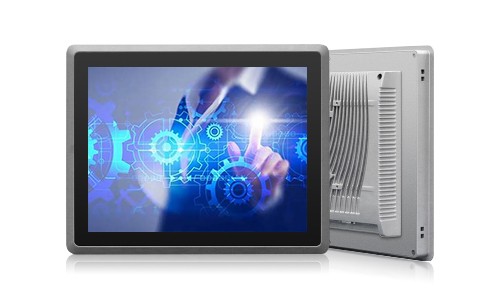
The industrial production environment often involves dust, moisture, oil stains, and temperature fluctuations. Ordinary computer equipment placed for long periods is prone to problems such as screen aging, internal dust accumulation, and operational lag. Senke’s industrial touchscreen computers adopt a closed-body structure design, with the body interfaces and panels sealed to prevent dust and moisture from entering the interior, reducing the probability of faults during daily use and adapting to conventional indoor working conditions such as workshops, warehouses, and environmental monitoring rooms.
In terms of hardware layout, most models feature fanless cooling designs, relying on the natural heat dissipation of the metal body to avoid the dust accumulation and noise issues caused by fan rotation, and reducing the frequency of maintenance for easily worn parts. The hardware configuration leans towards stability and practicality, supporting common industrial software such as industrial configuration software, data acquisition programs, and equipment control systems, meeting the basic usage requirements for continuous 24/7 operation and adapting to the production rhythms of two-shift and three-shift systems in factories.
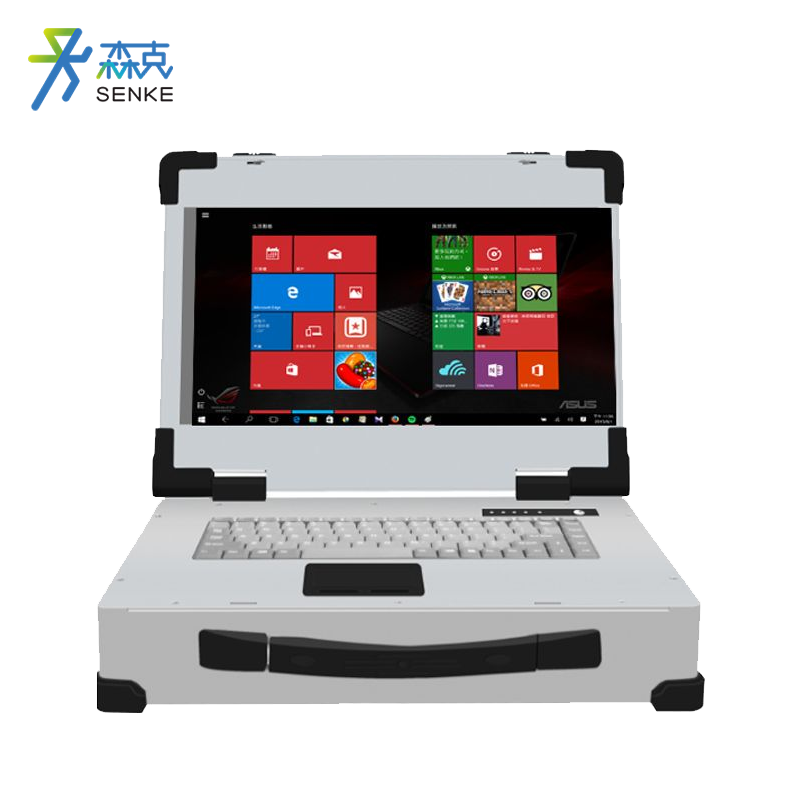
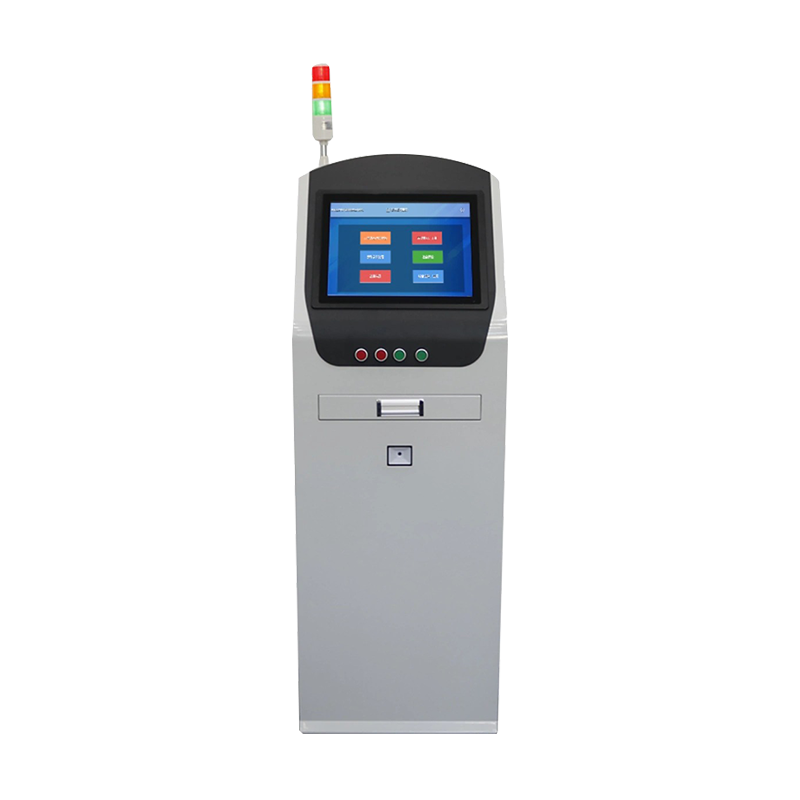
The diversity of installation methods is also a practical advantage of these industrial touch control devices. Senke’s industrial touchscreen computers support multiple installation forms, including embedded, wall-mounted, and desktop, which can be embedded in cabinet operation consoles or mounted on walls and equipment sides, not occupying much space on-site, and adapting to different layout scenarios such as the renovation of old workshops, the construction of new production lines, and the integration of equipment as a whole. Screen sizes range from small to large, allowing for flexible selection based on operating distance and visual range.
From the perspective of actual application scenarios, these industrial touchscreen computers are widely involved in the control of automated production lines, the visualization of production data, the sorting and dispatching of warehouse logistics, the viewing of environmental monitoring data, and the control of equipment in buildings and parks. The device operation interface is simple and intuitive, with smooth touch response, allowing staff to complete basic operations such as parameter setting, viewing of operating status, and retrieval of fault information through the screen, simplifying on-site operation processes.
As the pace of industrial digitalization continues to advance, industrial human-machine interaction terminals will develop towards better adaptation to working conditions, easier integration, and simpler maintenance. Relying on its experience in local scene adaptation, Senke’s industrial touchscreen computers continuously optimize in terms of body structure, hardware stability, and installation adaptability, capable of meeting the terminal usage needs of most traditional manufacturing and emerging light industries, providing basic hardware support for factory digital transformation and on-site intelligent operation and maintenance.