The core value of Chinese industrial all-in-one computers in industrial automation
Product knowledge 2026-03-25
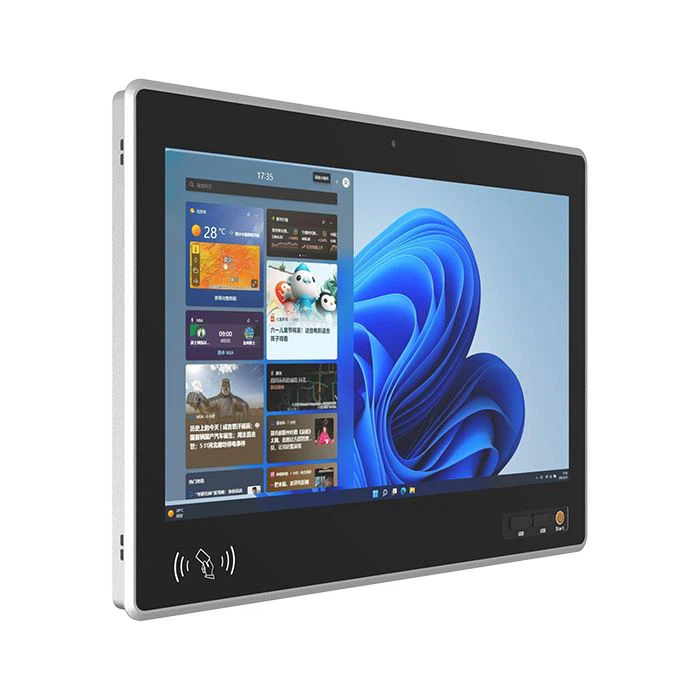
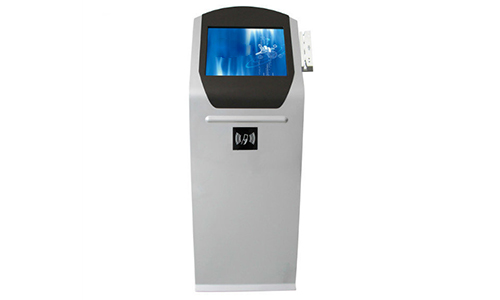
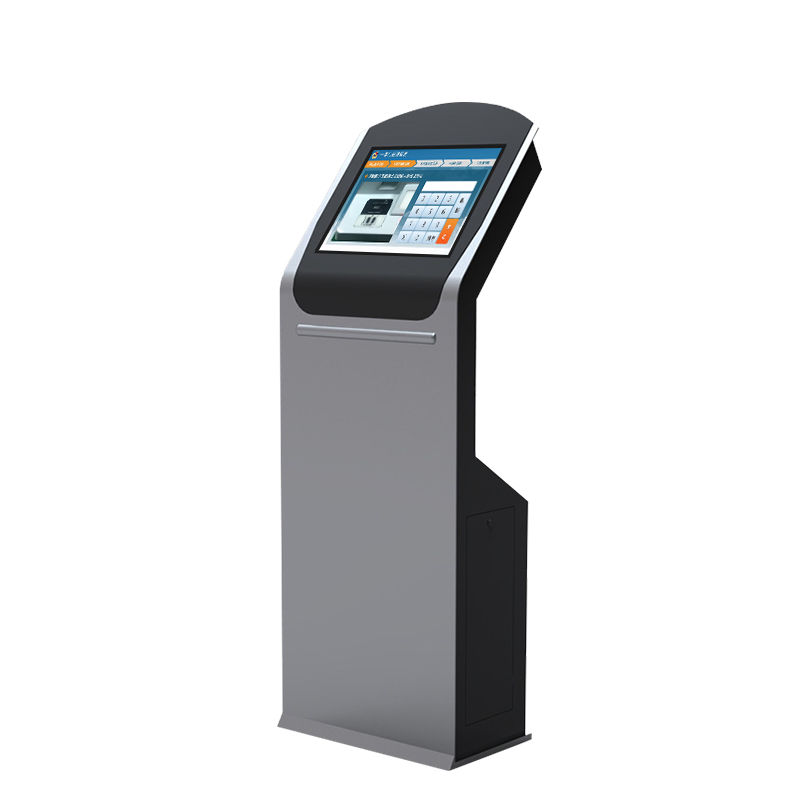
The core objective of industrial automation is to achieve efficient, standardized, and controllable production processes, reduce human intervention, and enhance production stability and product consistency. The industrial all-in-one computer in China, as an industrial-grade terminal integrating computing, display, control, and communication, with its characteristics suitable for industrial scenarios, deeply integrates into the entire process of industrial automation. It plays an irreplaceable role in key links such as equipment collaboration, data flow, and process control, and has become the core hardware support for promoting the implementation of industrial automation. This article starts from the actual needs of industrial automation, objectively analyzes the core value of the industrial all-in-one computer, and provides reference for industry applications.
- Connect the equipment and systems to establish an automated collaborative hub
In industrial automation systems, the interconnection between field devices (such as PLCs, sensors, servo motors, industrial cameras, etc.) and upper-level management systems (such as MES, SCADA, ERP, etc.) is the foundation for achieving process automation. Chinese industrial all-in-one computers, with their rich industrial interfaces and multi-protocol compatibility capabilities, play the role of an “intermediate hub”, breaking down the information barriers between devices and systems.
The industrial all-in-one machine is equipped with standard industrial interfaces such as RS232/485 serial ports, gigabit Ethernet, USB, GPIO, etc. It can directly connect to various on-site devices to achieve real-time collection of device status and precise transmission of control instructions. At the same time, it is compatible with mainstream industrial protocols such as Modbus, Profinet, EtherCAT, and OPC UA, enabling rapid connection with different brands and types of automation equipment and management systems, and solving compatibility issues in the process of multi-device collaboration. This connection capability enables scattered on-site devices to form an organic whole, ensuring the continuous advancement of the automated production process and reducing production interruptions caused by equipment disconnection.
II. Achieve optimization of human-computer interaction and lower the threshold for automated operations
Industrial automation is not completely free from human intervention. Instead, it requires operators to perform key operations such as parameter setting, status monitoring, and fault diagnosis. The convenience and stability of human-computer interaction directly affect the efficiency of automated production. The industrial all-in-one computer in China has optimized the human-computer interaction experience for industrial scenarios, taking into account both operational convenience and environmental adaptability.
The industrial-grade display it is equipped with supports high brightness, wide viewing angle and anti-glare processing, and is suitable for complex lighting conditions such as strong and weak light in the workshop, ensuring that operators can clearly view the equipment parameters and production data. The touch design is divided into resistive and capacitive types. The resistive type supports operation with gloves on, and the capacitive type supports multi-point touch, adapting to the operational needs of different working scenarios on-site. At the same time, the industrial all-in-one machine can be equipped with a dedicated industrial control interface, simplifying complex automation processes into visual operations. Operators do not need professional programming skills to complete operations such as adjusting process parameters and issuing production instructions, reducing the operational threshold of industrial automation and improving on-site work efficiency.
III. Supporting edge computing to ensure the real-time nature of automated processes
Industrial automation has high requirements for the real-time performance of production processes. Especially in scenarios such as precision processing and high-speed assembly, a millisecond-level response delay can affect production accuracy and product quality. Chinese industrial all-in-one computers possess powerful edge computing capabilities, enabling local data collection, preprocessing, and analysis at the production site. There is no need to upload all the data to the cloud, effectively reducing network latency and ensuring the real-time response of the automation process.
In practical applications, industrial all-in-one machines can collect real-time data such as operating parameters, production data, and fault information from on-site equipment, perform local filtering, aggregation and analysis, quickly identify equipment abnormalities and production deviations, and promptly feedback to operators or trigger automatic adjustment instructions, achieving a rapid closed-loop of “identifying problems – solving problems”. This edge computing capability not only enhances the real-time performance of automated production, but also reduces the pressure of data transmission on the cloud, lowers the impact of network failures on the production process, and ensures the stable operation of the automated system.
IV. Strengthen environmental adaptation to support the implementation of automation in challenging scenarios
Industrial automation scenarios often encounter complex conditions such as high and low temperatures, dust, oil contamination, vibration, and electromagnetic interference. Ordinary commercial terminals cannot meet the requirements for long-term stable operation. However, Chinese industrial all-in-one computers, through specialized design, possess strong environmental adaptability, providing support for the implementation of automation in demanding scenarios.
In terms of hardware design, the industrial all-in-one machine adopts industrial-grade components and supports wide temperature operation, capable of stable operation within a temperature range of -20°C to 60°C or even wider. The body adopts a metal reinforced structure and sealed design, and the front panel typically reaches IP65 or higher protection levels, effectively preventing dust, water, and oil contamination. At the same time, it adopts EMC/EMI anti-interference design, enabling stable operation in strong electromagnetic environments such as those of frequency converters and servo motors, avoiding the impact of signal interference on control accuracy. This environmental adaptability enables the industrial all-in-one machine to be widely applied in various harsh industrial scenarios such as mechanical processing, metallurgy, chemical industry, and new energy, promoting the implementation of automation technology in more industries.
V. Facilitating process standardization and enhancing the quality of automated production
One of the core advantages of industrial automation is to standardize and regulate production processes, reduce human operational errors, and enhance the consistency of product quality. The industrial all-in-one computer in China provides support for the standardization of automated production by solidifying production processes and recording production data.
Industrial all-in-one machines can pre-load standardized production process parameters and operation procedures. Operators only need to follow the prompts on the interface to complete the operations, ensuring that the production process complies with the standards and avoiding product quality issues caused by human operational errors. At the same time, it has data recording and traceability functions, which can record the equipment operation parameters, process execution status, product detection data, etc. during the production process in real time, forming a complete production ledger. This makes it convenient for managers to trace the production process, analyze quality issues, and optimize production processes. This process standardization support capability further leverages the advantages of industrial automation, helping enterprises improve product quality stability and reduce quality control costs.
Six. Reduce operation and maintenance costs and ensure the long-term stable operation of the automated system.
The long-term stable operation of industrial automation systems cannot be achieved without convenient operation and maintenance management. The Chinese industrial all-in-one computer, through its modular design and remote management functions, effectively reduces the operation and maintenance costs of automation systems.
The industrial all-in-one machine adopts a modular structure. The core components can be flexibly replaced and upgraded without the need to replace the entire equipment, thereby reducing the costs of equipment maintenance and updates. At the same time, some models support remote management functions. Maintenance personnel can configure parameters, update programs, check status and diagnose faults for on-site terminals via the network, reducing the workload of on-site inspections and improving the efficiency of maintenance. Moreover, the average downtime of the industrial all-in-one machine is longer, which can reduce the number of equipment failure shutdowns and lower production losses caused by shutdowns, further ensuring the long-term stable operation of the industrial automation system.
VII. Summary
The core value of China’s industrial all-in-one computers in industrial automation is mainly reflected in six aspects: coordination and collaboration, human-machine optimization, real-time response, environmental adaptation, process standardization, and operation and maintenance optimization. As the core terminal in industrial automation sites, it not only solves key problems such as equipment coordination, data flow, and environmental adaptation, but also lowers the threshold for automation operations and maintenance, promoting the efficient, stable, and standardized operation of industrial automation processes.
With the continuous upgrading of industrial automation technology, the functions and performance of industrial all-in-one computers are also being continuously optimized. They will further adapt to the automation needs of more specialized scenarios and deeply integrate into the upgrade process of intelligent manufacturing, providing solid hardware support for the high-quality development of industrial automation.