Senke industrial all-in-one computers are designed to be stable and reliable intelligent terminals for industrial scenarios.
Product knowledge 2026-04-22
In today’s era of continuous advancement in intelligent manufacturing, the requirements for hardware equipment in industrial sites are getting higher and higher. Ordinary commercial computers often struggle to adapt to complex environments, while industrial all-in-one computers, with their integrated design, durability, and stability, are gradually becoming important hardware supports for factory automation, production line monitoring, equipment control, data collection, and other scenarios. As a domestic brand specializing in industrial displays and industrial control terminals, Senke has been deeply engaged in the field of industrial all-in-one computers, launching multiple products suitable for different industries, providing stable and reliable terminal support for enterprises’ digital transformation.
There are significant differences between industrial and office environments. Workshops often have issues such as dust, oil stains, vibrations, high and low temperatures, and electromagnetic interference. Ordinary computers are prone to problems like freezing, lagging, loose interfaces, and screen damage in such environments, which not only affect production efficiency but also increase maintenance costs. Senke industrial all-in-one computers are designed specifically for industrial scenarios from the very beginning. They feature a robust and durable body structure, along with reinforced screens and stable hardware configurations, enabling them to operate continuously in complex working conditions.
In terms of structural design, Senke industrial all-in-one computers often adopt an integrated and compact layout, integrating the main unit, screen, and interfaces into a single body, saving installation space and facilitating embedding in cabinets, equipment panels, production line operation tables, and other locations. Some models support multiple installation methods, including embedded, wall-mounted, and desktop, to meet different installation requirements such as machine tools, automated equipment, sorting lines, and warehouse terminals. The body material is designed to balance strength and heat dissipation performance, ensuring structural stability while avoiding overheating due to long-term operation.
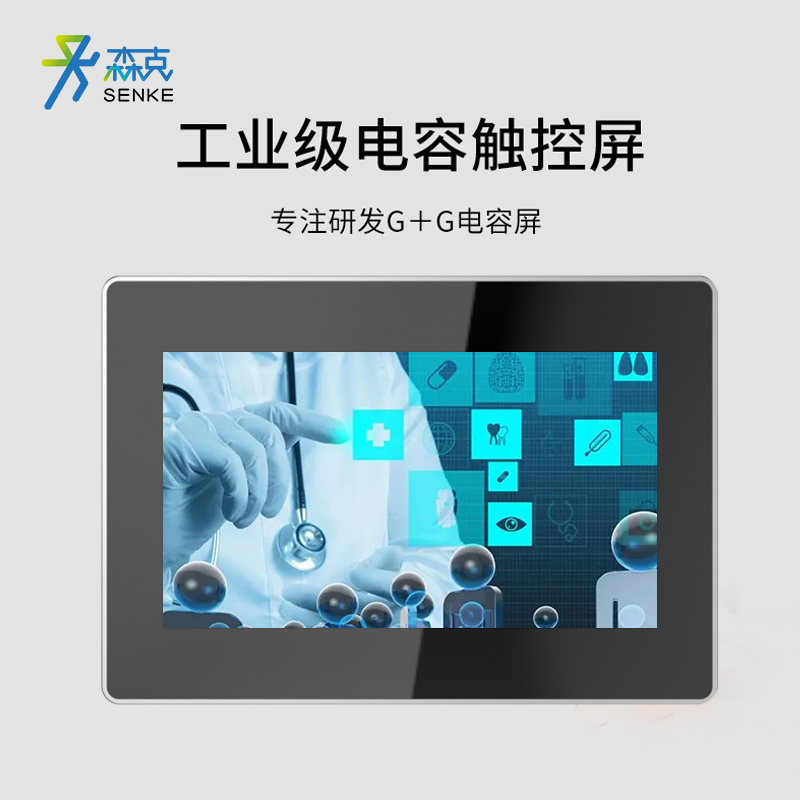
The screen is an important component of industrial all-in-one computers. Senke industrial all-in-one computers are equipped with high-definition display screens that support multi-touch operation, with a responsive and smooth experience. They can be used even when wearing gloves. The screen brightness is optimized to remain clear in strong light environments in workshops, avoiding issues such as reflection and unclear images that could affect operation. Additionally, the screen surface is treated to be scratch-resistant and impact-resistant, adapting to the frequent operation habits in industrial sites.
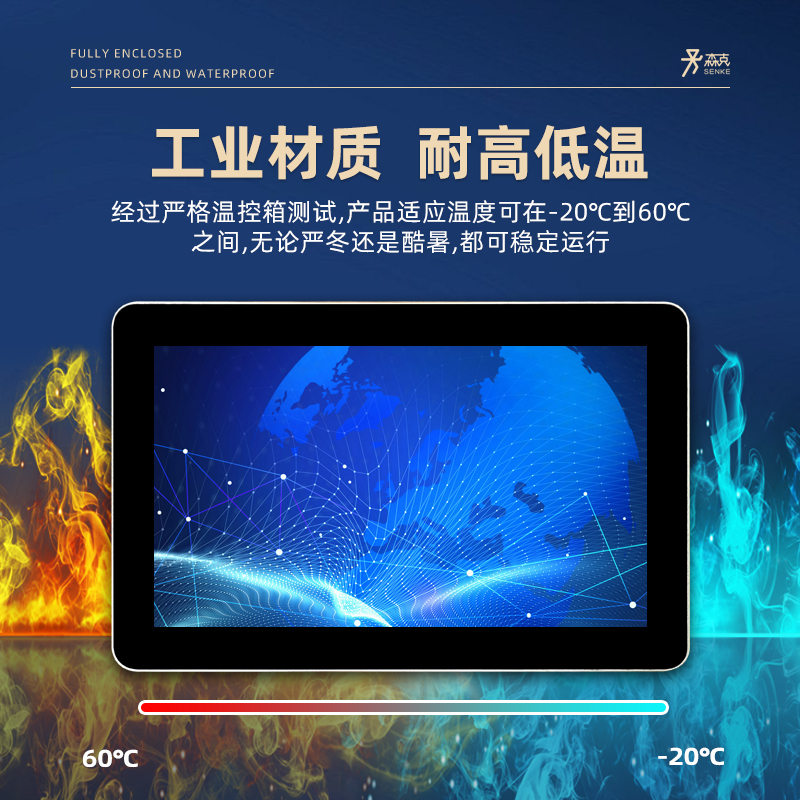
In terms of internal hardware, Senke industrial all-in-one computers use core components suitable for industrial environments to ensure long-term stable operation. The products support wide-temperature operation, allowing them to function normally in places with large temperature fluctuations, accommodating seasonal changes and temperature differences in workshops. They also have strong anti-interference capabilities, maintaining stable signals and avoiding problems such as screen flickering, disconnection, and data transmission errors in environments with a high density of equipment like frequency converters and motors. Rich interface configurations can meet the needs of connecting devices such as barcode scanners, printers, sensors, and PLCs, enabling data intercommunication and equipment interconnection.
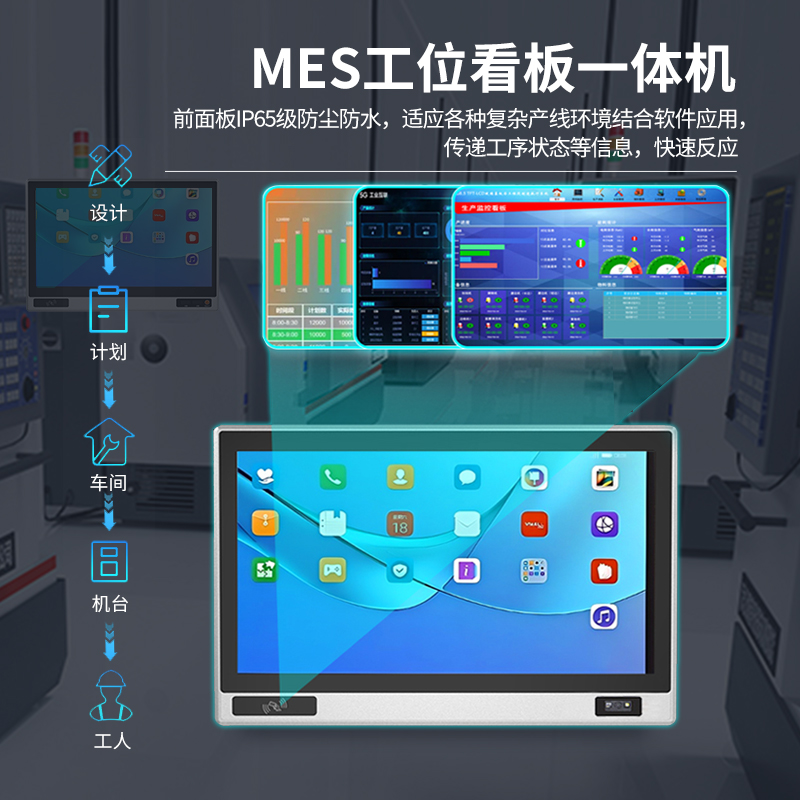
From practical applications, Senke industrial all-in-one computers are widely used in various manufacturing scenarios. In the mechanical processing industry, equipment control consoles equipped with industrial all-in-one computers can display real-time equipment operation parameters, processing progress, and fault alerts, helping operators quickly understand the equipment status. In electronic manufacturing workshops, all-in-one computers are used for production line data collection, recording production volume, yield rate, working hours, and other information, achieving production process visualization. In the field of warehousing and logistics, they serve as sorting terminals and inventory management terminals, improving the efficiency of goods entry and exit.
As the digitalization of enterprises increases, industrial terminals not only need to be “usable” but also “user-friendly, stable, and easy to maintain.” Senke industrial all-in-one computers, while ensuring performance, also consider ease of use and post-maintenance costs, reducing the frequency of equipment replacement and repair for enterprises. For enterprises that pursue long-term stable operation, choosing industrial all-in-one computers that are suitable for the scenario can effectively improve production management efficiency and reduce downtime losses caused by hardware failures. In the future, with the further popularization of industrial internet and smart factories, industrial all-in-one computers will play a role in more scenarios. Senke will also continue to optimize the product structure and performance, and launch more targeted industrial all-in-one computer products based on the actual needs of users, providing stable and reliable hardware support to help enterprises achieve more efficient, intelligent and safe production management.