How to Choose a Factory Display? Senke Gives You the Standard Answer
Product knowledge 2026-04-16
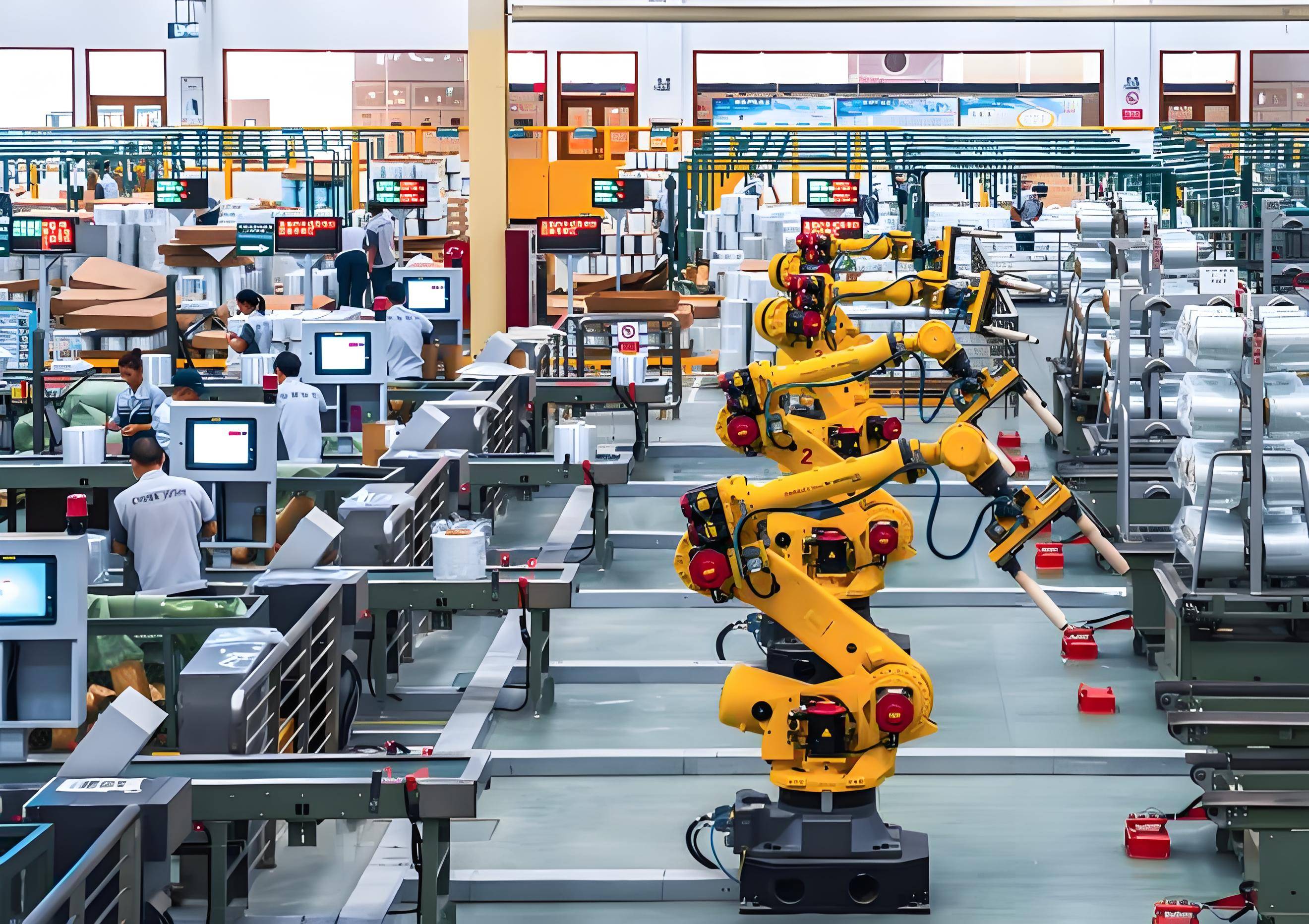
The factory workshop environment is complex, with frequent problems such as dust, oil stains, high and low temperatures, vibration, and electromagnetic interference. Ordinary displays are difficult to adapt. When choosing a display suitable for industrial scenarios, the core is to focus on four dimensions: environmental adaptation, stable display, durability and reliability, and ease of use. Senke industrial displays, based on long-term industrial control scene practice, from design, materials to performance, meet the various usage needs of factories, providing a clear reference for selection.
I. First, let’s look at environmental adaptation: Withstanding harsh factory conditions without downtime
The core challenge of the factory environment is its “harshness”. The primary requirement for industrial displays is strong environmental adaptability, which is the foundation for long-term stable operation.
- Dustproof and waterproof, fear neither dust nor oil stains
Dust in the workshop, oil stains from equipment, and daily water stains can easily invade the equipment. The front panel of Senke industrial displays reaches an IP65 protection level, with a seamless full-screen panel design. This effectively blocks the invasion of dust, oil stains, and low-pressure water jets. In high-dust workshops and food processing environments where water splashing is common, there is no need to worry about damage to internal components. Daily cleaning can be done by direct wiping, meeting the cleanliness requirements of multiple scenarios. - Wide Temperature Range Operation, Adapting to Extreme Temperature Differences
In scenarios such as non-air-conditioned workshops, open-air production lines, and low-temperature storage, where temperature fluctuations are significant, Senke employs wide-temperature-range panels and temperature control designs. The operating temperature range covers -20°C to 55°C, ensuring no black screen or color distortion in high-temperature environments, and quick startup without delay in low-temperature conditions. Through the changing seasons and day-night temperature differences, the display and operation remain stable. - Vibration and electromagnetic interference resistance, suitable for vibration and complex electromagnetic environments
The operation of production line machinery and the start-stop of equipment can easily cause vibrations, and nearby frequency converters, motors, and other devices can bring electromagnetic interference. Senke selects an aluminum alloy die-cast one-piece shell, which is structurally robust and can withstand regular vibration impacts. The internal mainboard adopts an anti-interference design, combined with anti-static and anti-surge solutions, to reduce the problems of screen flickering and flashing caused by electromagnetic interference, making it suitable for strong interference scenarios such as automated production lines and CNC equipment. - Fanless cooling, long-term operation without dust accumulation
Unlike the fan cooling of ordinary monitors, Senke adopts a fully enclosed fanless design, which passively dissipates heat through the aluminum alloy panel and metal back shell. This not only avoids the internal blockage and failure caused by dust being sucked in by the fan, but also reduces the wear of mechanical components, supporting 7×24-hour continuous operation and lowering the risk of downtime due to cooling issues.
2. Revisiting Display Performance: Clear and Visible, Meeting Production Operation Requirements
The core function of industrial displays is data presentation and human-machine interaction. The display effect directly affects operational efficiency and judgment accuracy, and must balance clarity, visibility, and practicality.
- High Definition and Brightness, Clear in Both Strong and Weak Light
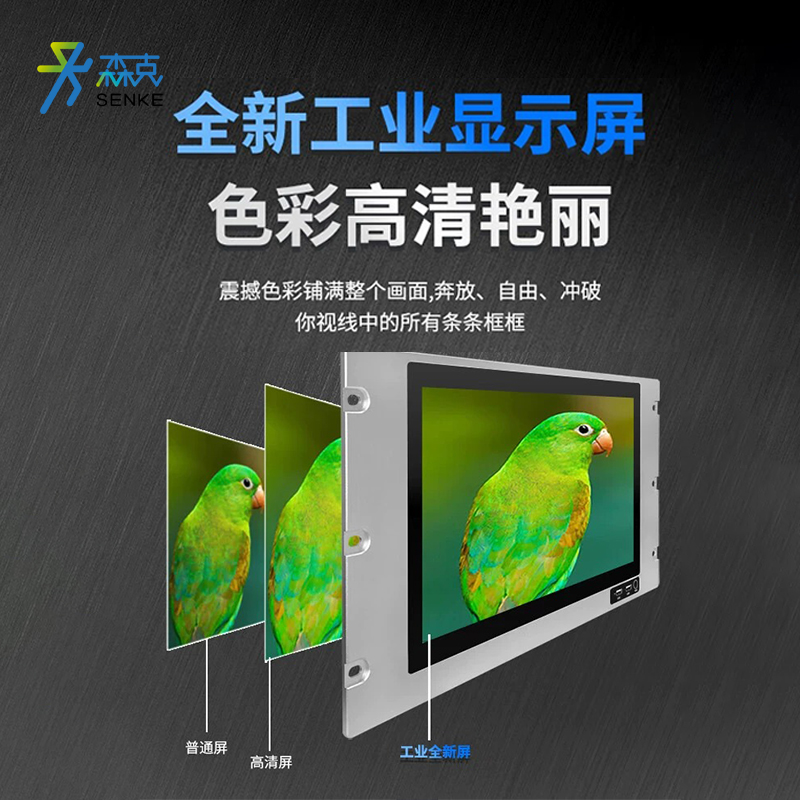
Uneven lighting in workshops can make it difficult to see the screen clearly in strong light and cause visual fatigue in weak light. Senke is equipped with industrial-grade high-definition LCD screens, with mainstream resolutions of 1920×1080, and is paired with high-brightness panels and anti-glare coatings. The brightness is adapted to industrial scenarios, ensuring visibility in sunlight and comfort in low light. The picture details are clear, and there is no blurring or ghosting in data, charts, and operation interfaces, reducing the risk of misoperation. - Wide viewing angle design, no distortion from multiple viewing angles
Production line operators do not have fixed positions and often need to view the screen from the side or from above. Senke adopts wide viewing angle display technology, with horizontal/vertical viewing angles reaching 178°. When viewed from different angles, the color, brightness, and content consistency are high, without color bias or dark corners. When multiple people collaborate or operate from multiple angles, information can be read accurately without error. - Sensitive touch control, easy operation in industrial scenarios
Supports capacitive multi-touch, with an industrial-grade touch IC solution, offering a responsive touch experience. It can be operated smoothly even with thin gloves on, eliminating the need to frequently remove gloves and adapting to the operational habits in workshops. The touch panel is scratch-resistant and durable, maintaining its functionality even with frequent clicking and swiping over a long period, meeting the high-frequency interaction requirements of production lines.
III. Three Looks at Durability and Reliability: Reduce Replacements and Lower Long-Term Maintenance Costs
Factory equipment emphasizes “long-term stability”. Frequent replacements and repairs not only increase costs but also affect production line progress. Durability is a key selection criterion.
- Industrial-grade Materials, Prolonging Service Life
Senke’s entire series uses industrial-grade components, with core parts such as the panel, motherboard, and power supply all undergoing rigorous screening. Different from commercial-grade accessories, they have stronger anti-oxidation and anti-aging performance. Under long-term high-load operation, component performance degrades slowly, reducing faults such as black screens, flickering, and touch malfunctions, and lowering replacement frequency. - Strengthened Structure, Durable and Impact Resistant
The body is made of cold-rolled steel plate and aluminum alloy, with the frame and corners reinforced. Daily bumps and minor impacts are less likely to cause deformation or damage. Internal circuits and interfaces are designed to prevent loosening. In long-term vibrating environments, interfaces do not loosen and circuits do not short-circuit, extending the overall service life of the equipment. - Stable Power Supply, Compatible with Industrial Voltage Fluctuations
Factory power grids often experience unstable voltages and surges, which can easily damage ordinary displays. Senke is equipped with a wide-range power module, supporting wide voltage input, capable of withstanding voltage fluctuations and instantaneous surges. Combined with overvoltage, overcurrent, and short-circuit protection, the power supply is stable, preventing equipment damage due to power issues.
Four, Four Looks and Easy to Use: Flexible Installation, Compatible with Various Industrial Control Scenarios
Industrial displays need to be compatible with different devices and various installation scenarios. Compatibility and installation flexibility directly affect deployment efficiency.
- Rich Interfaces, Compatible with Multiple Industrial Devices
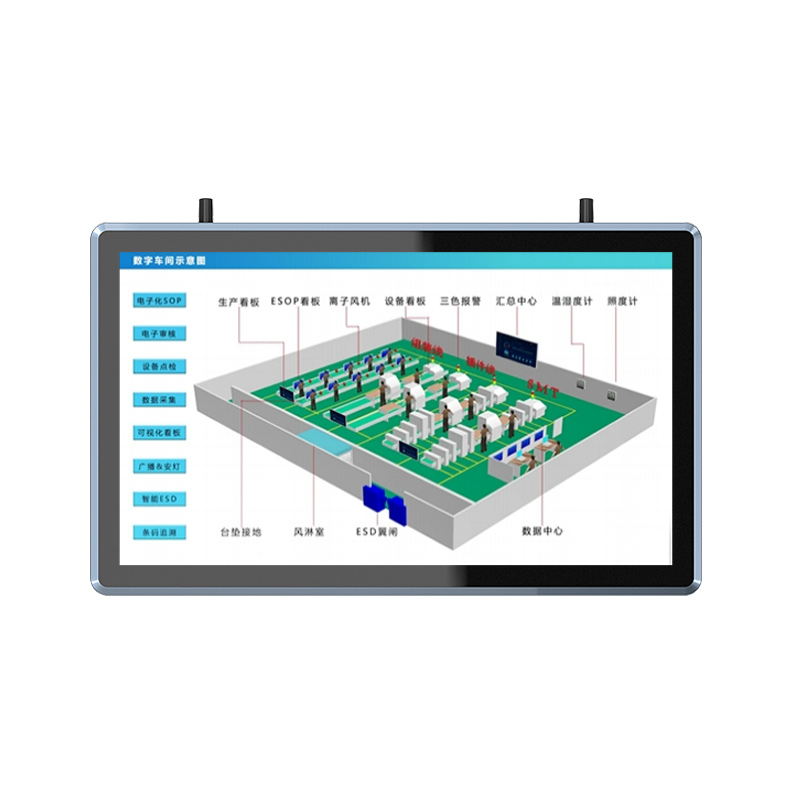
Equipped with multiple types of industrial interfaces such as HDMI, VGA, DVI, USB, and RS232, it can seamlessly connect to mainstream industrial control devices such as PLCs, industrial computers, sensors, and CNC equipment. It is compatible with multiple industrial operating systems such as Windows and Linux, eliminating the need for additional adapters. It can be connected and used immediately, meeting the connection and data transmission requirements of different devices. - Multiple installation methods, adaptable to workshop layouts
Supports multiple installation methods such as embedded, wall-mounted, desktop, and cantilevered. It can be embedded in control cabinets, wall-mounted on the side walls of production lines, or placed on operation desks, adapting to different workshop layouts and equipment installation requirements. The installation structure is stable, does not occupy extra space, and is easy and efficient to deploy. - Customized Adaptation to Meet Special Scene Requirements
For special factory scenarios, we can provide customized solutions in terms of size, interface, protection level, brightness, etc., such as ultra-large size displays, higher protection levels, and ultra-high outdoor brightness, to meet the usage requirements of non-standard production lines and special equipment, achieving precise scene-based adaptation.
V. Senke Industrial Displays: A Practical Choice Tailored to Factory Needs
In summary, when selecting factory displays, there is no need to pursue redundant functions. The key lies in “environmental adaptability, stable display, durability and reliability, and ease of use.” Senke industrial displays are designed around the actual pain points of factories. From environmental adaptability features such as IP65 protection, wide temperature operation, and fanless cooling, to display experiences like high-definition and high-brightness, wide viewing angles, and sensitive touch control, and then to stable performance with industrial-grade materials, anti-interference design, and multi-interface compatibility, every configuration is tailored to the needs of industrial scenarios.
It does not engage in excessive marketing but addresses issues such as factory dust, temperature differences, vibrations, and interference with practical product performance, reducing equipment failures and maintenance costs, ensuring smooth human-machine interaction and stable data display on the production line, and facilitating more efficient digital and automated operation of the factory. When choosing a factory display, first consider environmental adaptability and then durability. With long-term industrial control experience, Senke provides a selection answer that meets your needs.