Intelligent Foundation: Senke Industrial Tablet Computers Transform China’s Industrial Interaction Standards
Product knowledge 2026-04-02
In the process of the comprehensive deepening of intelligent manufacturing, industrial tablet computers have evolved from simple display and control terminals to the core interaction hub that connects devices, data, and people. Their technical standards and application experiences directly affect the operational efficiency and digitalization level of industrial sites. For a long time, domestic industrial interaction hardware standards have mostly followed overseas systems, and local brands have mostly participated in competition as followers. With the dual drive of domestic production substitution and industrial upgrading, local enterprises like Senke are gradually building new interaction standards that meet the needs of Chinese industry through in-depth technology and scenario innovation, laying a hardware foundation for intelligent manufacturing.
1. Industrial Interaction Upgrade: From Adaptation to Standard Construction
Traditional industrial interaction terminals have long faced three major problems: first, insufficient environmental adaptability, in high-pollution, wide-temperature, and strong-vibration industrial sites, stability and durability cannot meet the long-term operation requirements; second, lagging interaction experience, traditional resistive touch has low sensitivity and does not support gloves, wet hands operation, and has limited applicable scenarios; third, weak compatibility and customization, standardized hardware is difficult to connect with diverse industrial protocols and specific scenarios. These problems led to low industrial interaction efficiency and became a hidden bottleneck for the advancement of intelligent manufacturing.
With the acceleration of digital transformation in domestic manufacturing, industrial interaction standards are undergoing a reconfiguration opportunity. On the one hand, policies promote self-reliance and controllability, specifying clear requirements for the compatibility and security of domestic hardware in key fields; on the other hand, new industries such as flexible manufacturing, intelligent production lines, and edge computing are emerging, forcing interaction terminals to evolve towards higher reliability, strong interaction, wide compatibility, and fast customization. In this context, Senke breaks away from the homogenized competition based on “parameter benchmarking”, focusing on the actual needs of Chinese industrial sites, and building an industrial interaction system that is more tailored to local applications from three dimensions: hardware design, interaction technology, and scenario adaptation.
2. Senke’s Standard Practice: Dual Breakthroughs in Technology and Scenarios
As a local enterprise specializing in industrial touch control, Senke has integrated industrial-grade reliability, intelligent interaction, and scenario customization through more than a decade of technological accumulation. Its products and solutions have gradually become industry reference benchmarks, with core breakthroughs concentrated in three aspects.
1. Reliability Standard: Building the Foundation for Industrial Site Operations
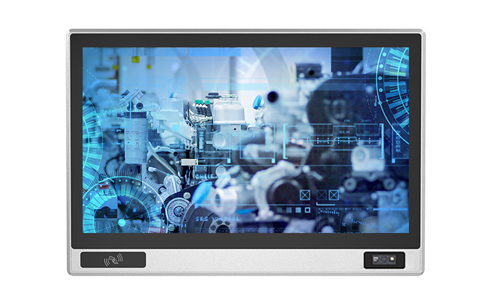
In response to the strict requirements of industrial environments, Senke focuses on “stable operation in all scenarios” as the core, building a high-standard hardware reliability system. The product adopts an all-aluminum alloy integrated die-casting process, with a sturdy and pressure-resistant body, a front panel with IP65 protection level, featuring waterproof, dustproof, and oil-resistant properties, and can be used directly in high-humidity, high-pollution workshops, meeting the surface cleaning requirements of medical and food industries. The non-fan fully enclosed design uses passive heat dissipation through the metal body, eliminating the risk of dust intrusion and fan failure, ensuring continuous and stable operation 24/7.
At the same time, the product is compatible with -20°C to 60°C wide temperature environments, covering northern low-temperature workshops, southern high-temperature production lines, and outdoor vehicle-mounted scenarios. The circuit layer uses military-grade six-layer PCB motherboard, integrating anti-surge, anti-static, and anti-electromagnetic interference technologies, effectively resisting electromagnetic interference from frequency converters, motors, etc., avoiding operation stalling and data anomalies. Core components have undergone strict high and low-temperature, vibration, and aging tests, with overall reliability indicators gradually approaching international mainstream levels, laying a stable foundation for industrial interaction.
2. Interaction Standard: Upgrading Industrial Site Operation Experience
Senke breaks through the limitations of traditional industrial touch control, optimizing interaction technology to adapt to complex operation scenarios. It is equipped with an industrial-grade high-sensitivity capacitive touch solution, supporting multi-point touch, accurately identifying gloves and wet hands operations, solving the pain point of inconvenient operation in industrial scenarios. The screen adopts a full-lamination process to reduce reflection interference and enhance visibility in bright sunlight. It is equipped with a high-definition and high-brightness LCD screen to ensure clear display in complex lighting conditions.
At the same time, the interaction design is in line with industrial operation logic, simplifying the interface interaction levels, and adapting to the operation habits of industrial software such as MES, SCADA, and equipment monitoring, thereby reducing the learning costs for on-site personnel. Different scenarios are supported by differentiated interaction solutions, such as enhanced shock resistance and convenient operation for the vehicle-mounted series, and adaptation to outdoor inspection requirements for the three-proof series, shifting industrial interaction from “usable” to “good to use and easy to use”.
3. Adaptability Standards: Breaking Through Barriers in Multifaceted Application Scenarios
The fragmentation and diversity of industrial scenarios place high demands on the compatibility and customization of interaction terminals. Senske has established a full-range product matrix covering embedded, rack-mounted, vehicle-mounted, and three-proof forms, with screen sizes ranging from 7 to 21.5 inches, meeting the basic needs of multiple fields such as intelligent manufacturing, power and energy, warehousing and logistics, and medical equipment.
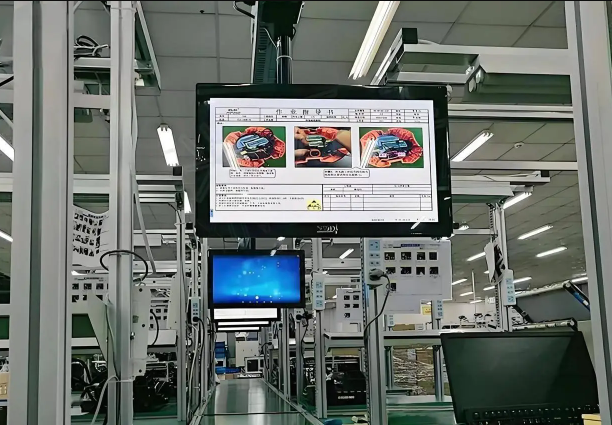
More importantly, it has the flexibility to customize scenarios based on industry requirements, adjusting hardware interfaces, functional modules, and system configurations. For example, integrating scanning and RFID functions for 3C production lines, adapting to domestic systems and hardware encryption for the power industry, and optimizing shock resistance and wide-voltage adaptation for vehicle-mounted warehousing. The product supports Windows, Linux, Android, and domestic operating systems, seamlessly connecting with PLCs, sensors, and industrial software, breaking the barriers of “hardware – software – scenario” adaptation and forming a “standardization + customization” adaptation standard.
3. Industry Impact: Promoting the Formation of Domestic Industrial Interaction System
Senske’s practice in the field of industrial interaction is not only an enhancement of the enterprise’s product strength, but also a push for the domestic industrial tablet computer to move from “parameter pursuit” to “standard leadership”. Currently, its products are widely applied in automotive manufacturing, 3C electronics, smart grids, and other scenarios, gradually replacing some overseas brand equipment, confirming the feasibility and competitiveness of the domestic industrial interaction solution.
From an industry perspective, local enterprises like Senske, through continuous technological iteration and scenario deepening, are gradually changing the dominance of overseas brands in industrial interaction standards. Local solutions are more in line with the production characteristics, operation habits, and digitalization needs of domestic manufacturing, having natural advantages in delivery efficiency, customization response, and after-sales support, accelerating the formation of domestic, specialized, and systematic industrial interaction standards.
4. Future Direction: Deepening Intelligence and Domestication of Interaction Standards
With the deep integration of edge computing, AI, 5G, and industrial scenarios, industrial interaction standards will upgrade towards “intelligent interaction, edge decision-making, and autonomous control”. Senske will continue to deepen the adaptation of domestic chips and systems, enhance the edge computing and AI inference capabilities of products, and expand the application of new technologies such as high-precision interaction and non-contact interaction. At the same time, focusing on high-end industrial scenarios, optimizing product performance and service systems, promoting the implementation of domestic industrial interaction standards in more fields.
Industrial interaction is the foundation link of intelligent manufacturing. The standard construction of domestic brands is precisely an illustration of China’s industrial self-control. Senske’s continuous exploration in the field of industrial tablet computers not only reshapes the practical standards of China’s industrial interaction but also provides solid hardware support for the digital transformation of the manufacturing industry, helping domestic industrial brands steadily move from adaptors to definers.