The necessity of intelligent transformation and digitalization in the industrial sector: An observation on the development of industrial touch-screen computers in China
Product knowledge 2026-04-01
The intelligent transformation and digitalization of manufacturing has become an inevitable choice for promoting new industrialization, and it is the core path for industrial enterprises to achieve quality improvement, efficiency enhancement, and transformation and upgrading. As the core carrier of human-machine interaction, industrial touch-screen computers connect industrial equipment, production data, and operators, serving as the key node to bridge the production site and the management system. Their development is deeply tied to the process of intelligent transformation and digitalization. Currently, with the continuous advancement of the “Intelligent Transformation and Digitalization Networked” initiative, the demand for interactive terminals in industrial scenarios has shifted from basic control to intelligence and collaboration, and China’s industrial touch-screen computer industry has ushered in new development opportunities while also facing numerous challenges. Its development trend has become an important reflection of the effectiveness of intelligent transformation and digitalization in the manufacturing sector.
As a global manufacturing powerhouse, China’s manufacturing scale has ranked first in the world for 14 consecutive years, with a large and complete industrial enterprise cluster and industrial chain. This provides a broad market space for the industrial touch-screen computer industry. Driven by the policy guidance of intelligent transformation and digitalization and the market demand, industrial touch-screen computers have transformed from auxiliary tools in traditional industrial scenarios to essential equipment for enterprises to achieve digital control and intelligent production. They cover multiple core scenarios such as automated production lines, equipment operation and maintenance, energy management, and intelligent warehousing. Their development presents distinct characteristics of scale, diversification, and autonomy.
- Necessity-driven: Intelligent transformation and digitalization give rise to new growth in the industry
The core demand of intelligent transformation and digitalization is to achieve digitalization, intelligence, and collaboration throughout the production process. Industrial touch-screen computers, as the core terminal for data collection, command issuance, and status monitoring, have a continuously released market demand as intelligent transformation and digitalization deepen. Unlike consumer-level touch screens, industrial scenarios have higher requirements for the reliability, adaptability, and anti-interference ability of the terminal. This differentiated demand has driven the industrial touch-screen computer industry to gradually break away from reliance on the consumer electronics market and form an independent industrial development system.
At the policy level, the country has continuously introduced favorable policies to safeguard the development of the industry. Documents such as the “14th Five-Year Plan for Intelligent Manufacturing” and the “14th Five-Year Plan for National Economic and Social Development and the Long-Range Objectives for 2035” have clearly stated that key equipment for data collection and industrial control should be developed, and the autonomous upgrade of industrial human-machine interaction equipment should be promoted, providing directions for the industry’s development. At the local level, Guangxi proposed to promote the transformation and upgrading of 1,000 or more industrial enterprises by 2028, and Suzhou was the first to launch the “Intelligent Transformation and Digitalization Networked” initiative. These measures have further released the market demand for industrial touch-screen computers and promoted the steady expansion of the industry scale.
At the market level, enterprises of different scales and industries in the process of intelligent transformation and digitalization have shown diversified demands for industrial touch-screen computers. Large manufacturing enterprises focus on high-end scenarios, with demands concentrated on high-precision, high-stability, and collaborative terminal products, used in precision manufacturing and high-end equipment control scenarios; small and medium-sized enterprises focus on cost-effectiveness, easy installation, and easy operation of terminals, used for the digital transformation of basic production lines. At the same time, with the integration and application of technologies such as industrial internet and artificial intelligence, the data volume in industrial sites has increased sharply, and higher requirements for the computing power and data processing capabilities of the terminal have been put forward, further promoting the industry to upgrade to high-end and intelligent levels. Currently, although the touch-screen industry in China is in a reshuffling stage and faces pressure such as overcapacity, the necessity demand in the industrial field has become an important direction for the industry to seek new growth points. - Development status: Opportunities and shortcomings coexist
Driven by intelligent transformation and digitalization, China’s industrial touch-screen computer industry has achieved remarkable progress, gradually transforming from technology following to independent innovation, and from low-end manufacturing to mid-to-high-end breakthroughs. However, there are still some shortcomings that restrict the high-quality development of the industry. The industrial advantages are gradually becoming more prominent, and the level of autonomy is continuously improving. Domestic regions have formed two major industrial clusters, namely the Yangtze River Delta and the Pearl River Delta, which have gathered enterprises covering the entire chain of display, touch control, chips, and software. Upstream and downstream enterprises work collaboratively to build a relatively complete industrial system. In the core component field, the performance of industrial-level projection capacitive (PCAP) touch modules produced by companies such as BOE and Tianma Microelectronics has been continuously optimized. New touch materials such as nano silver lines and metal grids have achieved domestic production and mass production, effectively promoting cost optimization of products. In the software ecosystem, enterprises such as Shuguang Network have achieved full self-research and development of operating systems and industrial communication protocols, building an independently controllable industrial digital infrastructure, and promoting deep compatibility of terminals with domestic operating systems such as Kylin and UOS. In terms of application implementation, the products of enterprises such as Huihuan Technology and Zju Zhongkong have been widely applied in multiple fields such as new energy, high-end equipment, and medical care, demonstrating strong scene adaptability.
At the same time, the industrial development still faces many shortcomings that need to be overcome urgently. At the core technology level, core raw materials such as high-end driving ICs, special optical adhesives, and large-sized high-end glass substrates still rely on imports. Domestic enterprises still have a gap compared to international leading brands in the research and production capabilities of high-end components, which is a specific manifestation of the current situation of “lack of chips and spirit” in China’s industrial manufacturing. At the product level, some enterprises are still engaged in homogeneous competition of mid-to-low-end products, with insufficient R&D investment, and the long-term stability and ability to withstand extreme environments of products need to be improved, making it difficult to fully meet the requirements of high-end manufacturing scenarios. At the ecosystem level, the collaborative adaptation of industrial touch screen computers and industrial software, industrial equipment still needs to be optimized, and some products cannot seamlessly connect with systems such as MES and PLC, affecting the overall efficiency of intelligent transformation and digitalization; in addition, domestic enterprises have insufficient in international standard formulation, and their products need to pass complex international certifications to enter the global high-end market, increasing the difficulty of market expansion.
It is worth noting that enterprises in the industry are gradually striving to break through these shortcomings. Hualong Xundan’s second-generation programmable logic controller, the electronic components used have achieved 100% domestic production; Zhongke Shiage has launched industrial intelligent computers, effectively solving the problem of integration between OT and IT, adapting to the computing power requirements of intelligent transformation and digitalization, and these innovative measures inject impetus into the high-quality development of the industry.
III. Core Value: Empowering Intelligent Transformation and Digitalization, Strengthening Industrial Foundation
The core value of industrial touch screen computers in intelligent transformation and digitalization lies in breaking through the information barriers between the production site and the management system, achieving efficient data flow and precise control, helping enterprises realize the transformation of production models. Its value mainly lies in three aspects.
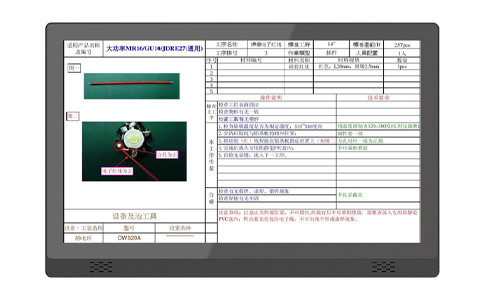
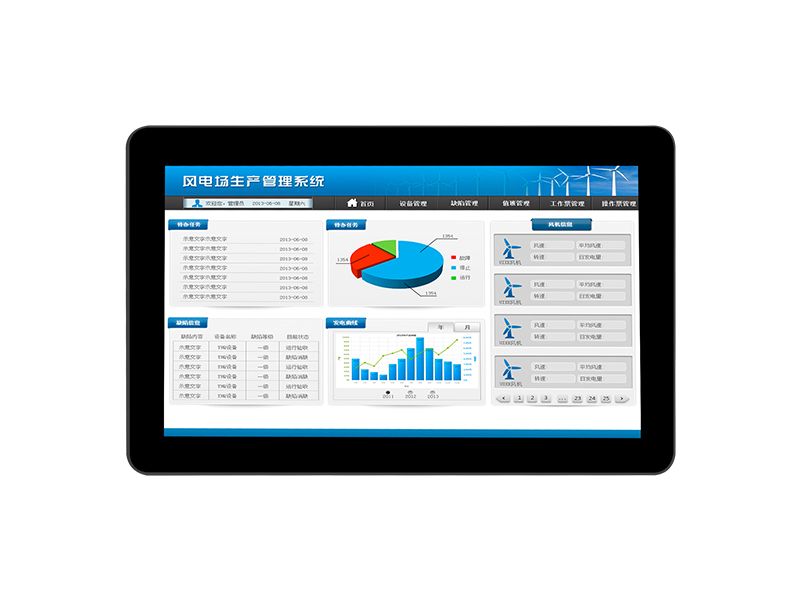
First, promoting production control digitalization. Industrial touch screen computers can seamlessly connect with PLCs, sensors, servo systems, etc. of industrial equipment, real-time collect core data such as production rhythm, process parameters, and equipment status, and present it through a visual interface, allowing operators to clearly grasp the overall operation of the production line, achieving precise adjustment of production parameters and timely response to abnormal conditions. This data-driven control mode replaces traditional manual operations and paper records, reduces human errors, and improves production efficiency and product quality, promoting the transformation from “experience-driven” to “data-driven” production processes.
Second, facilitating intelligent equipment maintenance. In the context of intelligent transformation and digitalization, equipment maintenance has shifted from “passive repair” to “predictive maintenance”. Industrial touch screen computers, as the core terminal of equipment maintenance, can collect information such as equipment operation parameters, maintenance cycles, and historical fault records, through data modeling analysis, predict equipment failure hazards and issue maintenance reminders. At the same time, some terminals support remote operation functions and can be connected to remote operation systems. They can invite technical experts to remotely assist in troubleshooting, shortening the fault handling cycle, ensuring production continuity, and reducing operation costs.
Thirdly, it promotes the efficient collaboration of industries. Industrial touch screen computers, as the core nodes of information interaction, can achieve seamless linkage with management systems such as MES, ERP, and WMS, promoting the synchronization and collaborative efforts of production, operation, warehousing, and management. For example, in the intelligent warehousing scenario, the terminal can be connected to AGV robots and vertical shelves, enabling real-time updates of inventory data and entry and exit records, promoting precise collaboration between warehousing and production; in the multi-line control scenario, the terminal can achieve unified summary and comparative analysis of data from multiple production lines, providing data support for production scheduling and improving the efficiency of industrial collaboration.
Fourth, the development trend: Meeting the urgent needs and transforming towards high quality
With the continuous deepening of intelligent transformation and digitalization, the demands in industrial scenarios will further upgrade. The Chinese industrial touch screen computer industry will develop towards autonomy, intelligence, scenario-based, and collaborative directions, gradually filling the gaps and achieving high-quality development.
Autonomy deepening becomes the core direction. Enterprises will continue to increase R&D investment, focus on technological breakthroughs in high-end core components, promote breakthroughs in areas such as shortfalls in high-end drive ICs and special optical materials, strengthen collaboration with upstream supply chains, and enhance the level of autonomy and controllability throughout the entire industry chain. At the same time, they will continuously improve the domestic software ecosystem, promote deep compatibility between terminals and domestic industrial software and domestic processors, build an “hardware + software” integrated autonomous system, gradually dependence on overseas core technologies, and ensure the security of the industrial chain and supply chain.
The trend of intelligent integration becomes more obvious. With the development of technologies such as AI, edge computing, and digital twins, industrial touch screen computers will gradually break through the positioning of traditional interactive terminals and upgrade to intelligent decision-making carriers. The terminal will integrate edge computing capabilities to achieve real-time processing and analysis of local data, improving data response speed; combined with digital twin technology, it can realize visual simulation of industrial equipment and production processes, helping managers achieve precise scheduling and process optimization; by integrating multi-modal interaction methods such as voice and gestures, it can adapt to the operational needs of complex industrial scenarios, improving operational convenience and safety.
The scenario-based adaptation becomes more precise. Enterprises will abandon the design thinking of general-purpose products and deeply explore the pain points of different industries and scenarios, launching customized solutions. For high-end scenarios such as semiconductor manufacturing and aerospace, they will strengthen the precision and anti-interference capabilities of the terminal; for specialized fields such as new energy and healthcare, they will optimize the environmental adaptability and protocol compatibility of the terminal; for the intelligent transformation and digitalization needs of small and medium-sized enterprises, they will launch cost-effective and easy-to-deploy terminal products, promoting the penetration of industrial touch screen computers in more specialized scenarios.
Standard co-construction and global layout are gradually advancing. Domestic enterprises will actively participate in industry standard formulation, promote the improvement of national standards such as “Industrial Touch Screen General Technical Specifications”, and at the same time connect with international certification systems and technical standards to enhance the international adaptability of products, striving for more international discourse power. In terms of global layout, enterprises will consolidate the domestic market and gradually expand to emerging markets such as Southeast Asia, the Middle East, and Latin America, through product performance and service advantages, gradually gaining international market recognition and promoting domestic industrial touch screen computers to go global.
Five, industry outlook: Based on urgent needs, enabling manufacturing upgrade
The continuous advancement of intelligent transformation and digitalization has provided a broad development space for the Chinese industrial touch screen computer industry and put forward higher requirements. Currently, the industry is in a critical stage of transformation and upgrading, and it is necessary to seize policy and market opportunities, leverage the synergy of the industrial chain, and continuously promote technological innovation and product upgrades; We should also recognize our own shortcomings, focus on core technology research and development, improve the ecological construction, and enhance the core competitiveness of products.
In the future, China’s industrial touch screen computer industry will continue to base itself on the urgent needs of intelligent transformation, digital transformation and upgrading. It will take independent innovation as the core, scenario adaptation as the handle, and coordinated development as the support, gradually achieving the transformation from “mid-to-low-end substitution” to “high-end leadership”. As the core essential equipment for intelligent transformation and digital transformation, industrial touch screen computers will further empower the digital and intelligent transformation of manufacturing, consolidate the grassroots foundation of China’s intelligent manufacturing, promote the manufacturing industry to develop towards high-end, intelligence and green, and provide strong support for promoting new industrialization and building a manufacturing power.