Wide temperature range, high protection level, and anti-interference capabilities – these are the three core technical advantages of industrial displays.
Product knowledge 2026-03-23
Industrial displays, as the core terminal for human-computer interaction in industrial scenarios, their operational stability directly affects the orderly conduct of industrial production. Compared to consumer-grade displays, the complex environment of industrial scenarios places higher demands on equipment performance. Wide temperature range, high protection, and anti-interference are the three core technical advantages of industrial displays, which can help the equipment adapt to various demanding industrial scenarios, ensure the stable operation of display functions, and provide reliable support for industrial production. This article will thoroughly analyze the core logic, implementation methods, and application scenarios of these three core technical advantages, helping practitioners fully understand their value and adaptation points.
Wide temperature design is a key technology for industrial displays to adapt to complex temperature environments, and it is also one of the important characteristics that distinguish industrial displays from consumer-grade displays. The temperature variations in industrial scenarios are significant, with some scenarios remaining in high-temperature environments for long periods, such as chemical workshops and metallurgical plant areas; some scenarios are in low-temperature environments, such as outdoor extremely cold areas and cold chain storage supporting equipment; and some scenarios have large temperature differences between day and night. These environments all have an impact on the normal operation of the displays. The operating temperature range of consumer-grade displays is narrower, making it difficult to adapt to such extreme temperature conditions, and it is prone to problems such as abnormal startup, black screen of the display, and accelerated aging of components.
The wide-temperature design of industrial displays optimizes the selection of components and the heat dissipation structure to expand the operating temperature range of the equipment, typically covering -40°C to 85°C. It can handle scenarios with high temperatures, low temperatures, and significant temperature fluctuations with ease. In component selection, core components that can withstand both high and low temperatures are adopted to reduce the impact of temperature changes on component performance. In the design of the heat dissipation structure, through reasonable layout of heat dissipation channels and the use of efficient heat dissipation materials, heat accumulation inside the equipment in high-temperature environments is avoided. At the same time, in low-temperature environments, it has an automatic heating function to ensure the normal startup and operation of the equipment. The application of the wide-temperature design enables industrial displays to work stably in different climates and production environments, reducing equipment failures caused by temperature issues and lowering maintenance costs.
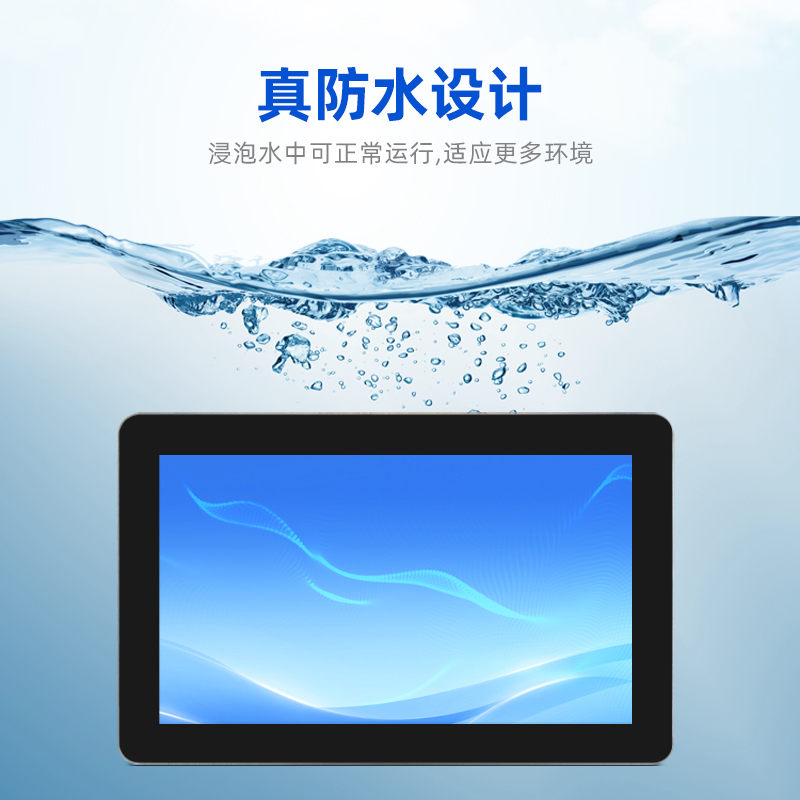
The high protection design is an important guarantee for industrial displays to resist the erosion of complex environments and extend their service life. In industrial scenarios, problems such as dust, moisture, oil stains, and external force collisions are quite common. For example, in mining sites, there is a dense amount of dust; in chemical workshops, there are corrosive oil stains; in outdoor scenarios, there is exposure to rain and snow. These factors can all cause damage to the internal components and screen of the display, affecting the normal operation of the equipment.
The high protection design of industrial displays is mainly reflected in two aspects: protection level and structural sealing. The protection level is usually indicated by the IP rating. Common protection levels of industrial displays are mostly IP65 or above, which can effectively prevent dust from entering and prevent liquids such as water vapor and oil from splashing into the equipment interior, protecting the core components from damage. For some special scenarios, displays will also add explosion-proof and anti-corrosion designs to meet the usage requirements of dangerous scenarios. In terms of structural sealing, an integrated sealing design is adopted, sealing the parts prone to water and dust entry such as the screen edges and interfaces to reduce the erosion of the external environment on the equipment. The high protection design enables industrial displays to operate stably and long-term in harsh environments, reducing the frequency of equipment replacement and adapting to the usage requirements of various complex industrial scenarios.
Anti-interference design is the core technology for ensuring the stable display of industrial monitors in strong electromagnetic environments. In industrial scenarios, there are numerous devices such as frequency converters, motors, transformers, etc. These devices generate strong electromagnetic interference when operating. If the monitor lacks anti-interference capabilities, problems such as screen blurring, black screen, and signal interruption may occur, which will affect the operators’ observation and operation of production parameters and even lead to production interruptions.
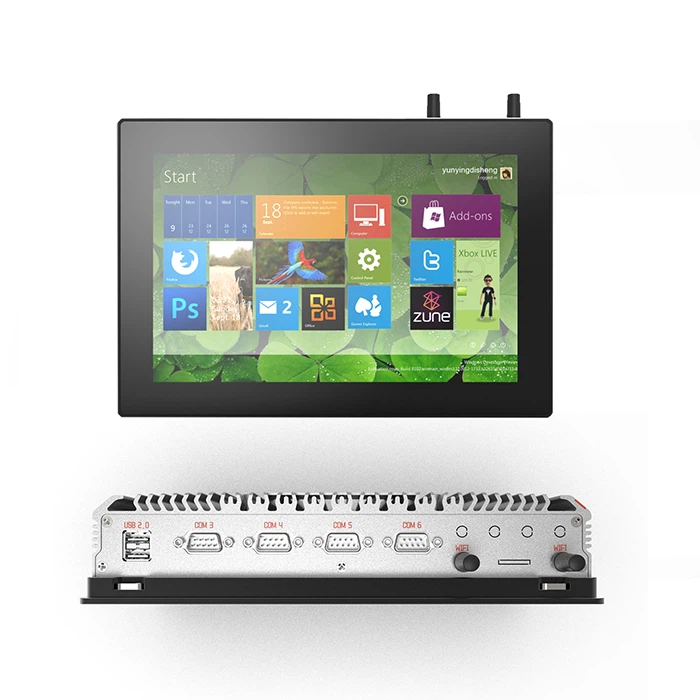
The anti-interference design of industrial displays enhances the device’s ability to resist electromagnetic interference through a combination of hardware optimization and software debugging. In terms of hardware, a shielding enclosure design is adopted to reduce the interference of electromagnetic signals to the internal circuits of the device; the circuit layout is optimized to avoid signal interference between internal circuits, and high-performance anti-interference components are selected to improve the device’s anti-interference foundation. In terms of interface design, shielded interfaces are used to prevent external electromagnetic signals from invading the device through the interface. In software, the signal processing algorithm is optimized to filter out interference signals, ensuring a stable and clear display screen. The application of anti-interference design enables industrial displays to operate normally in strong electromagnetic interference scenarios, ensuring the continuity of the production process and providing support for the stable development of industrial production.
The three core technical advantages of wide temperature range, high protection level, and anti-interference jointly form the foundation for industrial displays to adapt to complex industrial scenarios, and are also the core characteristics that distinguish industrial displays from consumer-grade displays. In practical applications, these three technical advantages do not exist independently but work together and interact with each other, helping industrial displays perform display and interaction functions stably in different scenarios. Whether it is in the chemical workshop with high temperature and high humidity, the mining site with thick dust, or the substation with strong electromagnetic interference, or the outdoor harsh cold operation area, industrial displays can adapt to the scene requirements and ensure the stable operation of the equipment by relying on these three technical advantages.
Understanding the three core technical advantages of industrial displays is of great significance for professionals when selecting, using and maintaining industrial displays. During the selection process, one can take into account the actual conditions such as temperature, environmental erosion, and electromagnetic interference in one’s own scenario, and focus on the wide temperature range, protection level and anti-interference performance of the equipment to achieve a precise match between the equipment and the scenario; During the use and maintenance process, by leveraging the characteristics of these three technical advantages, one should conduct regular protection and inspections of the equipment to further extend its service life, fully utilize the value of industrial displays, and provide strong support for the efficient and stable operation of industrial production.