Full domestic configuration: The information technology innovation practice of China’s industrial all-in-one computers
Product knowledge 2026-03-19
Under the circumstances where the informatization and innovation industry is advancing vigorously and the demand for self-control in the industrial sector is continuously increasing, China’s industrial all-in-one computers, as the core terminals of industrial automation and intelligent manufacturing, are gradually achieving the full implementation of domestic configuration. The core of the informatization and innovation practice is to build a domesticized system of “chips – operating systems – application software – hardware components”, to break away from dependence on external technologies, while also taking into account the core requirements of industrial scenarios for stable, reliable and compatible equipment. The informatization and innovation practice of China’s industrial all-in-one computers is not a simple component replacement, but a collaborative optimization of the entire chain of domestication, so that the domestic configuration can truly adapt to industrial scenarios and exert practical value.
The uniqueness of industrial scenarios determines that the information technology innovation practices in this field cannot be separated from the actual application requirements. Unlike consumer-grade terminals, industrial all-in-one computers need to operate continuously in complex environments, facing various challenges such as high and low temperatures, dust, vibration, electromagnetic interference, etc. This requires not only the realization of self-control and autonomy in the domestic configuration, but also the possession of industrial-level reliability, compatibility and adaptability. Currently, the information technology innovation practices of Chinese industrial all-in-one computers have formed a complete path centered on domestic chips, supported by domestic operating systems, based on domestic hardware components, and oriented towards industry adaptation. They have gradually achieved the leap from “usable” to “easy to use”.
- Hardware Localization: Building the Hardware Foundation for the Implementation of Information Security Innovation (ISI)
Hardware is the core carrier of the information technology innovation practice. The domestic configuration of China’s industrial all-in-one computers begins with the independent substitution of core hardware components, covering aspects such as chips, storage, interfaces, and chassis structure, while also considering performance and industrial adaptability.
In terms of the selection of core chips, industrial all-in-one computers generally adopt domestic processor platforms, including popular domestic chips such as Phytium, Loongson, Zhongxing, and HaiGuang. These chips are specifically designed for industrial scenarios, focusing on low power consumption and high stability rather than solely pursuing performance parameters. They can meet the routine requirements in industrial scenarios such as data collection, logic control, and human-computer interaction. Compared with imported chips, domestic chips have a natural advantage in terms of autonomy and controllability. At the same time, through continuous technological optimization, their compatibility and reliability have gradually improved, enabling them to meet the requirements of industrial-grade wide temperature operation and anti-vibration. For example, some industrial all-in-one computers equipped with the Phytium D2000 processor can operate at a wide temperature range of -20℃ to 60℃, adapting to extreme industrial environments, and also have low power consumption characteristics, supporting the equipment to run continuously for 7×24 hours.
The simultaneous advancement of domestication of storage and memory components has further improved the hardware information technology innovation system. Industrial all-in-one computers adopt industrial-grade domestic storage and memory. Compared to consumer-grade components, they have more advantages in terms of temperature adaptability, data stability, and anti-power-off capability, effectively avoiding data loss or equipment failure caused by environmental factors in industrial scenarios. At the same time, the collaborative optimization of domestic storage and memory with domestic chips, operating systems reduces compatibility issues between hardware and software, and enhances the stability of the entire machine’s operation.
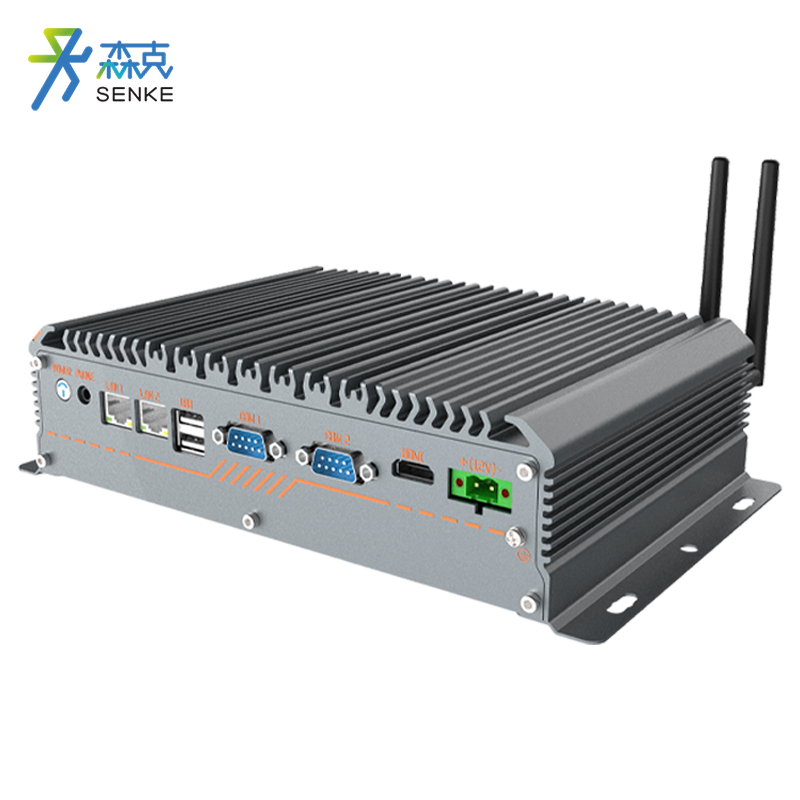
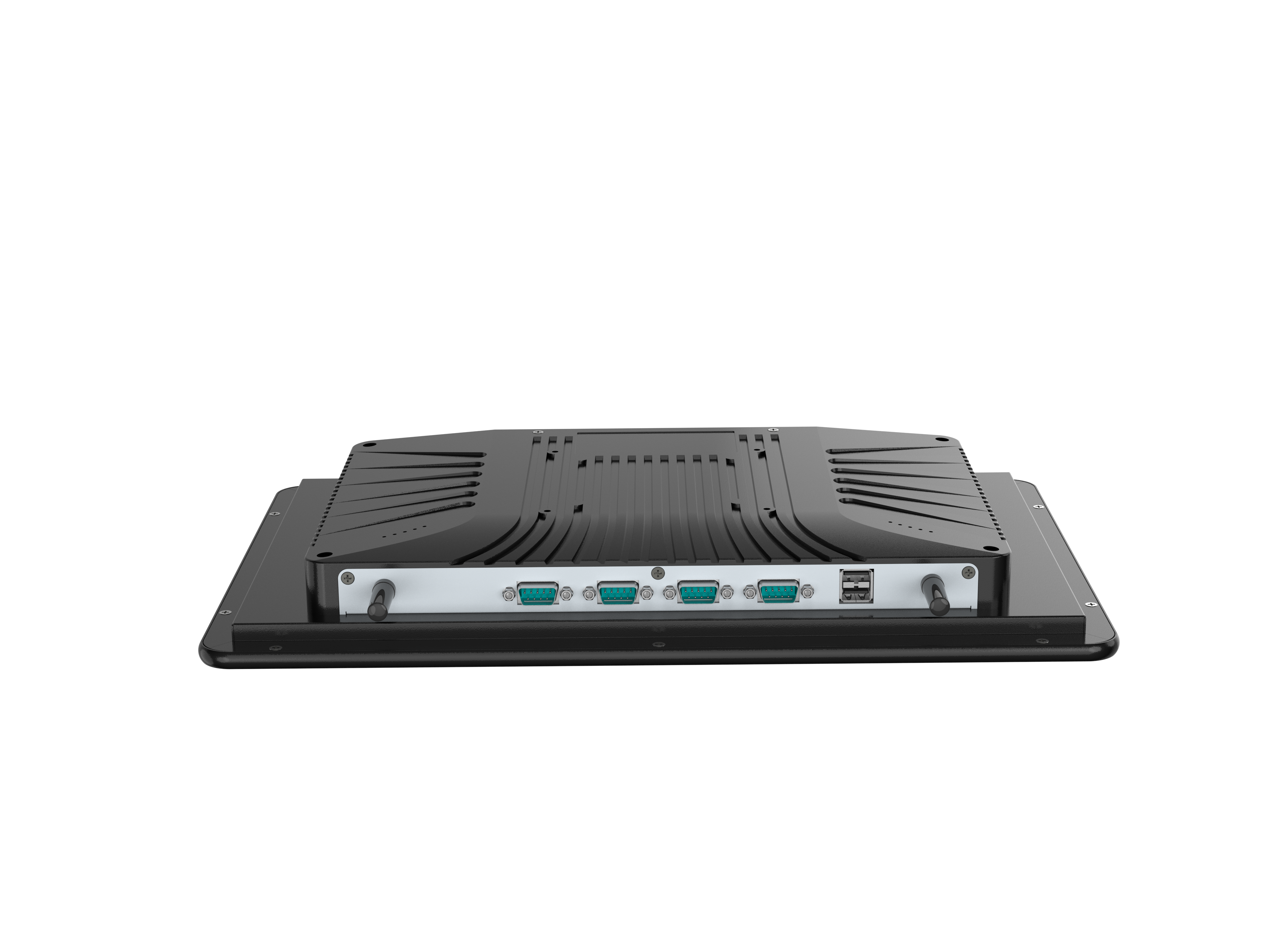
In addition, the domestic configuration of hardware components such as the机身 structure and interfaces has also been gradually implemented. The metal body and sealing structure of industrial all-in-one computers mostly use domestic materials and technologies, enhancing structural strength and protection capabilities, and adapting to the dusty and oily environments in industrial sites. The serial port, network port, USB and other interface circuits adopt domestic industrial-grade driver chips, which have protection capabilities against overcurrent, overvoltage and static electricity, meeting the requirements for connecting industrial equipment, and at the same time optimizing power consumption distribution to meet the low power consumption demands of industrial scenarios. Some models also support PCIe slot expansion, which can be compatible with domestic GPU cards, acquisition cards and other peripherals, enhancing the expandability of the equipment.
II. Software Localization: Establishing an Autonomous and Controllable Operating Environment
The domestication of the software ecosystem is a key support for the implementation of the information technology innovation (ITC) initiative. The ITC practice of China’s industrial all-in-one computers focuses on promoting the domestic adaptation of operating systems and application software, constructing an autonomous and controllable software system of “operating system – driver – industrial software”, and ensuring the security and compatibility of the entire machine’s operation.
The operating system serves as the core for device operation. Industrial all-in-one computers are mainly compatible with domestic operating systems such as Kylin and WOS. These systems have been rigorously tested in industrial scenarios and possess high stability, high security, and excellent compatibility. They can be adapted to domestic chips and support the stable operation of industrial-level applications. Domestic operating systems are designed to fully consider the requirements of industrial scenarios, optimizing system power consumption, startup speed, and stability. They support 24/7 uninterrupted operation and have a complete security mechanism, including trusted computing and data encryption functions, which can effectively ensure the security of industrial data. For example, some industrial all-in-one computers come pre-installed with the Kylin Desktop Operating System V10, which is compatible with over 3,000 domestic applications and supports the selection of defense version systems to meet the security needs of different industries.
The adaptation of domestic drivers is a crucial link in connecting hardware and software. Hardware components such as domestic chips, domestic interfaces, and domestic storage are all matched with and adapted to domestic drivers to avoid equipment failures or performance degradation caused by driver incompatibility. Through the collaborative optimization of hardware and drivers, the operational efficiency and stability of industrial all-in-one machines are further enhanced, enabling stable connection with industrial equipment such as PLCs, sensors, and barcode scanners, and ensuring smooth data collection and transmission.
The domestic adaptation of industrial application software has enabled the actual implementation of the information innovation initiative in practical applications. Currently, domestic industrial software is gradually maturing, covering MES systems, SCADA systems, data acquisition software, industrial simulation software, etc. These software have completed the adaptation to domestic operating systems and domestic chips and can run stably on industrial all-in-one machines. For instance, domestic industrial design software such as Zhongwang CAD and Zhongwang 3D have successfully adapted to multiple domestic all-in-one machines and achieved independent control of functions such as industrial design and production scheduling. Some industrial all-in-one machines in the energy sector have realized seamless integration with the DCS system through domestic database middleware and self-controlled protocol stacks, ensuring the security and efficiency of data transmission.
III. Adaptation Optimization: Make the domestic configuration fit the requirements of industrial scenarios
The core objective of the informatization and innovation practice is to make the domestic configuration truly fit the industrial scenarios and demonstrate its practical value. The informatization and innovation practice of China’s industrial all-in-one computers has always focused on the actual needs of industrial scenarios, conducting collaborative adaptation and optimization of hardware and software to solve the compatibility and stability issues that may arise when the domestic configuration is applied in industrial scenarios.
In terms of hardware adaptation, based on the requirements of different industrial scenarios, we optimize the configuration of domestic hardware. For example, for the intelligent manufacturing scenario, we optimize the computing performance of domestic chips to enhance data processing efficiency, and equip them with a variety of interfaces to meet the needs of multi-device connection; for extreme scenarios such as outdoor and high-altitude areas, we optimize the wide-temperature, anti-vibration, and anti-interference capabilities of domestic hardware, adopt a non-fan passive cooling design to reduce fan failures and dust entry issues, and improve the adaptability of the equipment in complex environments. Some industrial all-in-one computers achieve cold start at -10℃ and full-load operation at 60℃ through a three-dimensional heat dissipation fin design, making them suitable for extreme industrial environments.
In terms of software adaptation, efforts are made to conduct collaborative optimization between operating systems and industrial software, as well as between hardware and software, to address compatibility issues. For instance, for commonly used industrial control software in industrial scenarios, the adaptability of domestic operating systems is optimized to ensure stable software operation and prevent problems such as lag and crashes; for the characteristics of domestic chips, the running efficiency of the software is optimized to fully leverage the performance advantages of the hardware. At the same time, some enterprises collaborate with domestic chip, operating system, and software manufacturers to carry out system-level collaborative optimization, bridging the “last mile” from hardware scheduling, load balancing to upper-layer application adaptation, to achieve the maximum optimization of software and hardware collaboration efficiency.
Furthermore, based on the individualized needs of different industries, customized adaptations are carried out. In key fields such as energy and power, rail transportation, and automotive manufacturing, by taking into account the characteristics of the industries, the domestic configuration is optimized to create customized solutions for information technology innovation. For instance, the customized industrial control integrated machine provided for a certain converter station project of the State Grid has enhanced the anti-electromagnetic interference capability of domestic hardware, passed the EN50155 rail transportation certification, and is compatible with the strict requirements of power dispatching scenarios. In automotive manufacturing workshops, the industrial integrated machine that is adapted to domestic chips and operating systems can withstand situations such as accidental contact with metal tools and oil stains, and meets the operational needs of the production site.
IV. Practical Value and Development Direction
The information technology innovation practice of industrial all-in-one computers in China not only achieves the independent control of core technologies, but also provides a secure and reliable terminal support for the digital and intelligent upgrade of the industrial field, possessing significant practical value. From the perspective of security, the domestic configuration effectively avoids the security risks brought by external technical dependence, ensuring the security of industrial data and equipment operation, especially applicable to key fields such as energy, power, and rail transit; from the perspective of cost, the maturity of domestic hardware and software gradually reduces the procurement and operation costs of industrial all-in-one computers, and at the same time reduces the impact of price fluctuations caused by technological monopolies; from the perspective of the industry, the information technology innovation practice of industrial all-in-one computers has driven the coordinated development of related industries such as domestic chips, operating systems, and industrial software, improved the information technology innovation industry ecosystem, and accelerated the acceleration of the process of industrial domain’s independent control.
Currently, the information technology innovation (ITI) practice of industrial all-in-one computers in China is still in the process of continuous advancement. The future development will focus on three directions: Firstly, continuously enhance the performance and reliability of domestic hardware, optimize the computing capabilities and low-power characteristics of domestic chips, and improve the compatibility of hardware components; Secondly, enrich the software ecosystem, promote the domestic adaptation of more industrial application software, improve the collaborative efficiency between software and hardware, and achieve the leap from “usable” to “easy to use”; Thirdly, deepen the scenario adaptation, combine the needs of different industries, create more targeted ITI solutions, expand the application scenarios of domestic industrial all-in-one computers, and promote the comprehensive implementation of ITI practices in the industrial field.
Conclusion
The information technology innovation practice of China’s industrial all-in-one computers is an important part of the process of achieving self-control in the industrial field. Its core lies in the coordinated advancement of “hardware localization, software localization, and scenario adaptation”, so that the localized configurations can truly meet the needs of industrial scenarios. From the application of domestic chips to the adaptation of domestic operating systems, from the autonomous substitution of hardware components to the improvement of the software ecosystem, the information technology innovation practice of China’s industrial all-in-one computers not only strengthens the security defense line of industrial terminals, but also promotes the digitalization and intelligence upgrade of the industry and the coordinated development of the information technology innovation industry. In the future, with the continuous optimization of technology and the continuous expansion of scenarios, domestic industrial all-in-one computers will play an important role in more industrial scenarios, providing solid support for the autonomous control development of the industrial field.