Intelligent interaction, efficient management – The new human-machine collaboration form of China’s industrial all-in-one computers
Product knowledge 2026-03-17
The intelligent transformation of industrial production has led to a shift in the human-machine relationship from “humans adapting to equipment” to “equipment adapting to humans and human-machine collaboration”. As the core carrier of human-machine interaction in industrial scenarios, Chinese industrial all-in-one computers, relying on technological iteration and optimization, have broken through the limitations of traditional interaction models and constructed a new form of “intelligent interaction and efficient control” for human-machine collaboration. This enables efficient interaction between humans and industrial equipment and production systems, injecting new impetus into the refined and efficient development of industrial production.
In traditional industrial scenarios, human-computer interaction mainly focuses on basic operations and data viewing. The interaction methods are monotonous and the operation procedures are cumbersome. This not only increases the workload of the operators but also makes it difficult to achieve efficient linkage of production control, thereby restricting the improvement of production efficiency. With the development of industrial intelligent technology, industrial all-in-one computers have gradually integrated intelligent interaction technologies, promoting the transition of human-machine collaboration from “basic linkage” to “intelligent collaboration”. The core lies in optimizing the interaction experience and strengthening the control capabilities, enabling operators to more conveniently and efficiently control the production process and achieve synchronous linkage between humans, equipment, and systems.
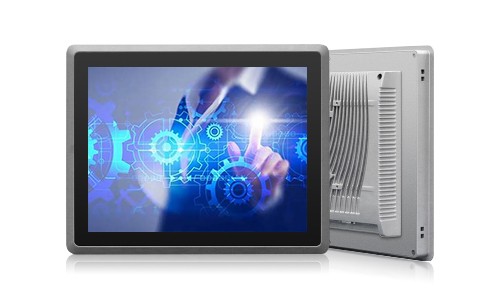
The upgrade of intelligent interaction is the core support for the new form of human-machine collaboration. Its core lies in adapting to the operation habits of operators, simplifying operation procedures and improving interaction efficiency. In the interaction design of China’s industrial all-in-one computers, based on the actual scenarios of industrial production, multi-dimensional intelligent optimization has been achieved. In terms of touch interaction, various touch control schemes such as projected capacitive and resistive types have been integrated, optimizing touch accuracy and response speed, supporting multiple touch control methods, gesture operations, and glove operation, etc., to meet the operation needs in different working conditions, enabling operators to quickly complete parameter settings, command issuance, and other operations.
In addition to touch interaction, intelligent interaction methods such as voice interaction and remote interaction have also been gradually applied to industrial all-in-one computers, further enriching the human-computer interaction scenarios. For scenarios where manual operation is inconvenient due to high temperatures, dust, etc., the voice interaction function can realize operations such as command issuance and data query, reducing the on-site operation burden of operators; the remote interaction function supports operators to remotely view production data, issue control instructions, and debug equipment parameters through terminal devices, breaking spatial limitations and achieving remote control of the production process, improving the flexibility of human-machine collaboration. At the same time, the intelligent optimization of the operation interface adopts a simple and intuitive layout, which can be customized to display contents according to the job requirements of operators, reducing learning costs and improving operational convenience.
The enhancement of efficient control capabilities is the core value manifestation of the new human-machine collaboration form, and it is also the key to enabling industrial production through industrial all-in-one computers. The ultimate goal of intelligent interaction is to achieve efficient control of the production process. By enabling human-machine collaboration to break through the information barriers in production links, it can improve the accuracy and efficiency of production control. Chinese industrial all-in-one computers, through deep integration with industrial equipment and management systems, have established a full-process efficient control system, enabling real-time collection, analysis, and coordinated control of production data.
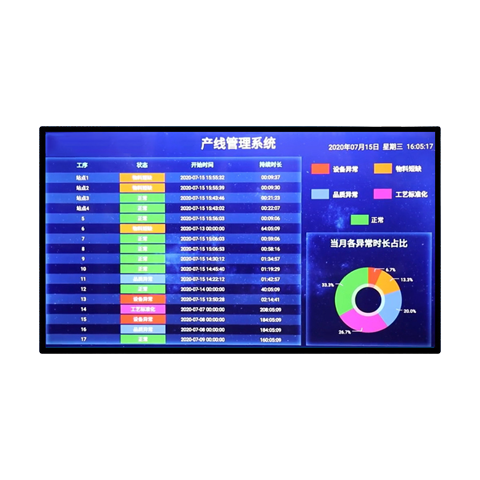
In the production control scenario, the industrial all-in-one computer collects real-time data from PLCs, sensors and other equipment through an intelligent interactive terminal, presenting information such as production progress, equipment status and process parameters in an intuitive manner. Operators can quickly grasp the overall production situation through simple interaction. At the same time, the basic data analysis function equipped on the equipment can identify production abnormalities and warn of equipment failures. Operators can respond quickly through interactive instructions, adjust production parameters and troubleshoot equipment issues in a timely manner, reducing production downtime and improving the smoothness of the production process. Moreover, the industrial all-in-one computer seamlessly connects with management systems such as MES and ERP. Operators can issue production plans and report production progress through the interactive terminal, achieving efficient linkage between production plans and on-site execution, and enhancing the coordination of production control.
The formation of the new form of human-machine collaboration in China’s industrial all-in-one computers is inseparable from the dual support of technological iteration and scenario practice. Local R&D enterprises, relying on a profound understanding of domestic industrial scenarios, accurately identify the interaction pain points and production control requirements of operators, and continuously optimize intelligent interaction technologies and control functions; The development of the local component industry provides stable support for core components such as intelligent interaction modules and data processing units, ensuring the stability and reliability of human-machine collaboration; The practical applications in various industries further optimize the human-machine collaboration model, forming a virtuous cycle of “interaction optimization – control improvement – practical feedback – iterative improvement”.
Currently, the new human-machine collaboration form of industrial all-in-one computers in China is still in the stage of continuous optimization. There is still room for improvement in aspects such as the accuracy of intelligent interaction, the adaptability to complex scenarios, and the integration with cutting-edge technologies. In some complex working conditions, the recognition accuracy of voice interaction needs to be enhanced; the human-machine collaboration solutions for niche sub-scenarios still need to be improved; the depth of integration with technologies like artificial intelligence and edge computing is insufficient, and the potential of intelligent control has not been fully exploited. However, in general, the new human-machine collaboration form has been gradually applied to various industrial scenarios, effectively improving the efficiency of production interaction and control levels.
In the future, Chinese industrial all-in-one computers will continue to focus on the core goals of intelligent interaction and efficient management, and will continuously promote technological iteration and functional optimization. On one hand, they will deepen the research and development of intelligent interaction technologies such as touch and voice, improving the accuracy and adaptability of interaction to better meet the interaction needs of more complex industrial scenarios; on the other hand, they will strengthen the integration with cutting-edge technologies such as industrial internet and artificial intelligence, enhancing data processing and intelligent management capabilities, and promoting the development of human-machine collaboration towards a more intelligent and efficient direction. Through continuous optimization of the new form of human-machine collaboration, industrial all-in-one computers will further shorten the distance between humans and industrial equipment and systems, providing more reliable support for the intelligent and efficient development of industrial production, and helping Chinese manufacturing achieve high-quality development.