Industrial Tablet Computers vs. Consumer Tablet Computers: Core Differences and Selection Tips
Product knowledge 2026-03-13
As portable computing terminals, tablets have been widely used in both daily life and industrial settings. However, industrial tablets and consumer tablets are not “scene extensions of the same type of products”; instead, they are two types of terminal devices designed based on different demand orientations. There are fundamental differences in design concepts, hardware configurations, environmental adaptability, and functional positioning between the two. When selecting, one should base it on the actual scene requirements and avoid the misconception of “replacing industrial tablets with consumer tablets”. This article objectively summarizes the core differences between them, clarifies the core selection points, without any marketing expressions, extreme words, or sensitive advertising content, to provide a reference for the selection of terminal devices for industrial scenarios.
I. Core Difference: The Essential Distinction Between Design Orientation and Core Competence
Industrial tablet computers are designed with the core focus on “stable operation in industrial scenarios”, emphasizing reliability, environmental adaptability and industrial function compatibility; consumer tablets are oriented towards “personal entertainment and lightweight office work”, emphasizing portability, interaction experience and cost-effectiveness. The differences between the two extend across all dimensions including hardware, software, structure and services.
(1) Hardware Configuration Differences: Practicality First vs. Experience First
Processor and computing power: Industrial tablet computers mostly use industrial-grade processors (X86 or ARM architecture), with computing power tailored for core tasks such as industrial scene data collection and edge inference. They do not aim for ultimate performance but rather for long-term stability. Consumer tablets use consumer-grade processors, focusing on high computing power to support entertainment and multi-tasking office work. Their performance is updated rapidly, aiming for short-term experience improvement.
- Storage Devices: Industrial tablets use industrial-grade wide-temperature storage (wide-temperature SSD, eMMC), which can operate stably in both low and high temperature environments (-40℃ to 85℃), featuring anti-vibration and anti-interference capabilities, ensuring long-term data retention; consumer tablets use consumer-grade storage, focusing on capacity and read/write speed, and are suitable for normal temperature environments, but have relatively weaker anti-interference and anti-vibration capabilities.
- Display and Touch: Industrial tablet computers use industrial-grade display panels, featuring high brightness, wide viewing angle, anti-glare properties, and readability in bright sunlight. The touch module supports glove operation and wet hand operation, and is suitable for complex operation scenarios in industrial sites. Consumer tablets focus on display clarity and color reproduction accuracy, and the touch function is adapted for bare-handed operation in daily life. However, their adaptability to industrial scenarios is insufficient.
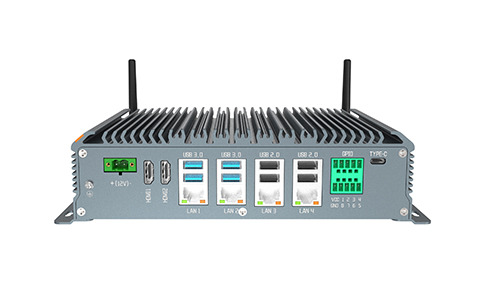
- Interface Configuration: The industrial tablet is equipped with a variety of industrial interfaces (RS232/485 serial ports, RJ45 network ports, GPIO, CAN bus interfaces, etc.), which support seamless connection with industrial equipment such as PLCs, sensors, and frequency converters; the consumer tablet mainly features general interfaces (USB, Type-C), focusing on charging and data transmission, without industrial-specific interfaces.
(2) Differences in Structure and Environmental Adaptability: Strict Adaptation vs. Daily Adaptation - Protection level: Industrial tablets generally have a protection level of IP65 or higher. Through a fully sealed design (silicone sealing ring, waterproof glue), they can prevent dust, water, and corrosion, and are suitable for industrial environments with high dust, high humidity, and oil contamination. Consumer tablets typically have protection levels of IP53 or lower, which can only resist minor dust and splashing water, and cannot adapt to the harsh industrial environment.
- Anti-vibration and anti-shock: Industrial tablet computers adopt reinforced structural design. The casing is made of aluminum alloy casting or sheet metal. The internal components are fixed by shock-proof pads and screws, which can withstand vibrations and impacts in industrial environments, ensuring the continuous operation of the equipment. Consumer tablets focus on lightweight and thin design, with fragile structures and weak anti-vibration and anti-shock capabilities. They are prone to hardware damage due to collisions and vibrations.
- Temperature and Humidity Adaptability: Industrial tablets support wide temperature operation (-40℃ to 85℃) and can operate stably in extreme high and low temperature environments, suitable for scenarios such as metallurgy, mining, and outdoor inspection; consumer tablets only support normal temperature operation (0℃ to 40℃), and may encounter issues such as inability to start, screen failure, and battery failure when exposed to extreme temperatures.
- Electromagnetic Compatibility: Industrial tablet computers have passed the EMC (Electromagnetic Compatibility) certification and possess strong resistance to electromagnetic interference. They can operate normally in environments with strong electromagnetic fields such as those found in frequency converters and motors, without affecting data collection and equipment control. Consumer tablets, on the other hand, do not have specific electromagnetic compatibility optimization and are prone to signal disorder and system crashes in strong electromagnetic environments.
(3) Differences in Software and Functions: Industrial Adaptation vs. Daily Entertainment - Operating System: Industrial tablet computers adopt industrial-grade operating systems (such as Windows IoT, Linux, RTOS, etc.), which allow for system customization, startup auto-activation, interface solidification, and security reinforcement. They are designed to meet the long-term continuous operation requirements of industrial scenarios without any additional entertainment functions. Consumer tablets use consumer-grade operating systems (such as iOS, Android), focusing on entertainment functions and interaction experiences, and contain a large number of redundant applications, which cannot meet the stability requirements of industrial grade.
- Industrial Function Compatibility: Industrial tablets support various industrial protocols such as Modbus, Profinet, and EtherNet/IP. They can perform tasks like data collection, equipment control, edge computing, and remote operation, and are compatible with industrial systems like MES and SCADA. Consumer tablets do not support industrial protocols and can only perform basic office and entertainment functions, and cannot connect to industrial equipment and systems.
- Stability and Fault Tolerance: The industrial tablet computer software has undergone long-term stability testing and features automatic restart in case of failure, data backup, and exception capture, among other fault-tolerant functions. It can operate continuously 24/7 without human intervention. In contrast, the consumer tablet software focuses on user experience but lacks sufficient stability design, making it unable to adapt to long-term continuous operation and prone to issues such as lag and crashes.
(4) Lifecycle and Service Differences: Long-term Durability vs. Short-term Iteration
Service life: Industrial tablets have a service life of 5 to 10 years. The selection of components focuses on long-term supply stability, supports version control and spare parts supply, and meets the long-term needs of industrial equipment; Consumer tablets have a service life of mostly 2 to 3 years. The hardware updates are rapid, and components are prone to being out of stock, which cannot meet the long-term usage requirements in industrial scenarios. - Service Assurance: Industrial tablet computer manufacturers offer long-term technical support, spare parts supply, firmware upgrades, etc. They can provide customized adaptation services according to industrial scene requirements. Consumer tablet manufacturers focus on short-term after-sales maintenance and do not have specialized services for industrial scenarios. Therefore, they cannot provide customized and long-term spare parts support.
II. Key Points for Model Selection: Based on the Scenario, Avoid Misunderstandings
The core of terminal selection in industrial scenarios is “matching the requirements of the scenarios and ensuring stable operation”. One needs to clearly define the core demands of their specific application scenarios and, based on the differences between them, avoid falling into common pitfalls such as “choosing consumer-grade tablets to pursue cost-effectiveness” or “blindly pursuing high performance while neglecting compatibility”. The specific selection points are as follows.
(1) Clearly define the core requirements of the scenario
Environmental requirements: Clearly define the temperature and humidity range, dust content, vibration intensity, electromagnetic environment, etc. for the application scenario. If it is in an extremely high or low temperature, high dust, strong vibration, or strong electromagnetic environment, an industrial tablet computer must be selected; if it is a normal temperature, clean office environment and does not need to connect to industrial equipment, a consumer tablet can be chosen. - Functional Requirements: Determine the core purpose of the terminal. If it is required to perform functions such as data collection, equipment control, industrial protocol integration, and edge computing, an industrial tablet computer must be selected; if it is only used for document viewing, simple office work, and entertainment, a consumer tablet can be chosen.
- Operating Requirements: Clearly define the running duration and stability requirements of the terminal. If it needs to operate continuously 24/7 and has a low tolerance for faults, an industrial tablet computer should be selected; if it is only used intermittently and has a lower requirement for stability, a consumer tablet can be chosen.
(2) Focus on selecting core parameters
Key points for selecting industrial tablets: Prioritize considering the protection level (IP65 or above), wide temperature range (-40℃ to 85℃), industrial interface configuration (compatible with required industrial protocols), component reliability, operating system (industrial grade), service guarantee and lifecycle. Secondly, consider computing power and storage capacity. - Key considerations for selecting a consumer-grade tablet: If it is intended for non-industrial applications, priority should be given to factors such as portability, display quality, computing power, storage capacity, interaction experience, and cost-effectiveness. Industrial-grade protection and protocol compatibility do not need to be considered.
(3) Avoid Common Selection Mistakes
Misconception 1: Using consumer-grade tablets instead of industrial-grade tablets. In some scenarios, to reduce costs, consumer-grade tablets are chosen to replace industrial-grade ones. This may meet basic needs in the short term, but in the long run, due to insufficient environmental adaptation, hardware damage, and unstable software, production may be disrupted, thereby increasing overall costs. - Misconception Two: Blind pursuit of high performance. In industrial scenarios, the requirement for terminal computing power is “fitting is sufficient”, meaning there is no need to blindly choose high-performance processors. Excessive pursuit of high performance will increase costs and has no significant improvement in the stability of industrial scenarios.
- Misconception Three: Ignoring Services and Lifecycle. Industrial equipment has a long service life. When selecting equipment, one should pay attention to the spare parts supply capacity, technical support, and long-term services of the manufacturer to avoid the equipment being prematurely scrapped due to the discontinuation of component production or the lack of after-sales support.
- Misconception Four: Ignoring Interface and Protocol Compatibility. In industrial scenarios, it is necessary to connect with various industrial devices and systems. During the selection process, it is essential to confirm whether the terminal interface and industrial protocol are compatible to avoid problems such as inability to connect or abnormal data collection.
(4) Scenario-based Selection Reference
Required scenarios for industrial tablets: intelligent manufacturing production lines, mines, metallurgy, energy and power, outdoor inspection, logistics and warehousing (AGV scheduling, goods sorting), rail transportation, etc. These scenarios have harsh environments, require connection with industrial equipment, and demand long-term stable operation. - Scenarios where consumer tablets can be used: lightweight office work, presentation at meetings, ordinary data entry (in a normal temperature and clean environment), mobile office in non-industrial settings, etc. These scenarios do not have strict environmental requirements, do not need to connect to industrial equipment, and have relatively low requirements for operational stability.
III. Summary
The core difference between industrial tablets and consumer tablets lies in the disparity between “industrial scenario requirements” and “personal consumption demands”. There is no “better or worse” distinction between them; only a distinction of “fit or not fit”. The core of industrial scenario selection is “based on environmental and functional requirements, prioritizing stability and adaptability”. The value of industrial tablets does not lie in the accumulation of parameters, but in their ability to operate stably and continuously in harsh industrial environments, achieving core functions such as industrial data collection and equipment control.
With the deepening of digital transformation in the manufacturing industry, the application scenarios of industrial tablet computers will continue to expand. When selecting the equipment, it is necessary to combine the specific needs of your own scenario, clarify the core requirements, avoid selection mistakes, choose the appropriate terminal devices, so as to ensure the continuity and stability of the industrial production process, reduce operation and maintenance costs, and maximize the value of the terminal devices.