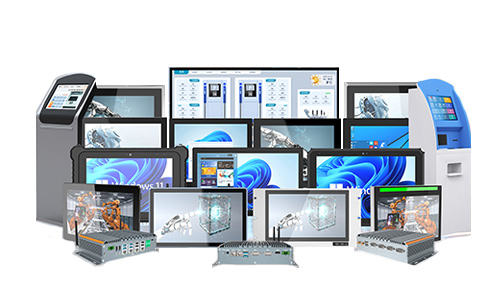
From consumer-level to industrial-level: The differentiated technological evolution of display panels
Product knowledge 2026-03-09
The display panel, as the core carrier of human-computer interaction, has deeply integrated into various scenarios in both daily life and industrial production. From consumer-level displays in household TVs and smartphones to industrial-level displays in fields such as industrial automation, energy and power, and rail transportation, the evolution of panel technology has always been centered around the needs of specific scenarios. Consumer-level display panels focus on user experience and strive for a balance between visual effects and cost performance; industrial-level display panels, on the other hand, prioritize reliability and environmental adaptability, meeting the stringent requirements of complex industrial conditions. Although they seem to be of the same origin, they have significant differences in technical design, performance indicators, and process standards. This difference represents the precise iteration of display panel technology from “consumer adaptation” to “industrial adaptation”, and it is also an inevitable requirement for core hardware in the digital and intelligent upgrading of manufacturing industries.
The commercialization of display panel technology began in the latter half of the 20th century. In 1968, the American RCA company released a watch made of liquid crystal material, marking the official entry of liquid crystal display into the path of practical application. The early display technologies mainly served the consumer sector. With the rise of industrial automation, traditional consumer-grade panels were difficult to meet the complex demands of industrial scenarios. Industrial-grade display panels gradually separated from consumer-grade technologies through targeted technical optimization and innovation, forming an independent technical system and completing the differentiated evolution from “general-purpose” to “special-purpose”.
I. Core Scenario Differences between Consumer-Level and Industrial-Level Display Panels: The Underlying Logic of Evolution
The differentiated evolution of display panel technology is fundamentally driven by the differentiation of application scenarios. There are fundamental differences in the application scenarios between consumer-grade and industrial-grade display panels, and these differences directly determine the core differences in technical design and performance requirements between the two, as well as the underlying logic of technological evolution.
(1) Characteristics of the consumer-level display panels’ scenarios
Consumer-grade display panels are mainly used in household, office, entertainment and other scenarios, such as televisions, computers, smart phones, and tablet computers. The core demands in these scenarios focus on users’ visual experience and cost-effectiveness. The usage environment is relatively mild – the temperature is controlled between 0℃ and 40℃, without strong dust, strong vibration, strong electromagnetic interference, and the usage time is intermittent, requiring no 24-hour continuous operation. Therefore, the technical design focus of consumer-grade display panels is on high resolution, high color gamut, high refresh rate, while also considering lightweight, low power consumption and cost control, to meet users’ demands for visual effects and ease of use, and the requirements for adaptability to extreme environments and long-term stable operation are relatively lower.
(2) Characteristics of industrial-grade display panels
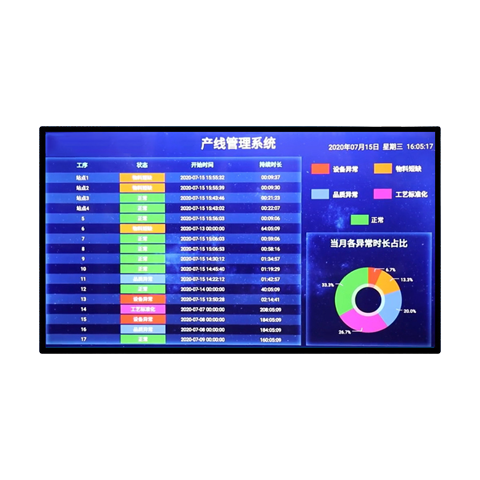
Industrial-grade display panels are mainly used in industrial automation lines, outdoor industrial environments, and special industrial fields, and they undertake key functions such as equipment status monitoring, operation instruction transmission, and production data visualization. The usage environments of these scenarios are complex and changeable, with common problems such as high temperature, high humidity, much dust, strong vibration, and strong electromagnetic interference. Some outdoor or special scenarios also need to withstand extreme temperatures, heavy rain, oil stains, etc. At the same time, industrial scenarios usually require the panels to operate continuously 7×24 hours. If a failure occurs, it may cause production line shutdown, equipment damage, and even trigger safety accidents. Therefore, the technical design focus of industrial-grade display panels is high reliability, strong environmental adaptability, long service life, and兼顾display accuracy and operation compatibility. The sensitivity to cost is lower than that of consumer-grade products, and the core demand is “stable, durable, and adaptable”.
The fundamental differences in scene requirements have driven the display panel technology to gradually evolve from consumer-level to industrial-level, forming a “same origin but different tracks” technological development path – both share the basic display principles, but gradually diverge in core performance and process design, ultimately forming differentiated technical systems suitable for different scenarios.
II. Core Technology Differentiation: Key Iterations from Consumer Level to Industrial Level
From consumer-level to industrial-level, the technological evolution of display panels is not merely a simple performance upgrade. Instead, it involves targeted iterations in multiple dimensions such as material selection, structural design, process optimization, and performance debugging, all centered around the demands of industrial scenarios. Ultimately, it achieves a leap from “meeting daily usage needs” to “adapting to the stringent requirements of industrial environments”. Below, we will analyze the distinctive features and evolution logic of the two from the perspective of core technologies.
(1) Environmental Adaptability Technology: A Breakthrough from “Mild Environments” to “Extreme Conditions”
Environmental adaptability is the most fundamental difference between industrial-grade display panels and consumer-grade panels, and it is also the key direction for technological advancement. Consumer-grade panels are mainly designed for indoor moderate environments and do not require special environmental protection designs. Their operating temperature range is typically from 0°C to 40°C, and the protection level is mostly below IP30, which can only resist minor dust and cannot cope with the complex interference in industrial scenarios.
To adapt to the harsh environment of industrial scenarios, industrial-grade display panels have achieved multiple breakthroughs in environmental adaptability technologies. In terms of wide temperature range technology, by optimizing the liquid crystal materials and driving circuits, the temperature limit of consumer-grade panels has been broken, and the working temperature range has gradually expanded to -40°C to 85°C. Some specially customized products can further extend this range. They can not only withstand the low temperatures of northern cold outdoor scenarios but also adapt to the influence of high-temperature production environments such as petrochemicals and metallurgy, avoiding problems such as black screen, screen distortion, and slow response caused by temperature fluctuations. In terms of protection technology, a sealed structure design and special sealing materials are adopted, and the protection level is generally increased to above IP65. Some products can reach IP68 level, which can effectively prevent dust, water vapor, oil stains, etc. from entering the screen interior, suitable for scenarios with a lot of dust in mechanical processing workshops and high humidity in chemical workshops. At the same time, through the optimization of reinforced shells and buffer structures, the shock resistance and impact resistance are improved, capable of withstanding common vibrations and collisions in industrial production, ensuring stable display on high-frequency vibrating equipment such as machine tools and assembly lines. In terms of anti-electromagnetic interference technology, by optimizing the circuit layout and adding electromagnetic shielding layers, the product’s anti-electromagnetic interference ability is enhanced, enabling normal operation in strong electromagnetic interference environments such as substations and frequency converters, avoiding display signal distortion and lag.
(2) Operating Stability Technology: The Upgrade from “Periodic Use” to “Continuous Operation”
The use of consumer-level display panels is intermittent. For instance, mobile phones and computers are used for several hours every day, while televisions are only turned on during leisure time. The requirement for long-term operational stability is relatively low. The average time between failures (MTBF) is usually between 20,000 and 30,000 hours, and there is no need to withstand the test of long-term uninterrupted operation.
Industrial-grade display panels need to be compatible with the 7×24-hour uninterrupted operation requirements of industrial production lines. Operational stability has become a key technical indicator. The MTBF (Mean Time Between Failures) of these panels generally exceeds 50,000 hours, and some high-end products can reach over 70,000 hours, effectively reducing production line downtime losses caused by panel failures. To achieve this goal, industrial-grade panels have undergone multiple technical optimizations: In terms of component selection, industrial-grade core components are given priority, including industrial-grade driver ICs, high-temperature-resistant backlight modules, and anti-aging polarizing films. These components have undergone strict environmental tests and lifespan tests, ensuring stable performance in complex conditions and avoiding faults caused by component aging or damage. In terms of production processes, high-precision bonding processes, strict sealing processes, and aging testing procedures are adopted. Each batch of products must undergo multiple rounds of environmental simulation tests such as high temperature, low temperature, vibration, and electromagnetic interference to ensure consistency and stability of product performance. Some products also have added self-detection functions for faults, which can promptly report the screen operation status, facilitating operators to detect potential problems in advance and further enhance operational stability.
(III) Display and Interaction Technologies: Optimization from “Visual Experience” to “Precise Adaptation”
The display and interaction technologies for consumer-level display panels focus on the user’s visual experience. They aim for high resolution, wide color gamut, and high refresh rate. For instance, the resolution of mobile phone panels has reached the 4K level, the color gamut coverage is close to 100%, and the refresh rate can reach 120Hz or even higher. The main purpose is to meet users’ demands for high-definition images and smooth operations. The interaction method is mainly capacitive touch, emphasizing the smoothness and convenience of operation, and is suitable for daily lightweight operations.
The display and interaction technologies of industrial-grade display panels focus on the precision and adaptability of industrial operations, rather than merely pursuing high parameters. Instead, they optimize performance based on the requirements of the scenarios. In terms of display accuracy, the key focuses are on enhancing pixel density and display stability to ensure the accurate presentation of critical information such as equipment operation parameters, production data, and fault codes, avoiding operational errors caused by unclear display. In terms of brightness adjustment, for outdoor and high-lighting scenarios, high-brightness designs are adopted, with brightness reaching over 500 cd/m². Some outdoor products even exceed 1000 cd/m², combined with anti-glare coatings, achieving clear visibility in sunlight. However, the brightness of consumer-grade panels is typically between 250 and 350 cd/m², which cannot adapt to strong light environments. In terms of interaction methods, the capacitive touch technology is optimized, supporting wet-hand operations and glove operations, meeting the needs of operators wearing protective equipment in industrial scenarios. Some high-end scenarios also introduce voice interaction and gesture control to enhance operational efficiency and avoid errors. Additionally, industrial-grade panels also pay attention to color accuracy, especially in medical and precision manufacturing scenarios, where color calibration technology is used to ensure that the displayed colors are consistent with the actual scenes, meeting industry-specific requirements.
(4) Structure and Process Technology: The Transformation from “Thin, Light and Convenient” to “Sturdy and Durable”
Consumer-level display panels aim for slimness and portability. For instance, the panel thickness of mobile phones and tablet computers is only a few millimeters. They use lightweight plastic or glass casings, and the structural design focuses on “lightness” as its core. There is no need to consider complex mechanical protection. Even to pursue an aesthetic level, some durability is sacrificed.
The structure and process design of industrial-grade display panels focus on “durability and robustness”, being capable of withstanding tests such as collisions, friction, and vibrations in industrial environments. In terms of structural design, a metal reinforced casing is adopted to replace the thin and lightweight plastic casing of consumer-grade panels, enhancing the panel’s ability to withstand pressure and impact. Some products adopt an embedded design, which can be directly integrated into industrial equipment, avoiding damage caused by external collisions. In terms of interface design, reinforced interfaces are used to prevent contact failure caused by vibration, and support various industrial-standard interfaces such as RS-485 and CAN bus, enabling seamless connection with various industrial automation devices and adapting to different manufacturers and types of industrial control systems. This is a significant difference from the design of consumer-grade panels, which mainly use universal interfaces such as HDMI and VGA. In terms of process, full-lamination technology is adopted to eliminate the air gap between the glass cover and the display layer, reducing light reflection, which not only improves display clarity but also enhances the sealing performance and durability of the panel, preventing dust and moisture from entering. Traditional consumer-grade panels mostly use non-full-lamination processes, which have poor sealing performance and are difficult to adapt to industrial environments with a lot of dust.
III. The Core Driving Forces of Technological Evolution: Scenario Requirements and Industry Upgrading
The differentiated technological evolution of display panels from consumer-level to industrial-level is not accidental; rather, it is an inevitable outcome driven by the upgrading of application scenarios and the advancement of industrial development. The core driving forces mainly lie in two aspects.
On the one hand, the continuous upgrading of industrial automation has placed higher demands on the reliability and adaptability of display panels. As the manufacturing industry transitions towards digitalization and intelligence, the automation level of industrial equipment is constantly improving. Display panels, as the core terminal for human-computer interaction, need to adapt to more complex industrial conditions and more precise operational requirements. The performance of traditional consumer-grade panels is no longer sufficient to meet the demands of industrial scenarios, forcing display panel technology to evolve towards industrial standards and driving breakthroughs in core technologies such as environmental adaptability, operational stability, and precise interaction. From simple parameter display in early industrial scenarios to the multi-functional requirements such as data visualization, remote operation, and fault warning in intelligent production lines today, the upgrading of industrial scenarios has directly promoted the continuous optimization of industrial-grade display panel technology.
On the other hand, the maturity of display technology and the improvement of the industrial chain have provided technical support for differentiated evolution. From liquid crystal display (LCD), organic light-emitting diode (OLED) to Mini LED and Micro LED, the continuous iteration of display technology has offered more technical options for industrial-grade panels; the acceleration of the domestic production process of core components such as glass substrates, driving ICs, and polarizing films has gradually increased the autonomy rate of these core parts, reducing the industry’s dependence on external sources and providing a guarantee for the technical optimization of industrial-grade panels; at the same time, the increasingly detailed division of labor in the industrial chain has enabled midstream panel manufacturing enterprises to conduct customized design and production based on industrial scene requirements, promoting process optimization and performance upgrade, and achieving precise transformation from consumer-level technology to industrial-level technology. Moreover, the support of national industrial policies has also promoted the research and application of industrial-grade display panel technology, helping the industry achieve high-quality development.
IV. Future Evolution Trend: Diversification and Integration Coexist
With the continuous deepening of industrial intelligence and the continuous breakthroughs in display technology, the differentiated evolution of display panels from consumer-level to industrial-level will continue to advance, and at the same time, it presents a development trend of “differential deepening” and “technological integrationization” operating in parallel.
In terms of differentiated deepening, industrial-grade display panels will further focus on the specific requirements of various scenarios and achieve more precise technical optimization. For extreme industrial scenarios, such as deep-sea, high-altitude, high-temperature, and high-pressure environments, they will further expand the wide temperature range, enhance the protection level and anti-interference ability, adopt new inorganic materials to improve the panel’s anti-aging and anti-corrosion capabilities, promote the implementation of new technologies like Micro LED, and increase the screen lifespan to over 100,000 hours, meeting the requirements for longer uninterrupted operation; for high-end scenarios such as precision manufacturing and medical care, they will further improve display accuracy and color accuracy, optimize interaction experience, and adapt to more complex operational requirements; for small-sized industrial equipment, they will upgrade to miniaturization, lightweighting, and integration. While ensuring reliability, they will reduce the size, lighten the weight, improve the integration degree of the equipment, and strengthen customization capabilities, providing personalized solutions such as curved screens and special-shaped screens to adapt to the installation space and functional requirements of different devices.
In terms of technological integration, industrial-grade display panels will draw on the advanced technologies of consumer-grade displays to achieve a dual improvement in performance and experience. The high refresh rate, wide color gamut, and lightweight technology of consumer-grade panels will gradually be applied to industrial-grade panels, ensuring reliability while enhancing the user’s operational experience. At the same time, industrial-grade panels will be deeply integrated with technologies such as artificial intelligence and the Internet of Things to realize intelligent functions such as automatic brightness adjustment, automatic fault warning, and remote monitoring. Through AI algorithm analysis of screen operation data, potential problems such as backlight attenuation and circuit faults can be detected in advance. Through IoT technology, remote monitoring and parameter adjustment can be achieved, further enhancing the intelligence level of industrial automation systems and promoting the transformation of industrial-grade display panels from “display terminals” to “intelligent interaction terminals”.
Furthermore, the process of domestic substitution will continue to deepen. The self-research and development capabilities of core components are constantly improving. The self-ownership rates of core components such as glass substrates, driving ICs, and polarizing films are gradually increasing. This reduces the industry’s dependence on foreign sources and simultaneously enhances the product’s cost-effectiveness and supply stability, providing support for the autonomous and controllable development of the industrial automation industry. Upstream and downstream enterprises will strengthen collaborative innovation to jointly promote breakthroughs in the domestication of industrial-grade display panel technology, adapting to the development needs of the domestic industrial automation industry, and driving the transformation of China’s industrial-grade display panel industry towards high-quality development.
V. Conclusion
From consumer-level to industrial-level, the differentiated technological evolution of display panels is the result of both the drive of scenario requirements and the promotion of technological innovation. It is also the transition of the display panel industry from “generalization” to “…”