Analysis of the Core Components of Industrial Control pc and the Differences in Industry Applications
Product knowledge 2026-02-27
Industrial control all-in-one machines, as integrated hardware devices in the field of industrial automation, have their core value in integrating computing, display, and control functions into one. They are designed to adapt to the complex working conditions and diverse demands of industrial scenarios. Unlike ordinary commercial computing devices, the design and manufacturing of industrial control all-in-one machines are centered around the stability and durability requirements of industrial scenarios. The core composition and application adaptation logic of these machines directly determine their application forms in different industries. This article objectively analyzes industrial control all-in-one machines from three dimensions: core hardware composition, core technical characteristics, and application differences in various industries, providing a reference for practitioners to understand their functions and application logic.
The core components of the industrial control all-in-one machine are centered around “stable operation in industrial environments”. It mainly consists of four parts: the core computing module, the display and interaction module, the interface expansion module, and the protective structure module. These modules work together to ensure that the equipment can achieve efficient and stable human-machine interaction and equipment control in complex industrial environments. The core computing module is the “brain” of the industrial control all-in-one machine. It mainly includes industrial-grade motherboards, processors, memory and storage devices. Compared with commercial motherboards, industrial-grade motherboards use specialized components that are resistant to interference and can withstand high temperatures. The layout is more compact and can adapt to long-term uninterrupted operation. Processors mostly use low-power, high-stability industrial-grade chips, and memory and storage focus on the stability of data reading and writing to avoid data loss or read/write delays in industrial production.
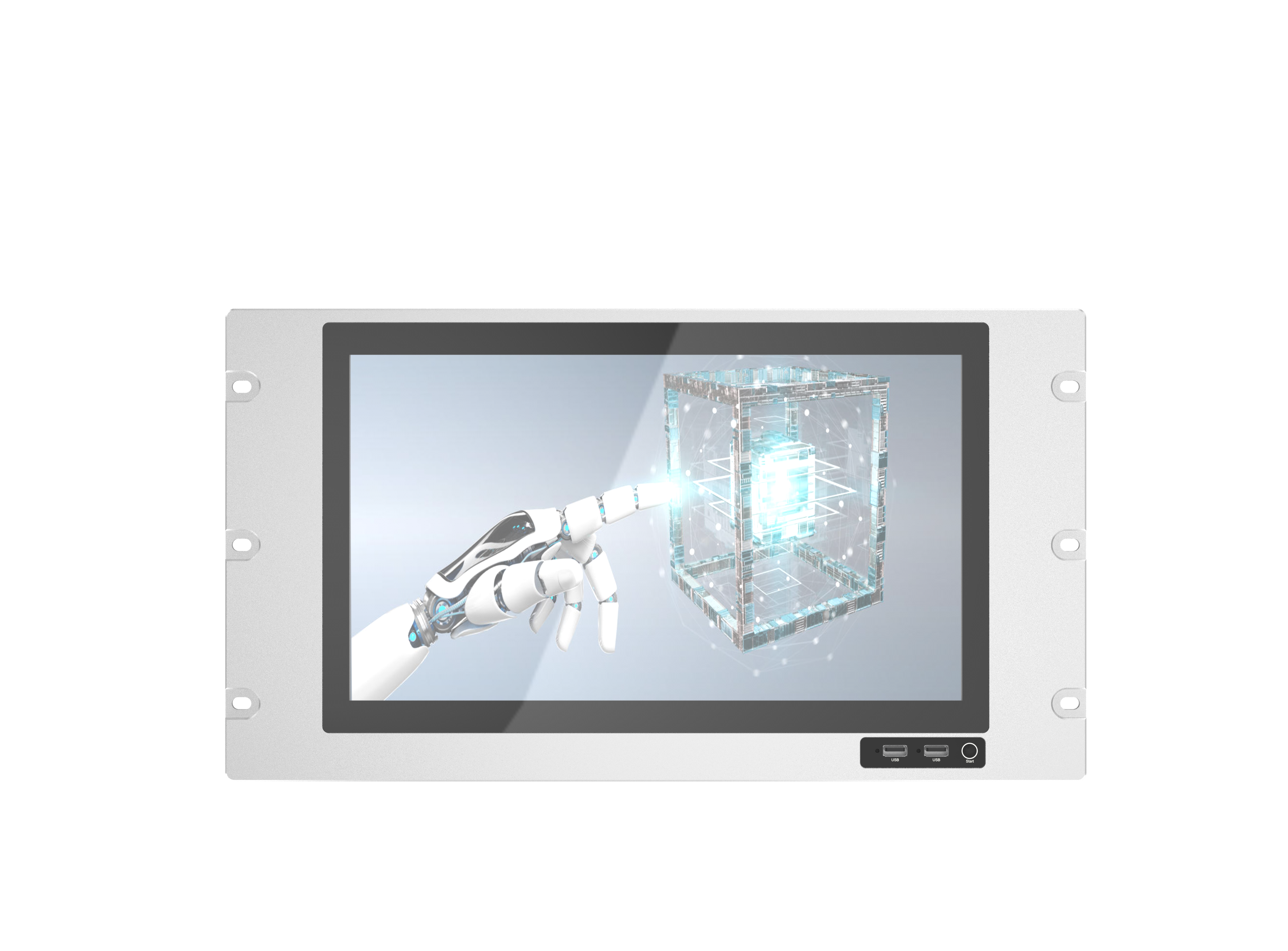
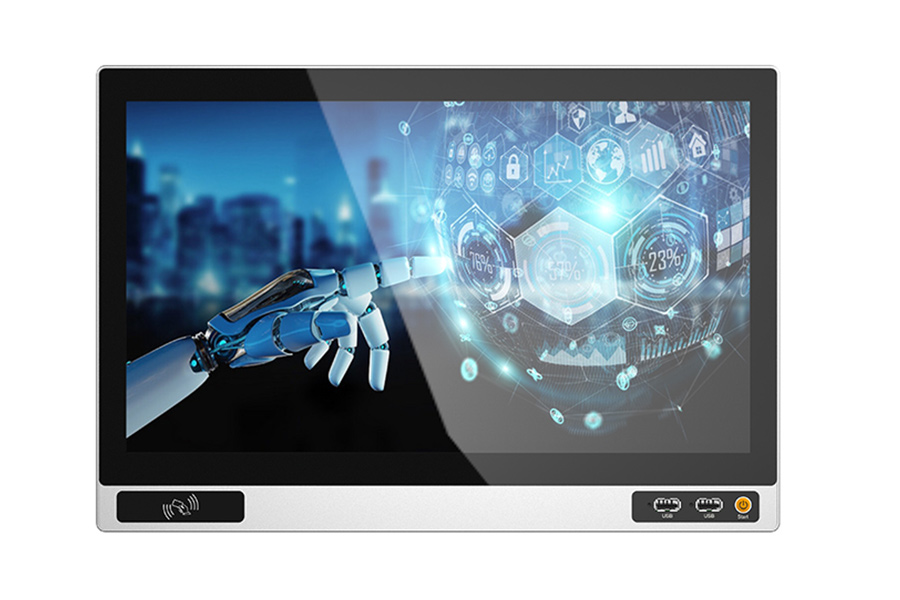
The display interaction module serves as the “human-machine interface” of the industrial control all-in-one machine. Its core components are industrial-grade touch screens and operation buttons (available on some models). The design focus is on adapting to the operating environment of industrial scenarios. The key difference between industrial touch screens and ordinary commercial screens lies in their protection performance and operation adaptability. They mostly use tempered glass panels, featuring anti-scuffing and anti-oil-stain properties. The touch response accuracy can meet the rapid operation requirements of industrial scenarios. Some special models can support normal touch control in low-temperature and high-temperature environments. The operation buttons adopt industrial-grade push buttons, with long service life and the ability to withstand frequent operations. Some models can customize button functions according to the scene requirements to enhance operational convenience.
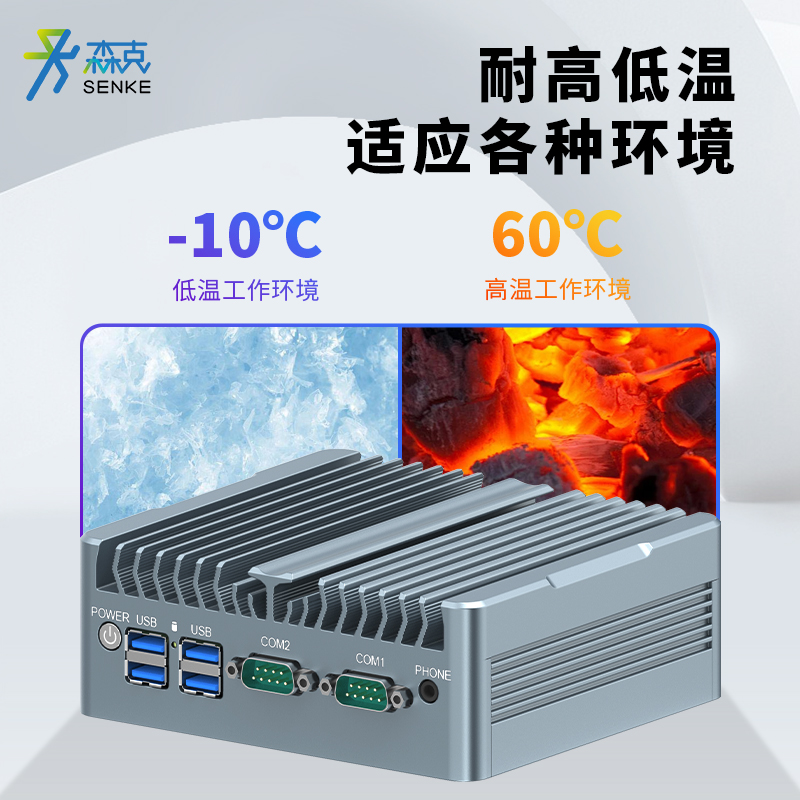
The interface expansion module is the core for achieving “device interconnection” in industrial control all-in-one machines. It is responsible for connecting various industrial peripherals, enabling data collection, signal transmission, and device control. Common interfaces include COM interface, USB interface, LAN interface, HDMI/VGA interface, DI/DO interface, etc. The COM interface is mainly used to connect industrial control devices such as sensors and frequency converters, the USB interface is used to connect external devices such as mice, keyboards, and USB drives, the LAN interface is used to realize device networking and data transmission, and the DI/DO interface is used to directly control the start and stop of actuators. The number and type of interfaces can be configured according to industry requirements to ensure that the equipment can flexibly adapt to the external device interconnection needs in different scenarios.
The protective structure module is crucial for the industrial control all-in-one machine to adapt to complex industrial environments. It mainly includes the material of the casing, sealing design, and heat dissipation design. The casing is mostly made of aluminum alloy or stainless steel, which has the characteristics of corrosion resistance and impact resistance, and can withstand collisions and wear in industrial scenarios. The sealing design uses professional sealant and sealing components to ensure that the equipment has certain dustproof and waterproof capabilities, with the protection level ranging from IP54 to IP67 depending on the scene requirements. The heat dissipation design adopts a combination of passive cooling and active cooling, with passive cooling relying on the natural heat dissipation of the heat dissipation fins on the casing, and active cooling equipped with industrial-grade cooling fans to ensure that the equipment can operate stably in high-temperature environments and avoid damage to components due to overheating.
In addition to the uniqueness of its core components, the industrial control all-in-one machine also possesses several core technical features that are suitable for industrial scenarios. Firstly, the anti-interference technology, through designs such as motherboard shielding and power filtering, resists electromagnetic interference and voltage fluctuations in industrial scenarios, ensuring the accuracy of equipment operation. Secondly, the low-power consumption technology, by using low-power components and intelligent power consumption control schemes, ensures performance while reducing energy consumption, meeting the requirements for long-term uninterrupted operation in industrial scenarios. Thirdly, the wide-temperature adaptation technology, through component selection and structural optimization, enables the equipment to operate stably within a wide temperature range, adapting to extreme industrial environments such as high and low temperatures. Fourthly, the data security technology, some models are equipped with data encryption and backup functions, preventing the leakage or loss of industrial control data, ensuring the security of the production process.
Due to the significant differences in industrial scenarios and operational requirements across various industries, the application of industrial control all-in-one machines also exhibits distinct differentiation characteristics. The core lies in optimizing configuration based on industry needs to achieve precise adaptation. In the manufacturing sector, industrial control all-in-one machines are mainly used for production line control. The key requirements are rich interfaces and strong interactivity, enabling connections with various external devices such as CNC machines, robots, and inspection equipment, real-time collection of production data, monitoring of equipment operation status, and in some scenarios, the need for high-temperature resistance and dust-proof capabilities to adapt to the complex working conditions of the workshop.
In the energy and power industry, industrial control all-in-one machines are mainly used for power monitoring and dispatching. The core requirements are strong anti-electromagnetic interference capability, stable operation, and the ability to collect key data such as voltage, current, and power in real time, enabling remote monitoring and dispatching of power equipment. In some outdoor application scenarios, they also need to have waterproof and UV-resistant capabilities to adapt to harsh outdoor environments. In the warehousing and logistics industry, industrial control all-in-one machines are mainly used for warehouse management and AGV dispatching. The key requirements are portable installation, strong networking capability, and the ability to work in coordination with warehouse management systems and AGV equipment to achieve automated management and dispatching of goods. The requirements for protection level are relatively lower, but they need to have flexible installation methods.
In the medical industry, industrial control all-in-one machines are mainly used for controlling medical equipment and presenting diagnostic data. The core requirements are stable operation, precise touch control, the ability to adapt to the linkage needs of medical equipment, and certain antibacterial and easy-clean capabilities, which comply with the hygiene requirements of medical scenarios. In the metallurgical and mining industry, industrial control all-in-one machines need to have high-intensity protective capabilities, able to withstand harsh working conditions such as dust, high temperatures, and vibrations, and also possess strong anti-interference capabilities to ensure the stability of equipment control and data collection in complex environments.
In conclusion, the core components and technical features of industrial control all-in-one machines determine their ability to meet the complex requirements of industrial scenarios. The differentiation in industry applications drives their continuous optimization of configuration and improvement of functions. With the continuous development of industrial intelligentization technology, the core components of industrial control all-in-one machines will become more modular and intelligent, better able to adapt to the individualized needs of different industries. At the same time, their application scenarios will be further expanded, providing more reliable hardware support for the automation and digitalization upgrades of various industries.