Selection Key Points and Usage Maintenance Guidelines for Industrial Control Integrated Machines
Product knowledge 2026-02-27
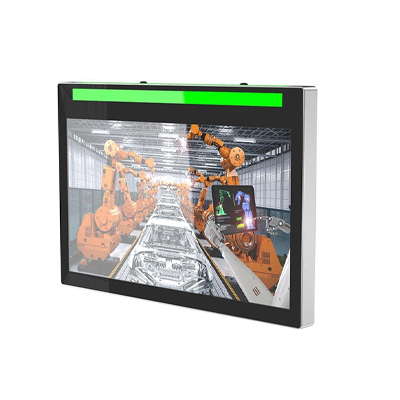
In the industrial automation scenario, the adaptability of industrial control all-in-one machines directly affects the stability and efficiency of the production process. Different industries and different scenarios have different requirements for the performance, protection, and interfaces of the equipment. Reasonable selection and scientific maintenance can extend the service life of the equipment and fully utilize its core role in industrial control. This article comprehensively analyzes the industrial control all-in-one machine from three dimensions: selection principles, usage precautions, and daily maintenance methods. Combined with the actual needs of industrial scenarios, it provides a reference for relevant practitioners.
The selection of industrial control all-in-one machines should be based on actual application scenarios, taking into account performance compatibility, environmental compatibility and functional compatibility. Avoid blindly pursuing parameters and ensure that the equipment can stably adapt to the on-site working conditions. First, it is about performance selection. The core lies in matching the actual needs of industrial control. Factors such as data processing volume, running software type, and the number of device interconnections need to be considered to select appropriate processors, memory and storage configurations. For simple data collection and basic control scenarios, basic configurations can meet the requirements; for complex production line interconnections and scenarios involving large amounts of real-time data processing, a configuration with stronger computing capabilities is required to ensure smooth software operation and timely data processing.
The next aspect is the selection of environmental adaptability. Industrial scenarios often encounter complex conditions such as high temperatures, humidity, dust, and electromagnetic interference. Therefore, the protection level and operating temperature range of the industrial control all-in-one machine need to match the on-site environment. In dusty and humid workshops or outdoor scenarios, products with a protection level of IP65 or above should be selected to prevent dust and moisture from entering the equipment and damaging components. In high-temperature environments, components that can withstand high temperatures must be chosen to ensure the equipment operates stably within a temperature range of -10°C to 60°C or even wider. In scenarios with strong electromagnetic interference, such as in the power and metallurgy sectors, products with anti-electromagnetic interference designs should be selected to prevent signal interference from affecting the equipment’s operational accuracy.
Finally, there is the issue of function and interface compatibility. The requirements for device interconnection vary across different industries. Therefore, based on the types of peripheral devices at the site, one needs to select industrial control all-in-one machines that are compatible in terms of interface quantity and type. For example, in manufacturing production lines, multiple sensors and actuators need to be connected, so products with sufficient COM interfaces and USB interfaces should be chosen as priority; for scenarios that require remote monitoring and data transmission, products with gigabit Ethernet interfaces or wireless communication modules should be selected; for scenarios involving image acquisition and processing, the compatibility of the device’s graphics processing capabilities and HDMI/VGA and other display interfaces needs to be considered. Additionally, the installation method should also be combined with the site’s space layout, and appropriate installation types such as wall mounting, embedding, or desktop installation should be selected to ensure convenient installation without affecting on-site operations.
The scientific and reasonable usage method is the foundation for ensuring the stable operation of the industrial control all-in-one machine. During the use of the equipment, it is necessary to strictly follow the operation norms and avoid abnormal operations that may cause equipment failures. First, do not randomly plug or unplug external interface connectors during the operation of the equipment, especially COM ports and LAN ports. Before plugging or unplugging, turn off the power of the equipment to prevent current shock from damaging the interface and components; second, avoid placing the equipment in locations exposed to direct sunlight, subject to rain erosion or intense vibration, and keep it away from strong electromagnetic radiation sources and high-temperature heat sources to prevent the equipment performance from being affected; finally, do not install software unrelated to industrial control on the industrial control all-in-one machine to avoid occupying system resources, causing software conflicts, and affecting the normal operation of the control program.
Daily maintenance is crucial for extending the service life of industrial control all-in-one machines. It is necessary to formulate a regular maintenance plan based on the operating conditions of the equipment. On one hand, regularly clean the dust on the surface of the equipment and the cooling vents. Use a dry soft cloth to wipe the surface and blow the cooling vents with compressed air to prevent dust accumulation from affecting heat dissipation and causing the equipment to overheat and freeze. On the other hand, regularly check the connection status of the equipment interfaces, check if the wiring is loose or aged, and replace the damaged wiring in time to ensure good interface contact. In addition, regularly back up the control programs and important data to prevent data loss due to equipment failures and affect the production process. For equipment that operates continuously for a long time, it is recommended to perform regular shutdown checks to identify potential faults and ensure the long-term stable operation of the equipment.
It should be noted that the industrial control all-in-one machine, as an industrial-specific device, its fault diagnosis and repair must be carried out by professionals. Non-professionals are strictly prohibited from disassembling the equipment without authorization, as this may cause secondary damage. When the equipment encounters issues such as failure to start, touch screen malfunction, or abnormal data collection, the power supply of the equipment should be turned off first. Then, check the interface connections and power supply conditions. If the problem cannot be resolved, contact professional maintenance personnel for inspection and repair to ensure that the fault is properly handled.
With the continuous advancement of industrial intelligence, the application scenarios of industrial control all-in-one machines have become increasingly widespread, and the importance of their selection and maintenance has become more prominent. Reasonable selection can ensure that the equipment precisely matches the on-site working conditions, fully exerting its control and data processing capabilities; scientific maintenance can extend the service life of the equipment, reduce the occurrence rate of faults, and lower the production and operation costs. In the future, as the technology of industrial control all-in-one machines continues to upgrade, their adaptability and stability will further improve, and at the same time, higher requirements will be placed on selection and maintenance. It is necessary to combine industry development and scene needs to continuously optimize the selection and maintenance plans, providing reliable support for the development of industrial automation.