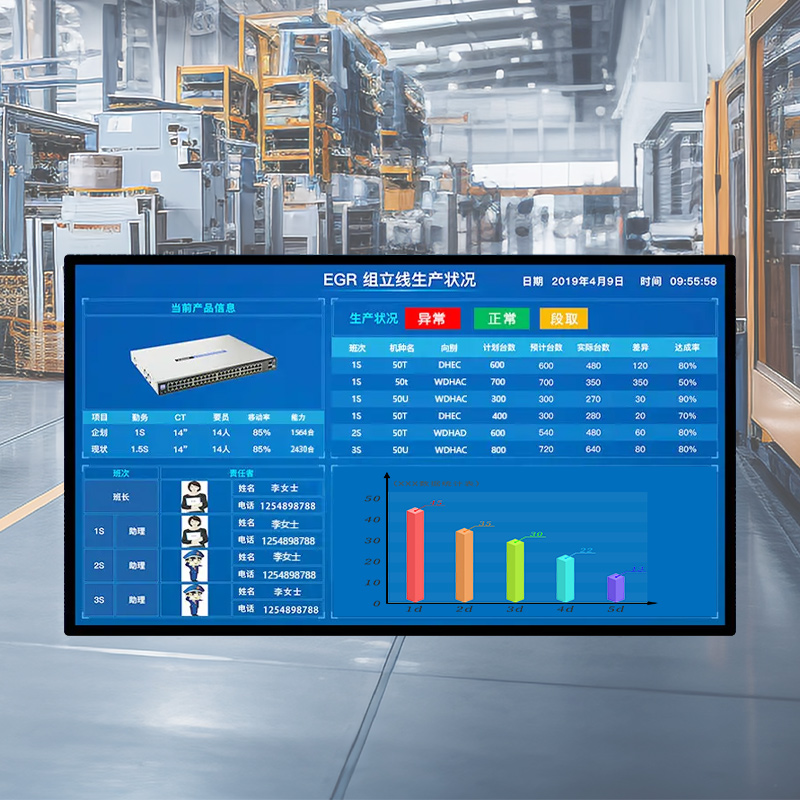
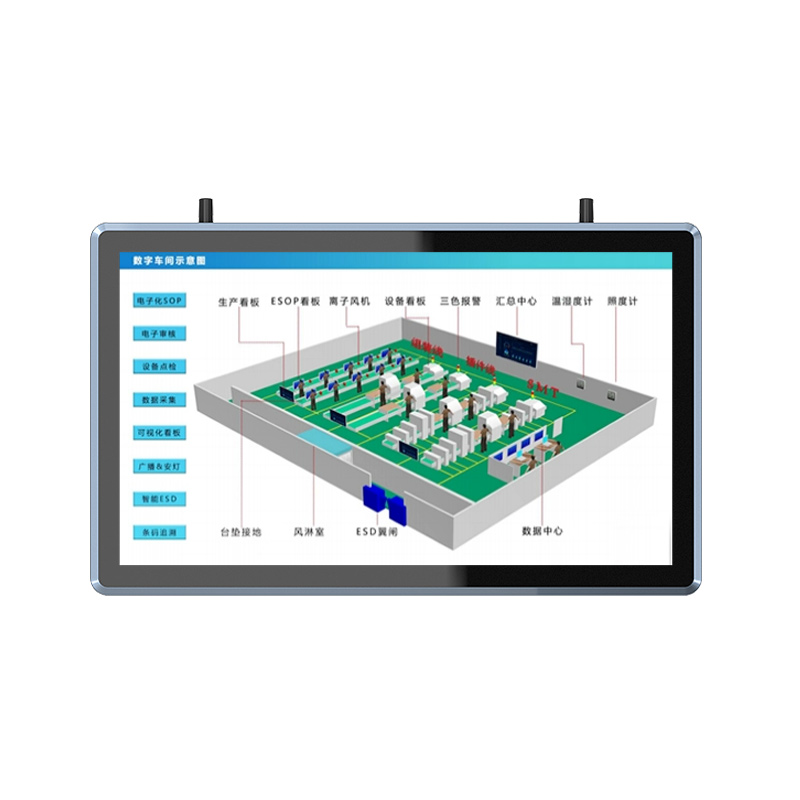
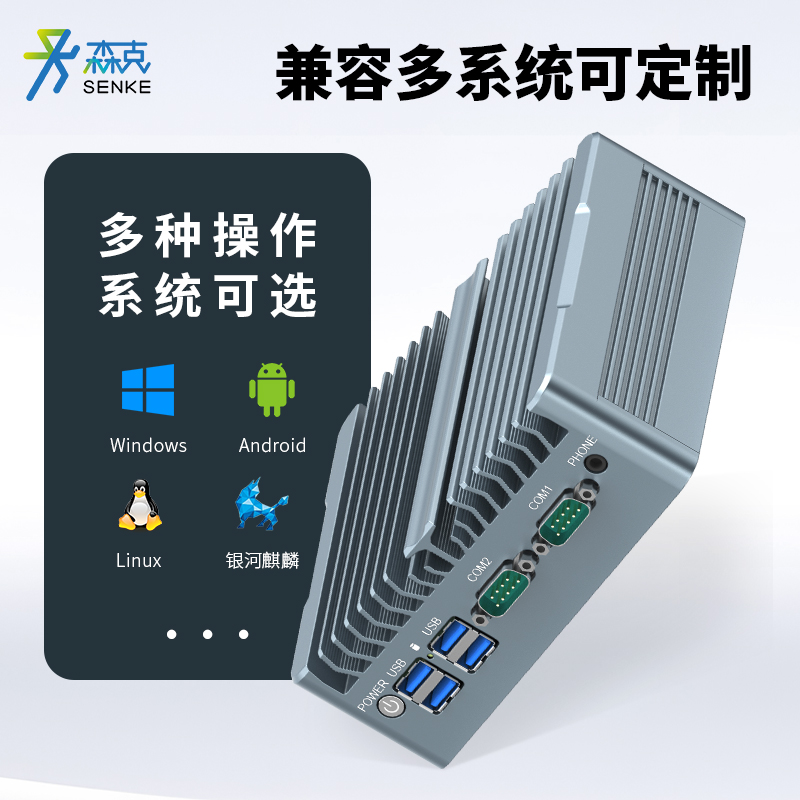
The core hardware components of the industrial control all-in-one computer.
Product knowledge 2026-02-14
The core hardware components of the industrial control all-in-one computer
This is the foundation of the industrial control all-in-one machine. Each component has been specially strengthened to withstand industrial environments.
Case and Structure:
Material: Utilizes an all-metal structure (such as aluminum alloy, galvanized steel plate), featuring high strength and excellent heat dissipation performance, and providing EMI/EMC (electromagnetic interference/correlation) protection.
Protection level: A core indicator, commonly represented by IP grades. For example, IP65 (dust-proof, splash-proof), can be directly applied to production lines, workshops, etc. where there is dust, oil, and water splashing.
Fanless design: Many mid-to-low power consumption models adopt passive cooling (through fin cooling), avoiding fan failures and dust intrusion, thereby enhancing reliability.
Compact and modular design: Saves space. Partially supports various installation methods such as rail mounting, wall mounting, and VESA suspension.
Motherboard and Platform:
Industrial-grade motherboard: Utilizes more durable components (such as solid-state capacitors), which can operate stably within a wider range of temperatures and humidity levels, and has a longer lifespan.
Processor platform:
x86 architecture: Intel (Intel Atom, Celeron, Core i series, Xeon), AMD Ryzen series, etc. It has strong performance and a rich software ecosystem, making it a mainstream choice.
ARM architecture: Rockchip, Renesas, NXP, etc. Extremely low power consumption, without fan, commonly used in embedded and edge computing scenarios where power consumption and cost are critical.
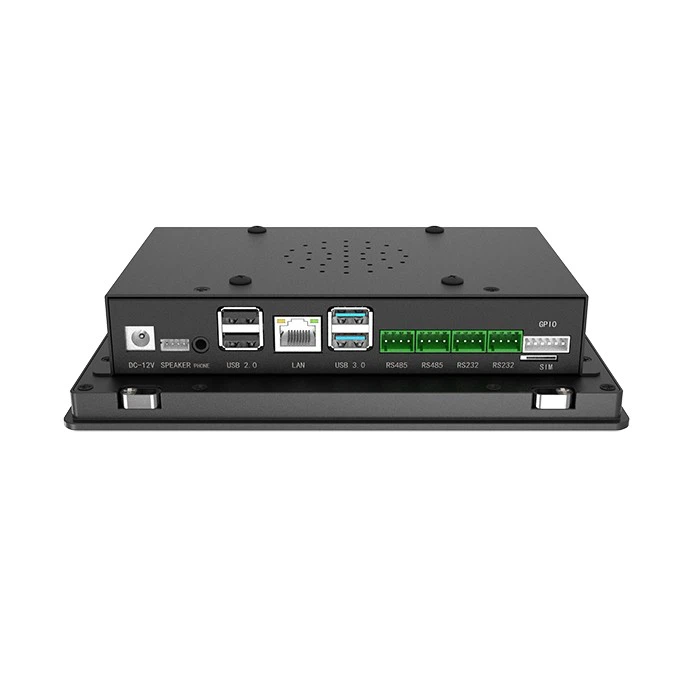
Chipset: Optimized for industrial communication (such as multiple serial ports, field buses).
Display and Touchscreen:
Display: Industrial-grade LCD screen, usually with higher brightness (250 – 1500 cd/m² or even higher) to adapt to strong light environments. Wide temperature range operation (-30°C ~ 80°C).
Touch technology:
Resistance type: Can be operated with gloves or a stylus, has strong anti-interference ability, but has slightly lower light transmittance.
Capacitive type: Mainstream, supports multi-touch, offers a good experience, but generally requires fingers or special gloves.
Infrared type: No physical contact, less prone to wear and tear, suitable for special environments.
Front panel protection: Usually, tempered glass or explosion-proof film is used to achieve IP65 protection, which is resistant to scratches and impacts.
Storage and Memory:
Memory: Utilizes industrial-grade memory with ECC (Error Correction Code) verification, which can correct data errors and prevent the system from crashing due to memory bit errors. This is crucial for 7×24-hour operation.
Storage: Solid-state drives (SSDs) are widely used, especially models without moving parts such as mSATA/M.2 or SATA DOM. Industrial-grade SSDs have a wider operating temperature range and a longer data retention period.
Power Supply and Power Consumption:
Industrial wide-voltage power supply: Supports DC 9-36V or AC 85-264V wide voltage input, capable of adapting to voltage fluctuations in factories.
Overvoltage, overcurrent, reverse connection protection: Prevents damage to the equipment due to abnormal power supply. Low-power design: Especially for fanless models, optimize power consumption to reduce heat generation.