The concept of long-term operation for industrial equipment: The hardware selection logic of Senke industrial display devices
Product knowledge 2026-05-08
Industrial equipment is commonly used for a long period and undergoes slow updates. Once deployed, it often operates continuously for many years, and most of them need to maintain uninterrupted operation throughout the year. Therefore, long-term operation has become the core concept in the selection of industrial hardware. Industrial displays, as important terminal devices for industrial equipment, the quality of hardware selection directly determines the service life, failure frequency, and long-term operational stability of the entire machine. Chinese industrial display enterprises generally regard rigorous hardware selection as the foundation for their products to stand firm.
Consumer-level display products focus on cost performance and iteration speed. The hardware selection is mainly to meet short-term usage needs, with relatively low standards for component temperature resistance, anti-aging, and continuous operation capabilities. They are not suitable for the non-stop working mode of industrial equipment. However, industrial hardware selection follows the principle of long-term durability, prioritizing component stability, temperature resistance range, anti-aging ability, continuous load performance, rather than simply controlling costs. It reduces the probability of later faults from the source.
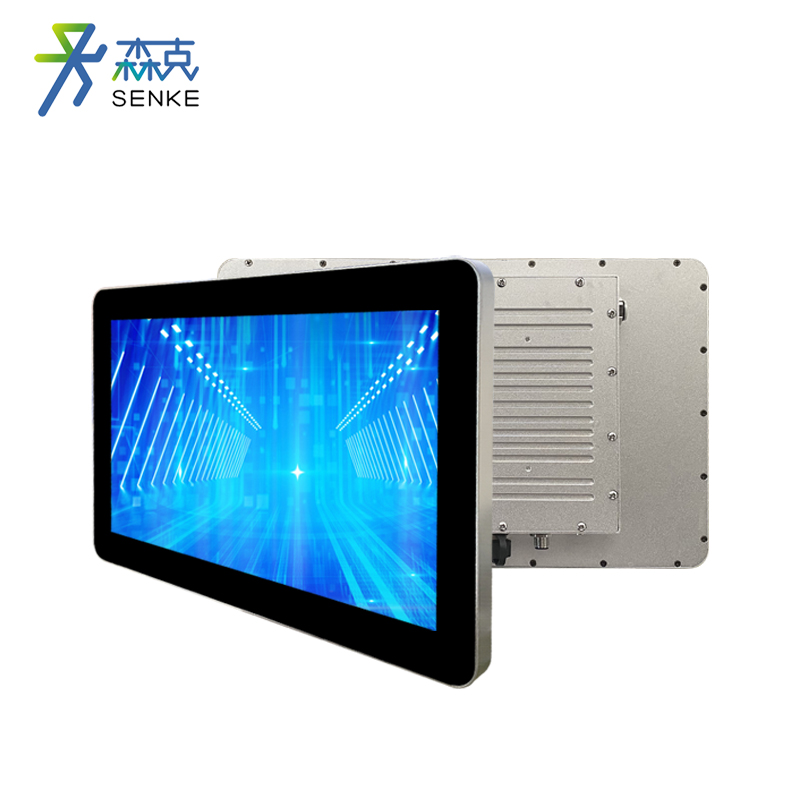
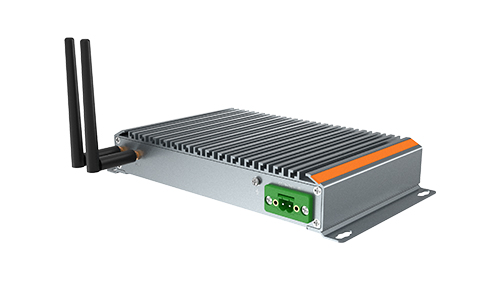
The core hardware of industrial displays includes six categories: display panel, touch control module, main control circuit board, power module, internal connection wires, and shell structural components. Each category of material selection has corresponding industrial-level usage standards to meet complex working conditions and long-term operation requirements. The selection logic focuses on five core dimensions: temperature resistance, stability, anti-aging, anti-interference, and wear resistance and corrosion resistance.
Senke adheres to the concept of long-term operation for industrial equipment and in the hardware selection of industrial display devices, it insists on strict standards. It does not use simplified components to assemble the entire machine. It controls quality from the source of core components to meet the usage requirements of industrial equipment for long-term service.
In the selection of display panels, industrial-grade panels that are suitable for industrial wide-temperature conditions, have good picture stability, and are not prone to yellowing or dimming over long-term use are selected. The color reproduction is long-lasting, the visible angle is stable, and the picture remains uniform even after long-term operation without local darkening or color difference aggravation. They are suitable for the mode of continuous online operation.
For touch control modules, mature solutions that are resistant to wear, have stable positioning, and are not prone to drift are preferred. The surface material is scratch-resistant and scratch-resistant, suitable for industrial high-frequency and long-term repeated touch operations. They still maintain sensitivity and accuracy over a long period of use, reducing the frequency of touch fault repairs.
For the main control circuit board and core chips, the selection follows the industrial temperature range standards. They can withstand a wider temperature range and operate normally in both high and low temperature environments. The circuit layout and materials are solid, the solder joints and circuits have strong antioxidant properties, and long-term continuous power supply operation is less likely to cause circuit aging or poor contact.
The power module is the key to the stable operation of the entire machine. Senke selects power accessories that are suitable for industrial voltage fluctuations, stable load, and good heat dissipation performance. They can adapt to small fluctuations in workshop voltage and do not overheat or overload during continuous load operation, reducing the probability of black screen, restart, and abnormal power failure.
Internal wires and interface accessories are selected with oil-resistant, temperature-resistant, and anti-aging specifications. They are suitable for the enclosed and high-temperature environment inside the chassis, and long-term use is less likely to harden, crack, or cause signal attenuation, ensuring stable line transmission. The shell structural components are made of materials that are not prone to rust or deformation, suitable for workshop air and slight corrosive environments, and remain structurally intact over many years of use.
The rigorous hardware selection, although it seems to increase the initial research and production costs, actually reduces the overall costs of later operation, maintenance, and replacement. It meets the core demands of long-term operation, less maintenance, and high stability of industrial equipment. The production losses caused by equipment shutdown faults in industrial sites are much higher than the investment in high-quality hardware selection. This is also the fundamental reason why industrial hardware insists on using good materials and achieving long-term durability. The Chinese industrial display industry is becoming increasingly mature, and more local enterprises are abandoning the short-term thinking of low price and low configuration and turning to the development route centered on hardware selection, process refinement, and long-term stability. Senke has always adhered to the logic of selecting industrial-grade hardware materials, and has integrated the concept of long-term operation throughout the entire process of product research and development and production. From the source of components, it ensures the quality of the entire machine, enabling industrial displays to be suitable for industrial use scenarios that require continuous operation for many years. It provides local industrial display hardware with solid material selection, stable operation, and long service life, which can be applied in fields such as intelligent manufacturing, industrial equipment, and automatic control systems.