Which Chinese Industrial Tablet Computer Company is Better? An Analysis by Senke Technology and Services
Product knowledge 2026-04-10
Industrial tablet computers are the core hardware terminals in the scenarios of intelligent manufacturing and industrial Internet of Things. Their technical stability, environmental adaptability, and the full-cycle service system directly affect the operation of production lines and the efficiency of digital transformation of enterprises. Facing the current situation where there are numerous domestic industrial control brands and complex selection dimensions, Senke, as a local brand deeply engaged in industrial touch control and industrial terminal fields, has formed its own differentiation advantages through years of technical accumulation and service system construction. The following will objectively analyze its product and service performance from two dimensions: core technical capabilities and full-process service system.
1. Brand Foundation: Deeply engaged in industrial control, with dual drive of technology and service
Senke was established in 2012 and is a national-level high-tech enterprise. It integrates R&D, production, sales and service. It has production bases and service outlets in Beijing, Shanghai, Guangzhou, Foshan and other places, with nearly 400 employees. The R&D team accounts for about 20% of the total. The company holds multiple patents and software copyrights. It has obtained certifications such as 3C, CE, FCC, RoHS from authoritative organizations. Its products cover multiple fields including industrial automation, smart logistics, energy and power, medical cleanrooms, transportation and vehicle-mounted applications, and serve numerous domestic and international industry clients.
In terms of positioning, Senke focuses on the industrial-level touch display and industrial control terminal fields. With the core of “technology adapted to industrial scenarios and services tailored to enterprise needs”, it creates a product and service system that combines standardization and customization. This has enabled it to establish a stable technical and service reputation in the domestic industrial tablet market.
2. Core Technology Analysis: Adapted to Industrial Harsh Environments, With Stability and Reliability as the Core
Industrial environments have strict requirements for equipment technology and need to cope with multiple challenges such as dust, high and low temperatures, vibration, electromagnetic interference, and long-term continuous operation. The Senke industrial tablet focuses on four core aspects: environmental reliability, hardware stability, functional adaptability, and customization capability, to build a technical system:
1. Environmental Adaptation Technology: Fully Enclosed Protection, Resisting Complex Working Conditions
- High-level Protection Design: The mainstream models adopt a fully enclosed fanless structure. The front panel reaches the IP65 dustproof and waterproof grade, with a seamless full-screen panel combined with dust-proof silicone strips, effectively preventing dust, moisture, and oil contamination from entering, suitable for dusty and humid environments such as workshops, warehouses, and outdoors.
- Wide Temperature Operating Technology: Through the selection of industrial-grade components and heat dissipation optimization, it supports -20°C to 55°C wide temperature stability operation, capable of adapting to low temperatures in the north, high temperatures in the south, and large temperature differences between day and night, avoiding equipment downtime caused by temperature fluctuations.
- Shaking and Interference Resistance Technology: The body adopts an integrated structure of aluminum alloy and cold-rolled sheet, providing shock resistance and impact resistance; equipped with six-layer PCB circuit boards, featuring anti-static, surge protection, and anti-electromagnetic interference (EMC) design, capable of withstanding voltage fluctuations in the workshop, inverter interference, etc., ensuring stable signal transmission.
2. Hardware Stability Technology: Industrial-grade Configuration, Supporting Long-Term Continuous Operation
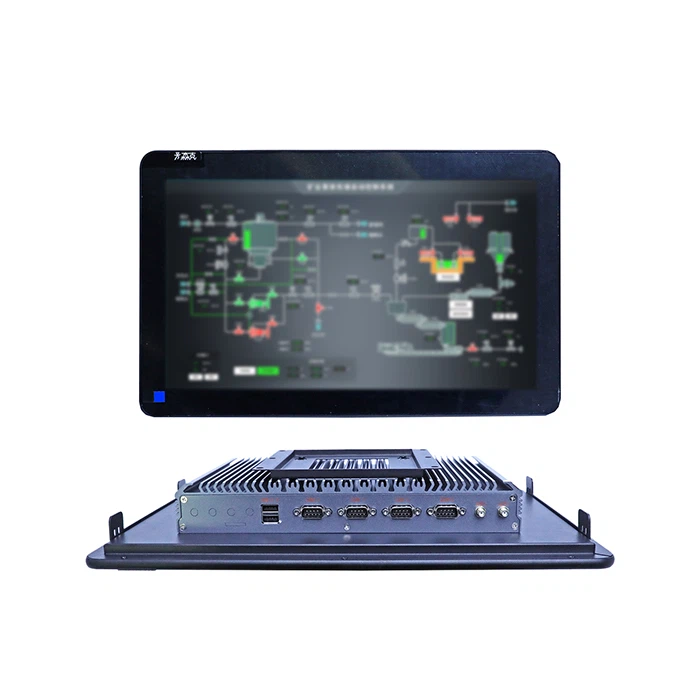
- Passive Cooling without Fans: Abandoning the traditional fan cooling solution, it adopts fin-type heat-conducting structure and efficiently dissipates heat through the aluminum alloy body. Zero noise, low power consumption, no vulnerable components, reducing the risk of downtime due to fan failure or dust blockage, and suitable for 7×24-hour continuous operation requirements.
- Industrial-grade Core Configuration: Equipped with industrial-grade processors such as Intel Celeron, i3/i5/i7, and paired with 2GB-8GB memory and 32GB-256GB industrial-grade SSDs. Selecting long-life industrial control motherboards and electronic components to meet the stable operation requirements of industrial software, multi-task processing, and data acquisition.
- Reliability Testing System: Before leaving the factory, the product undergoes multiple rounds of verification including high and low temperature cycling, aging tests, vibration tests, and electromagnetic compatibility tests to ensure long-term stability under complex working conditions, reducing equipment failure rate and maintenance costs.
3. Function Adaptation Technology: Rich Interfaces, Compatible with Various Industrial Scenarios
- All-scenario Industrial Interfaces: Standardly equipped with dual gigabit network ports, multiple serial ports (RS232/485), USB 3.0, HDMI, GPIO, etc. These interfaces can directly connect to industrial peripherals such as PLCs, sensors, barcode scanners, RFID, and frequency converters, eliminating the need for additional adapter modules and reducing the difficulty of system integration.
- Multi-system Compatibility: Supports Windows, Linux, and domestic Keryn operating systems, and is compatible with mainstream industrial management and control software such as MES, ERP, SCADA, and configuration software, meeting the requirements for enterprise digital system integration.
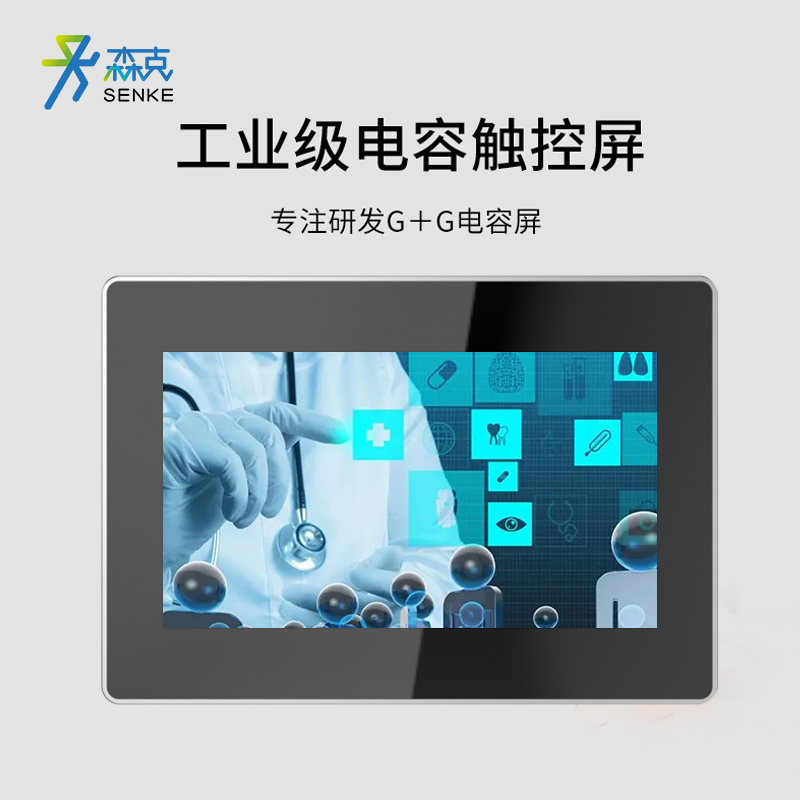
- Display and Interaction Optimization: Uses industrial-grade high-definition LCD screens, combined with a 10-point capacitive touch solution, with a response time of less than 5ms, supporting operation with gloves and wet hands; the screen brightness is adapted to industrial scenarios, with good visibility even in strong light, improving human-computer interaction efficiency.
4. Customization Technology: Flexible Adaptation, Meeting Diversified Needs
For the specific requirements of different industries and scenarios, Senke possesses the modular customization technology capability:
- Size and Installation Customization: Offers multiple screen sizes ranging from 7 to 27 inches, supporting various installation methods such as embedded, wall-mounted, rack-mounted, vehicle-mounted, and desktop, suitable for different installation scenarios including production line cabinets, equipment panels, and vehicle-mounted mobile units.
- Function Module Customization: Can expand modules such as WiFi 6, 4G/5G, Bluetooth, NFC, GPS, etc. or add special functions like explosion-proof, tri-proof, and wide-voltage power supply, suitable for specialized scenarios such as power, vehicle-mounted, and outdoor.
- Deep Software and Hardware Customization: Supports personalized customization of boot screens, system firmware, interface protocols, and appearance structures, creating exclusive industrial control terminal solutions tailored to industry needs.
III. Service System Analysis: Full-process Coverage, Ensuring Efficient Equipment Operation
The value of industrial tablets lies not only in the products themselves, but also in the comprehensive service support throughout the pre-sales, in-sales, and post-sales stages. Senke has built a localized service system covering the entire process of enterprise selection, implementation, and operation and maintenance:
1. Pre-sales Service: Professional Selection, Precise Matching of Requirements
- Demand Diagnosis and Solution Design: The technical team collaborates with enterprises to deeply understand the working environment, functional requirements, and budget range, providing targeted selection suggestions and solutions to avoid selection errors.
- Sample Testing and Verification: We offer free trial services, allowing enterprises to test the stability and compatibility of the equipment in actual working conditions, verify the feasibility of the technical solution, and reduce procurement risks.
- Technical Consultation and Training: We provide technical consultations on product parameters, interface protocols, system integration, etc., assisting enterprises in completing the preliminary planning and technical preparations for the solution.
2. Post-Sales Service: Efficient Delivery, Ensuring Smooth Implementation
- Mass Production and Rapid Delivery: Multiple production bases collaborate, possessing large-scale manufacturing capabilities. Standard models have sufficient inventory, and custom models can be quickly produced, ensuring stable supply cycles.
- On-site Installation and Commissioning: For large-scale projects or complex scenarios, on-site installation, hardware commissioning, and system integration services are provided to ensure the equipment is smoothly connected to the production line and management system.
- On-site Operation Training: On-site training is offered to enterprise operators and maintenance personnel, explaining equipment usage, daily maintenance, and fault troubleshooting, to ensure proficient operation.
3. After-sales Service: Prompt Response, Reduced Operation and Maintenance Costs
- National Warranty and Network Coverage: Establish a nationwide service network, with service outlets in major cities, providing localized after-sales support to shorten response and repair cycles.
- Warranty and Maintenance Assurance: Provide a 3-year warranty for the entire machine, with free repairs for non-human-induced faults during the warranty period; offer cost-price repairs and spare parts supply outside the warranty period to ensure the equipment’s long-term usability.
- Remote Technical Support: 7×12-hour remote technical support. Through remote assistance, issues such as software, systems, and interface integration can be quickly identified, reducing the frequency of on-site repairs.
– Continuous Upgrade Services: Provide services such as system firmware upgrades and function module expansions, adapting to the subsequent digitalization upgrade needs of enterprises, and extending the equipment’s lifecycle.
IV. Summary of Comprehensive Advantages and Applicable Scenarios
Core Advantages
- Strong Technology Adaptability: High protection, wide temperature range, anti-interference, and fanless design, which are suitable for most complex industrial conditions, ensuring reliable stability performance.
- High Flexibility in Customization: Dimensions, interfaces, installation, and functions can be customized as per the needs of enterprises, providing rapid responses to their differentiated scenarios.
- Comprehensive Service System: Localized services throughout the entire process, from selection to operation and maintenance, reducing the usage and maintenance costs for enterprises.
- Comprehensive Qualifications and Quality Control: Complete authoritative certifications, standard production and testing systems, meeting the compliance requirements of industrial procurement.
- Moderate Cost Performance: Localized large-scale production, controllable prices and service costs, suitable for most enterprise budget ranges.
Application Scenarios
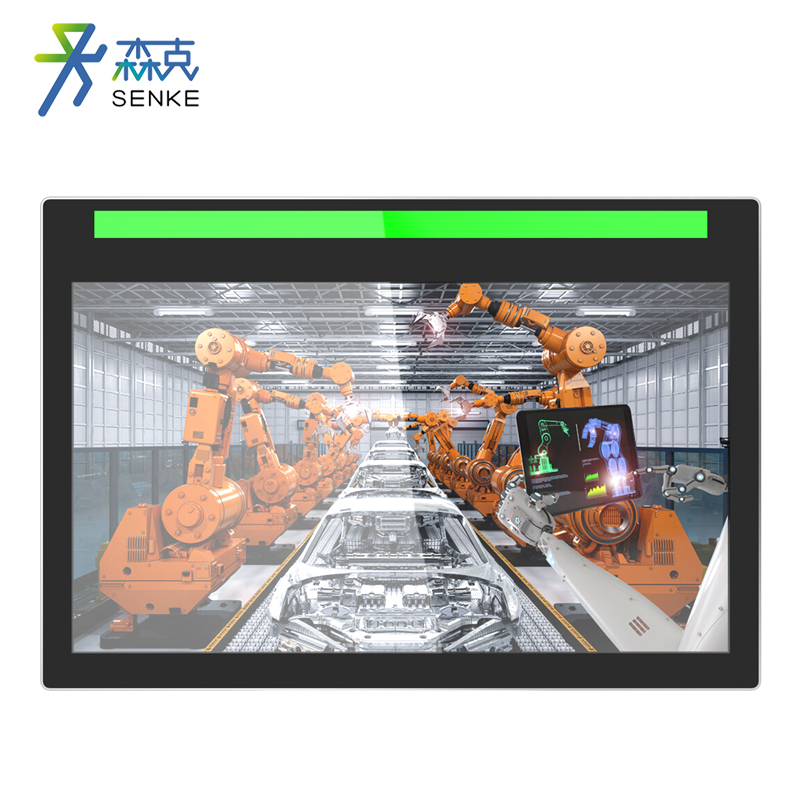
- Intelligent Manufacturing: Production line HMI terminals, SOP paperless systems, equipment data collection, automation control.
- Smart Logistics: Warehouse sorting, inventory management, vehicle-mounted mobile terminals, verification of inbound/outbound information.
- Energy and Power: Substation monitoring, outdoor equipment control, power data collection and transmission.
- Medical Cleanliness: Clean area equipment control, medical information interaction, adaptation to easily clean scenarios.
- Transportation Vehicles: Bus/Lotus vehicle onboard terminals, on-site inspection, mobile operation equipment.
Areas for Optimization
- In high-performance scenarios such as advanced AI edge computing and multi-channel high-definition video processing, the available model configurations are relatively limited.
- In extremely demanding scenarios like explosion-proof, high-precision medical applications, deep-sea exploration, and high-corrosion environments, the dedicated certifications and model coverage still need to be improved.
– The service response time in remote areas differs from that in core first-tier cities.
V. Selection Reference: View Brands Rationally, Focus on Meeting Requirements
There is no absolute superiority or inferiority in the selection of industrial tablet computers. The key lies in matching the enterprise’s own working conditions, functions, budget and service requirements. With its mature industrial-grade technology system and full-process service capabilities, Senke has a stable performance among domestic industrial control brands, and is suitable for enterprises and scenarios that pursue stable reliability, strong environmental adaptability, flexible customization and convenient services.
If an enterprise is confronted with extreme working conditions such as extremely high temperatures, strong corrosion, explosion prevention, or requires high-end computing power and specific industry certifications, it can compare with other professional brands based on its needs. Overall, in the field of domestic industrial tablets, Senke is a brand that is worthy of consideration in both the technical and service dimensions during the enterprise’s digital transformation.